Advertisements on social networks converted into “algorithm cleaners” is the proposal of the hygiene products brand Lux to turn the digital environment into a reflection of the power of its soaps and, at the same time, remind users of the control they can exercise over the content they see. “Lux My Algorithm”, dreamed up by VML Singapore, takes advertising from disruption to utility.
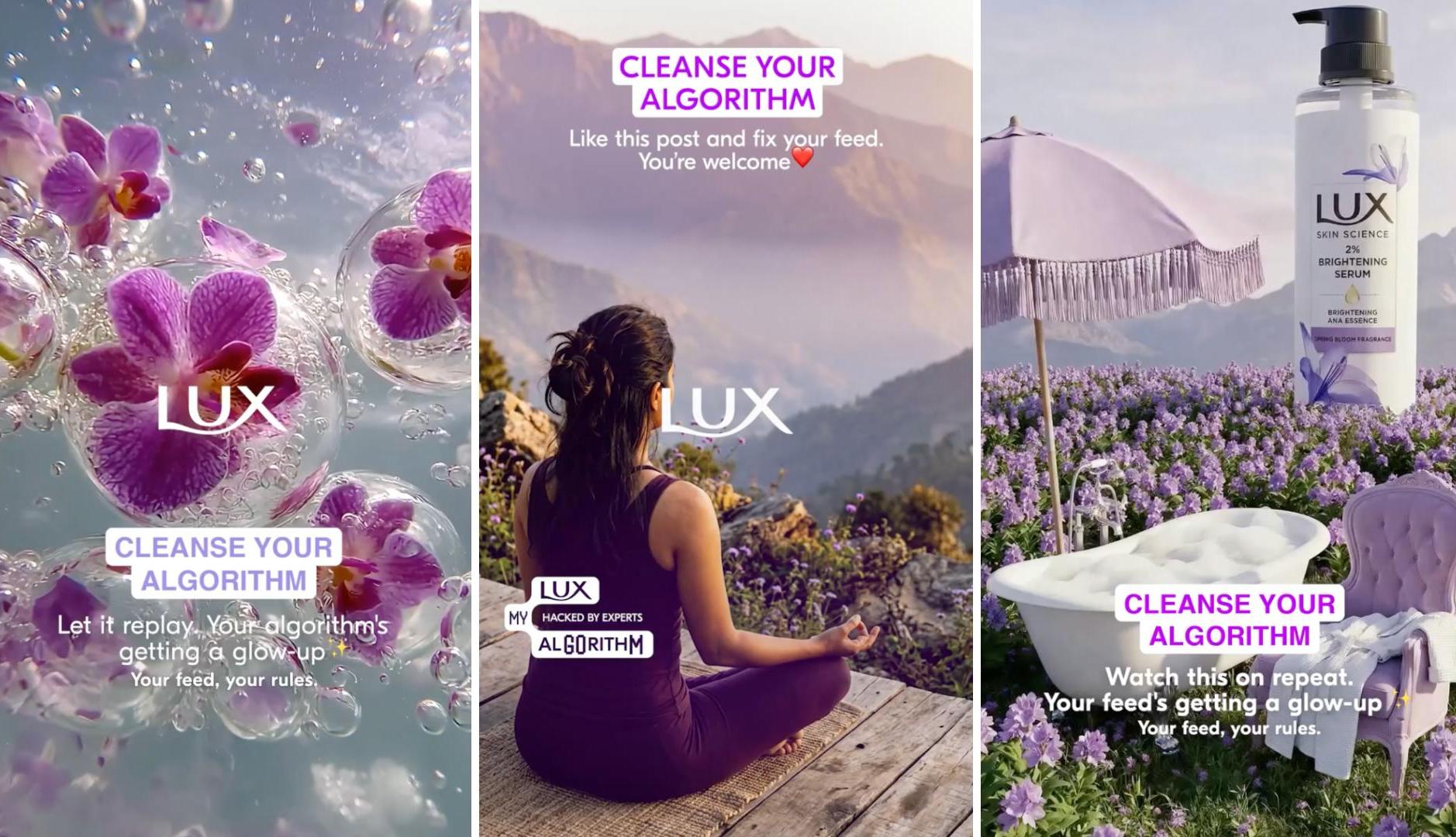
The ads that are part of the campaign are designed to be seen, but also to influence the users’ algorithm. Inspired by its long history of cleaning, the brand applies its mission and philosophy to online spaces and has disseminated a series of creatives designed to send signals to the system and impact the content that will be shown below.
It is a series of short pieces that collect more than a dozen images linked to the brand’s products and their visual codes, as well as the territory of hygiene, well-being and beauty. They show, for example, flowers, bubbles, relaxing baths or soap foam, but also young girls in an attitude of enjoyment, whether in a moment of relaxation, playing sports or in social activities.
“Lux My Algorithm” is based on a simple premise, which is that in social networks each interaction is a signal. Viewing, pausing, saving, or sharing content introduces signals into the system that shape the content that appears next. While users cannot completely control their feeds, they can influence the likelihood of what they see over time and with conscious use. By interacting with brand content, they feed data into the algorithm that gradually helps retarget and diversify their feeds.
What’s more, the videos are accompanied by instructions so that the playback of the content influences the algorithm. Thus, the brand invites you to see the same ad twice in a row or to like the publication. “Even your algorithm needs a moment of calm. Like it and tell your feed that there’s more to life than looping noise. Peace, clarity and a slower pace. Your feed, your energy, your rules”Lux commented in one of his posts on Instagram.
The campaign relies on the characteristics of paid ads, which unlike organic content, can appear in any feed, regardless of the user’s content patterns. With this, Lux does not fight against the algorithm, but rather plays its game and invites users to be aware of its operation, calling on them to take control. At the same time, greater engagement with brand ads will increase the chances of greater visibility and awareness for Lux content.
“Lux My Algorithm”, which the brand says has been developed with algorithm experts, explores how advertising can go beyond visibility and become a useful tool, making it less intrusive and more practical. The campaign seeks to challenge the repetitive loops of seemingly personalized content that social media feeds can become.
“The more we love this industry, the more we feel the urgency to rethink it. The more people scroll, the clearer it becomes that ads and paid content are, in most cases, disrupting the experience, not enhancing it. And the algorithms are designed to trap you, to maximize your screen time by giving you more and more of what keeps you glued, including ads you didn’t ask for.“commented Marco Versolato, Creative Director at VML, via LinkedIn. “For months we’ve been developing and testing ads designed to influence the algorithm as much as possible and diversify what you see. Ads that people really want to see. Just one change: watch twice, share or save and your algorithm changes. Less noise. More than you care”.
The brand also ensures that the campaign aligns with its purpose. “Lux has always championed self-expression. ‘My Algorithm’ starts from a simple truth: what we interact with shapes what we see and how we feel”; commented Judy Zu, Global Brand Director of Luz, according to Campaign Brief. “It’s about helping people take a more active role in that process and making everyday online interactions feel more intentional.”.
The campaign is being rolled out in China, India, Thailand, Brazil, Egypt, Indonesia and Vietnam, covering a combined population of more than 3.5 billion people. It will be spread across multiple platforms through a combination of branded videos and creator collaborations, all designed to drive intentional engagement at scale.