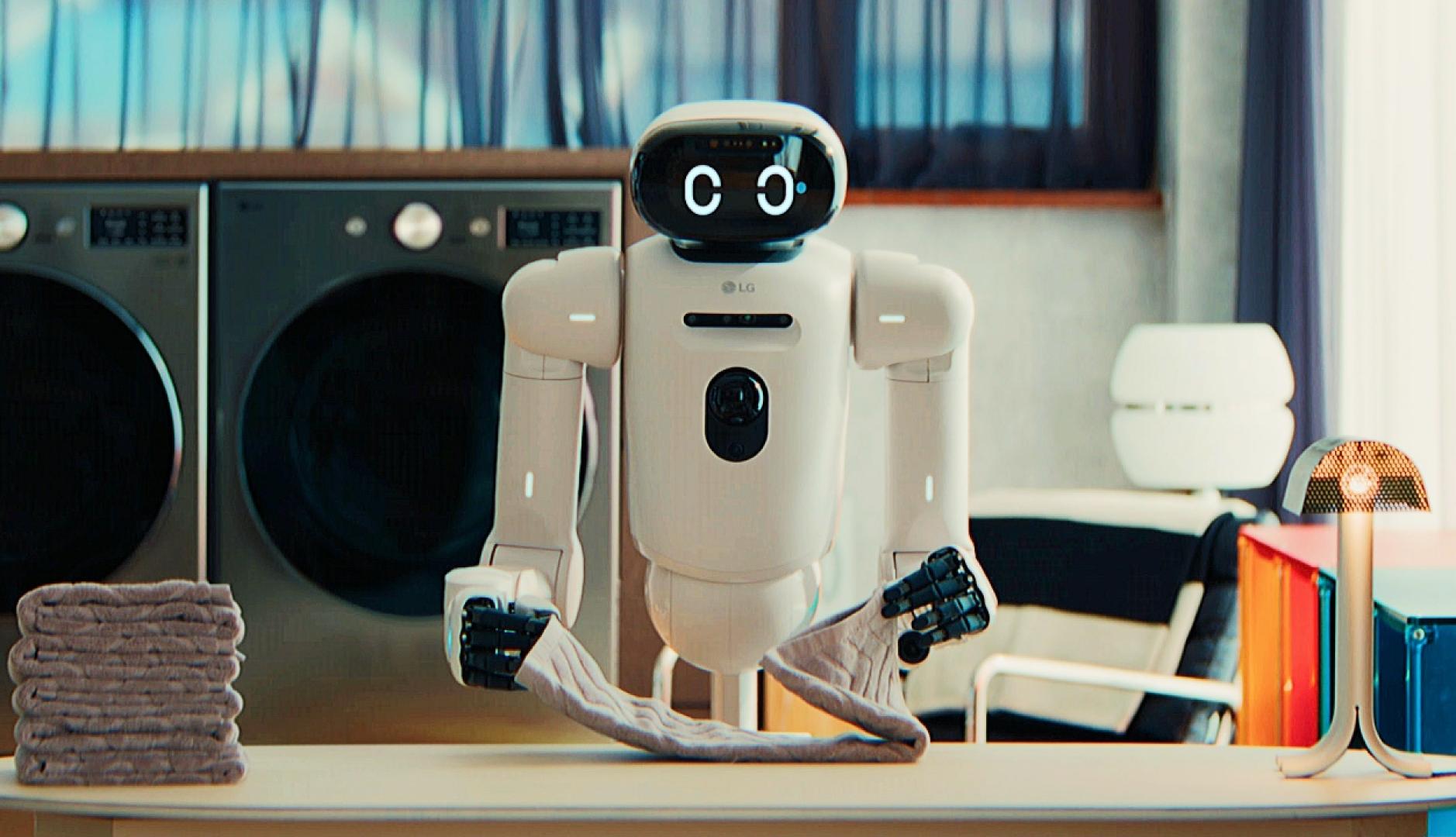
Domestic robotics are no longer a distant promise and are beginning to test their real entry into consumer homes. If in February of last year 1X Technologies showed with Neo Gamma how a humanoid could be integrated into everyday life, now it is LG Electronics that takes another step in that same direction with the presentation of LG CLOiD, its new home robot with Artificial Intelligence, shown for the first time in operation during the CES 2026 that is being held these days in Las Vegas. The device embodies the company’s strategic vision of a “workless home,” in which routine household tasks are delegated to smart systems.
During the event, LG has shown CLOiD operating in everyday scenarios. Thus, the robot is capable of preparing breakfast by interacting with the refrigerator and the oven, starting washing cycles when the home is empty and managing the drying, folding and stacking of clothes. Beyond mechanical execution, CLOiD demonstrates understanding of the user’s context and lifestyle, acting as an orchestrator of tasks within LG’s connected home ecosystem.
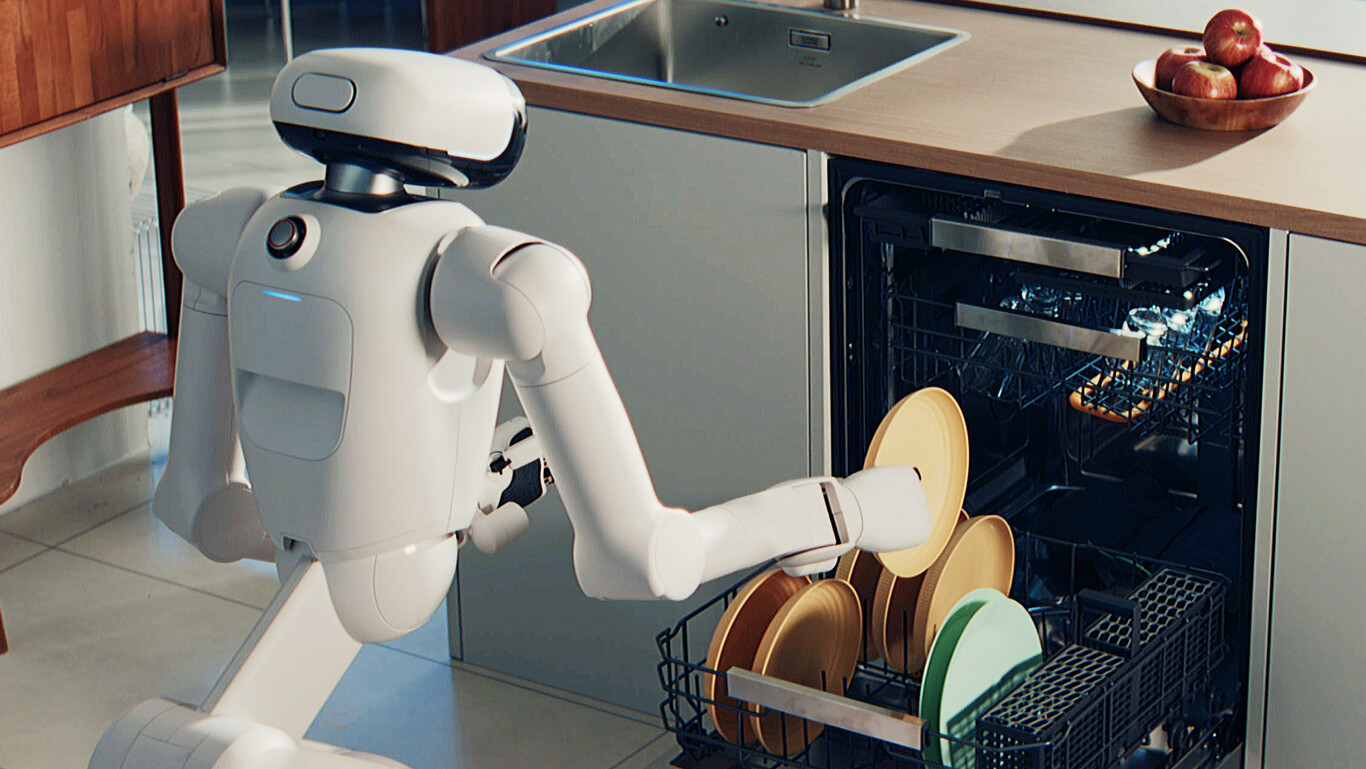
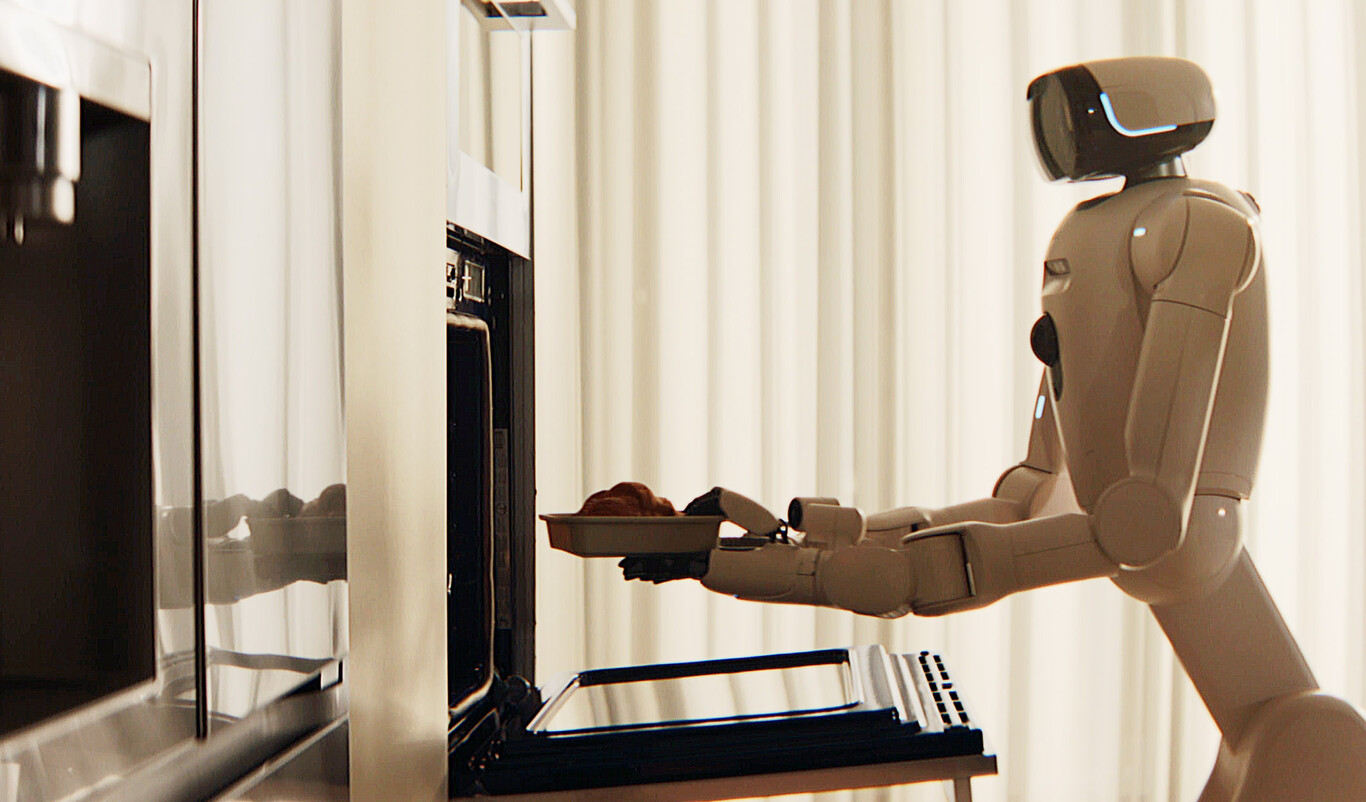
Regarding the design of CLOiD, the robot is composed of a head, a torso with two articulated arms and a base with wheels equipped with autonomous navigation. This configuration prioritizes stability, security and economic viability over bipedal humanoid solutions. Each arm has seven degrees of freedom and hands with five independently operated fingers, allowing it to manipulate everyday objects. The height-adjustable torso expands your range of action, while the low center of gravity base reduces risks in environments with children or pets.
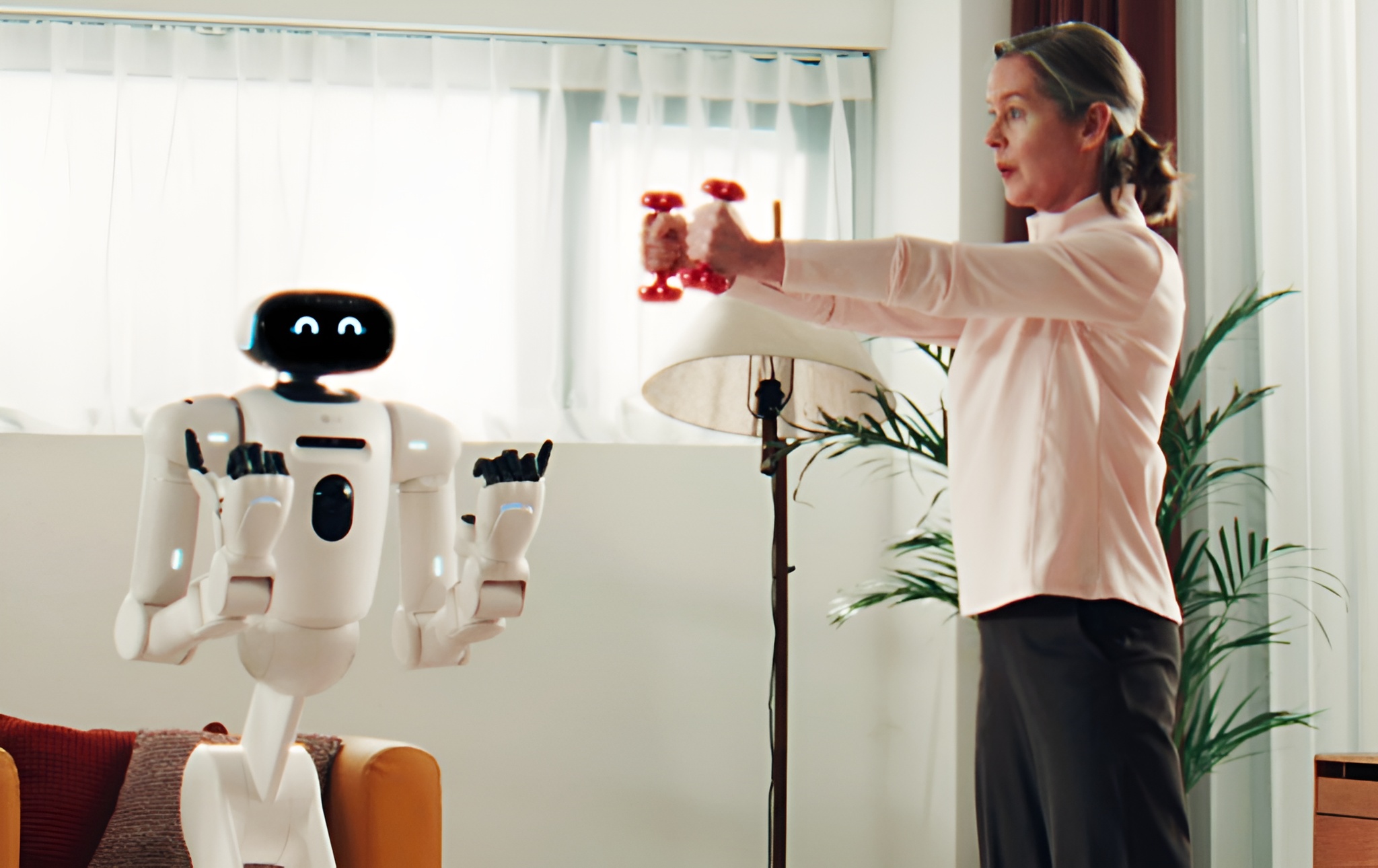
The robot can communicate with people using natural language and visual expressions
For its part, the CLOiD head functions as a mobile AI hub for the home. It integrates a screen, speaker, cameras, sensors and a chipset that combines voice generative AI with continuous learning capabilities. This set allows the robot to communicate with people using natural language and visual expressions, learn usage patterns, and control connected appliances based on those learnings.
At the core of the system is LG’s so-called Physical AI, which combines Vision and Language models (VLM) – capable of converting images and video into structured understanding – with Vision and Action models (VLA), which translate those visual and verbal inputs into physical actions. Trained on tens of thousands of hours of household task data, these models enable CLOiD to recognize appliances, interpret intents, and execute contextually consistent actions, such as opening doors or moving objects.
The official presentation of CLOiD is part of a broader roadmap with which LG plans to continue developing home robots with practical functions and, at the same time, extend robotics to its home appliances, giving rise to hybrid categories such as robot vacuum cleaners or refrigerators with automated doors. The ultimate goal is an “AI Home” in which people and machines coexist, freeing up time and reducing the physical burden of daily tasks.
“LG CLOiD is designed to naturally interact and understand people, providing an optimized level of help at home”says Steve Baek, President of LG Home Appliance Solution Company. A statement that summarizes the point at which domestic robotics is reaching: the technological frontier has already moved to the living room.