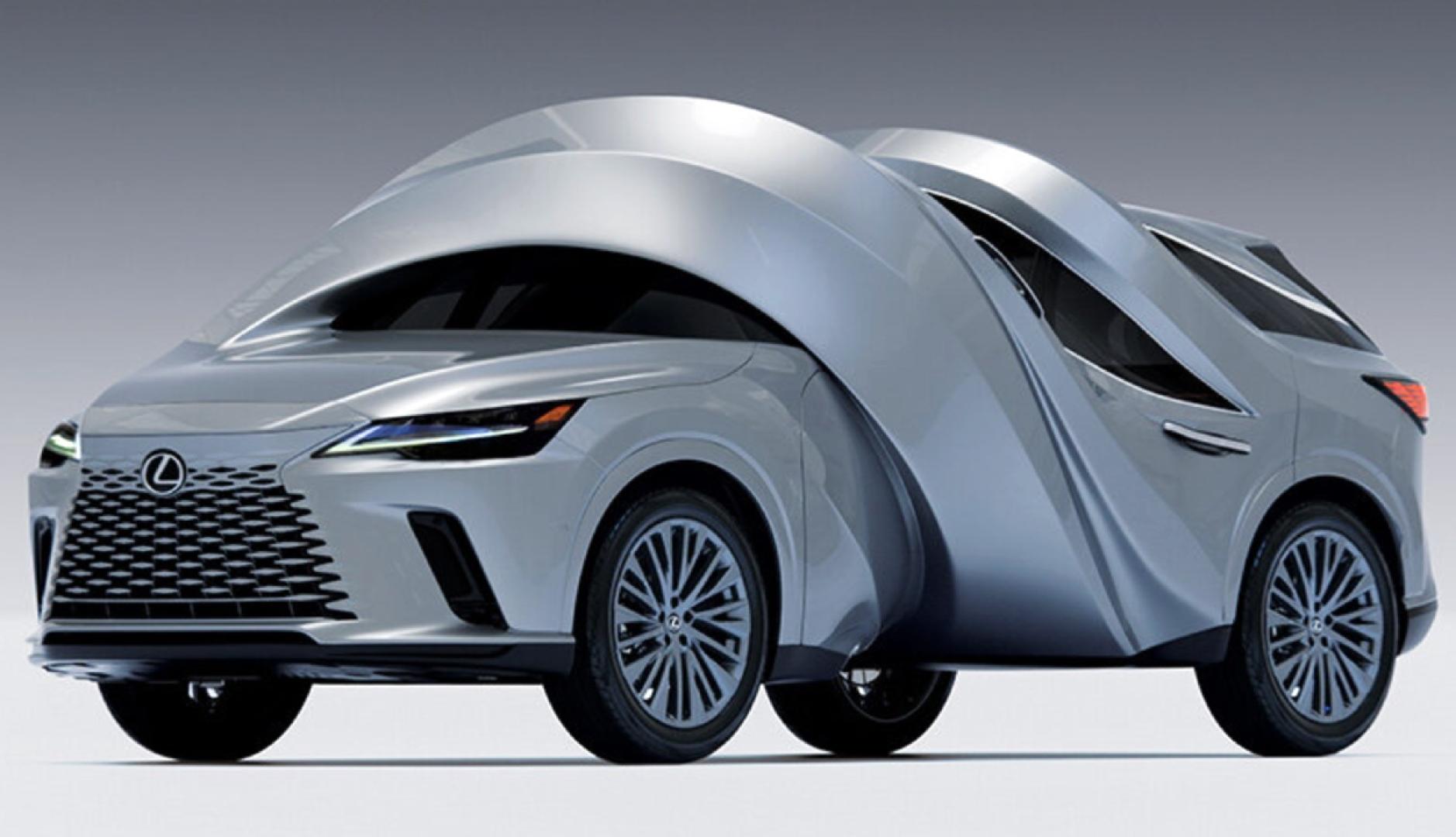
What would a car look like if it could behave like a digital object and its body had the elasticity of a 3D animation? Lexus and the MSCHF art collective have responded with “Motomorphosis,” a project that transforms two real vehicles of the brand into full-size sculptures.
The proposal takes as a starting point two electrified Lexus models, the RZ450e and the RX450h+, to alter their proportions. The first has been folded to form a circle in which the front part ends up meeting the back part; the second has been twisted longitudinally until it adopts the shape of a spiral.
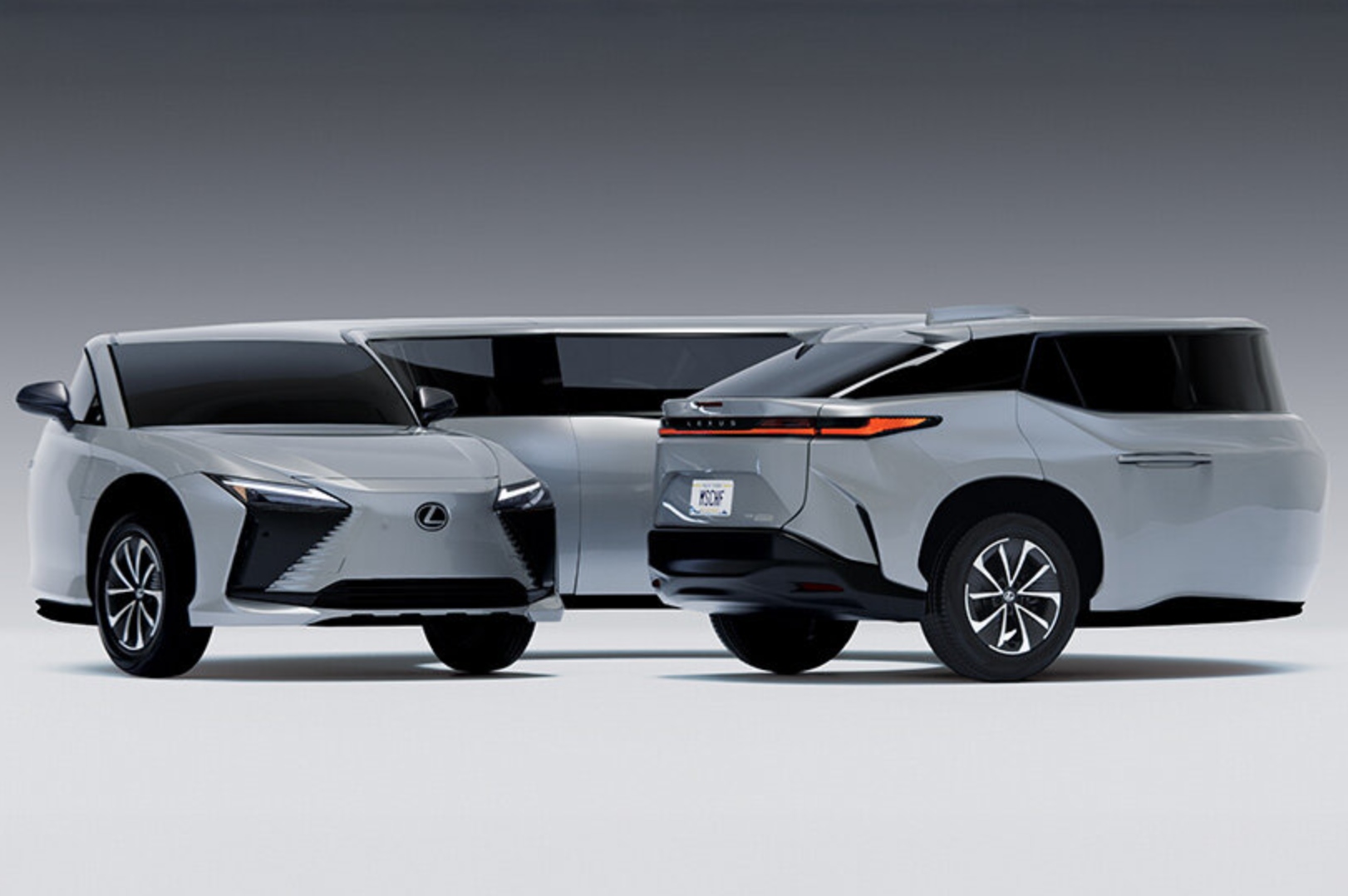
The two pieces, called “Circle Car” and “Twisted Car”, are on display from September 24 to 26 at Chelsea Industrial (New York) along with the original production models. The installation coincides with the city’s celebration of Armory Week.
The project plays with a visual language typical of animation and digital content
The project plays with a visual language typical of animation and digital content. And MSCHF has been inspired by resources such as squash and stretch -the deformation of objects to transmit movement- and the so-called smear framesframes in which a figure appears stretched or distorted to represent speed between two positions.
The difference is that here these deformations, normally conceived to last just a fraction of a second on screen, have been permanently materialized into full-scale physical objects.
The result makes materials associated with the rigidity of a car appear to behave as if they were malleable. The bodywork, windows, lights and design lines follow the deformations of each sculpture, transferring to the physical world a geometry more typical of digital modeling and animation.
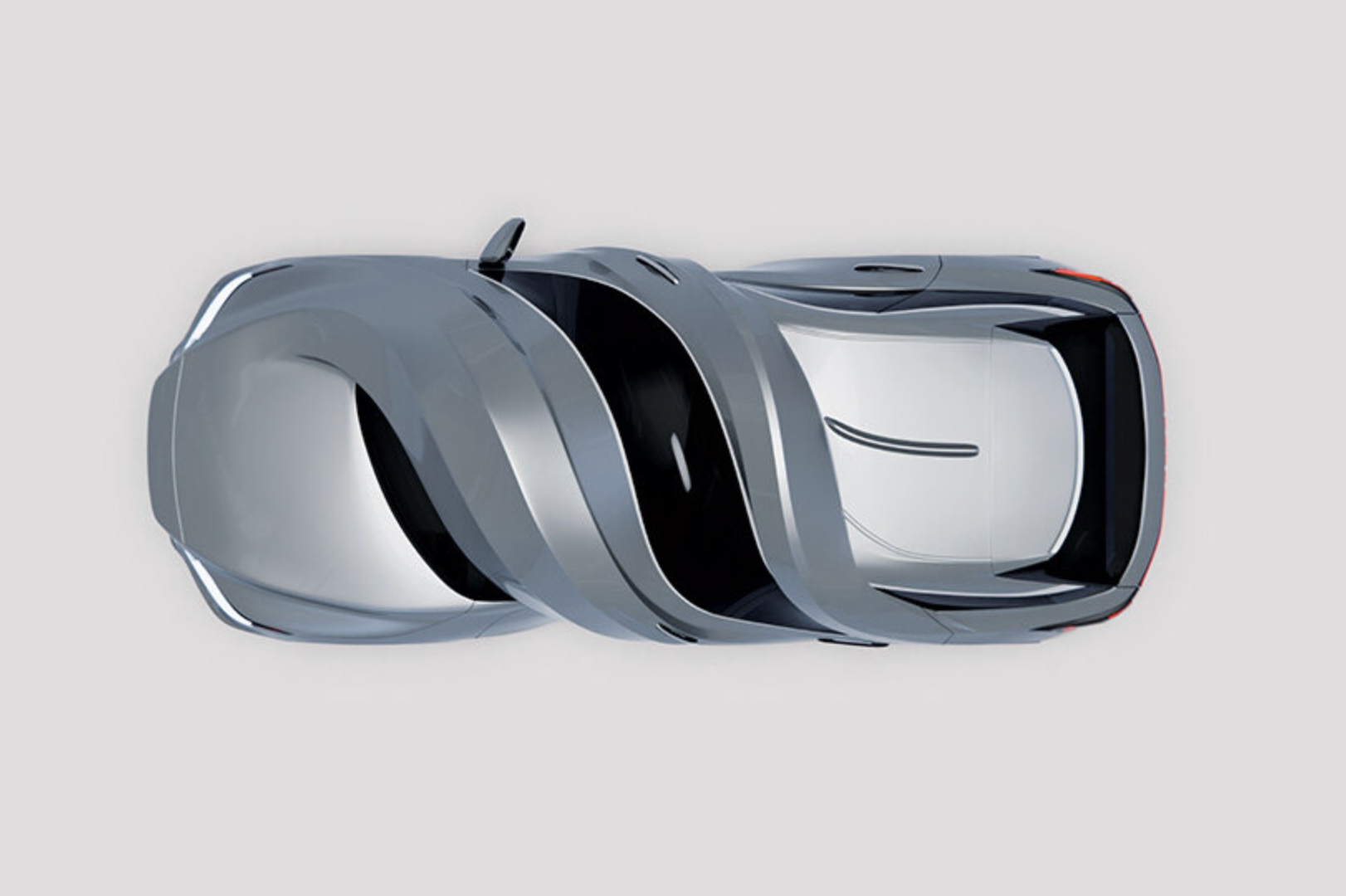
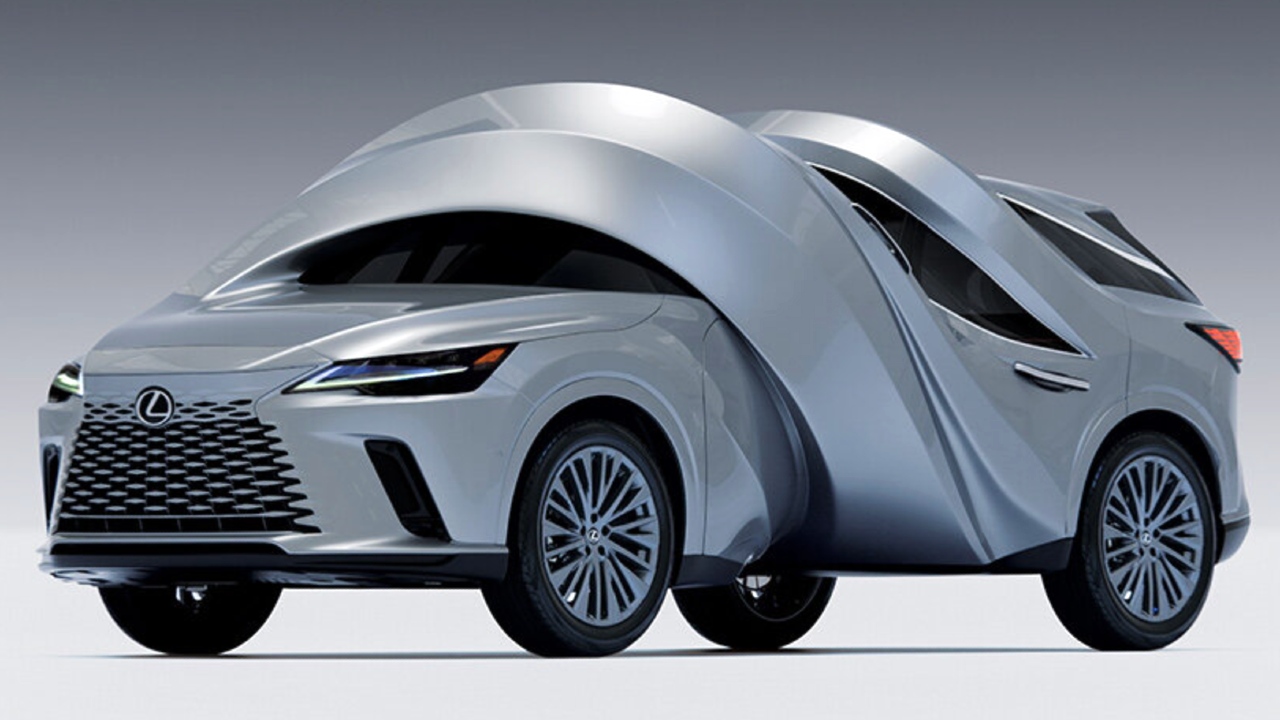
The works have been built using steel structures and thousands of individual pieces. Although they maintain enough elements of the original vehicles to immediately recognize them as Lexus, they are not functional cars nor are they designed to be roadworthy.
A Lexus that drives on itself and another twisted one
For “Circle Car”, MSCHF has started from the Lexus RZ450e and has doubled the entire length of the vehicle to visually unite the front with the rear. The result is a large ring in which the wheels are distributed around the outer perimeter and the passenger compartment follows the entire curvature.
The part alters one of the most basic principles of a car’s design: its steering. Compared to a conventional vehicle, whose shape is largely determined by forward movement, this Lexus seems condemned to permanently travel its own circumference.
“Twisted Car” applies another deformation to the Lexus RX450h+. The vehicle has been visually subjected to a longitudinal torsion, as if two forces were turning its ends in opposite directions. The body lines, surfaces and recognizable elements of the SUV accompany the spiral, freezing into a physical structure what could seem like a computer-generated instant of deformation.
Original post on Instagram: @highsnobietydesign
MSCHF calls both creations “Form Cars”, a concept that it proposes as a counterpoint to the traditional concept car. While the latter usually imagines possible evolutions of the automobile and anticipates future technologies or designs, these pieces use production vehicles to experiment exclusively with their form.
“Motomorphosis” has been commissioned by Lexus from MSCHF, a Brooklyn collective known for developing objects and actions that alter products and codes of popular culture. In this case, the collaboration uses two commercial cars as raw material to explore to what extent their proportions can be modified without completely losing their identity. The decision to display the sculptures next to the original RZ450e and RX450h+ also allows us to directly observe the distance between the functional object and its artistic reinterpretation.