2024 was an exceptional year for Lego. Its income increased by 13% to 9,950 million euros, achieving significantly higher growth than the toys sector. And it was placed among the 215 most valuable brands in the world, according to Brand Finance. Two data that serve to reflect the strength of a company whose current situation is far from what was going through at the beginning of this century, when he had to fight for his survival.
And it is that in 2000 he obtained losses of more than 830 million Danish crowns, beginning a few years of enormous complexity. The hyperinnovation approach adopted by Lego moved her away from the CORE of her activity and her mission, and forced those responsible for the company to take a resounding helm to guarantee the sustainability of the business.
LEGO knew how to do the cultural relevance and connection with the consumer the keys to his survival, and also of his present success. His resurgence has become a reference strategy in the business environment, inspiring firms such as Sony, Adidas or Boeing. From Reason.WHY We have analyzed some of the keys of Lego.
A radical change of strategy
Lego began the millennium with losses, and in 2003 the situation worsened. Sales fell by 26%, leaving losses of approximately 400 million euros compared to the nearly 60 million euros of the previous year. The company described it, as reflected in its account report, as an exercise “Very disappointing“E”unsatisfactory“That reflected”A failed growth strategy”
The figures fell again, although to a lesser extent, in 2004. Among the reasons, the growth of large supermarket chains in front of traditional toys, the impact of consumer electronics on the toys market or the search for manufactures and productions low cost in countries like China was alluded to the growth of large supermarket chains in countries like China.
Excessive diversification truncated business development
However, as Strategy+Business collects, the PWC publication, experts also pointed out excessive diversification in the product line, which at that time included areas such as clothing, jewelry, magazines and publications or theme parks. The company became obsessed with hyperinnovation, new launches and the introduction of novelties, bringing products to the market that did not end up hugging consumers and that were not very profitable.
Lego described him as “its most serious financial crisis to date“And she was forced to do”A radical change of strategy” for “be a company again with a solid financial base and value generating”A seven-year action plan (until 2010) was established that was divided into three phases: survival (2004-05), the construction of a profitable central platform (2006-08), and organic growth (from 2009 onwards).
Among the measures taken in the first phase, Jørgen Vig Knudstorp assumed the role of CEO after 25 years of Kjeld Kirk Kristiansen leadership, grandson of the founder of Lego Ole Kirk Christiansen. The thematic parks are also sold to Merlin Entertaiment -Property that he recovered in 2019-; The number of pieces produced was reduced, or 1,000 template members were dispensed with.
In the second stage, the company focused on the outsourcing of its distribution and some of its manufacturing processes; as well as in improving the profitability of the product portfolio, focusing on the most profitable lines. At the same time, Lego also prepared for growth working on innovation projects.
The resurgence of the business focused, as explained Reason.WHYin not losing the focus and concentrating the strategy in the brick, and in the Lego game system, that is, the chore of its activity. Also in innovation. “The collaboration with Star Wars was crucial for the reactivation of the brand. The simplification of our organizational and productive models were key in the first years of this century”, He tells us.
The keys of Lego’s success
However, aware that the brick in itself is not enough, LEGO was reinforced in his vision of innovation continues and his approach to his audience, both children and adults, to know the trends in the world of the toy and the most attractive licenses.
Thus, he concentrated his efforts on some of his most iconic and profitable product lines, such as LEGO TECHNIC, with a specific system for vehicle and machinery construction; Lego City, set in the city; Or Dute, the range for younger children. However, he also opted for new lines, such as Lego Ninjago, with a ninja theme, or Lego Friends, sets for boys and girls from six years and with daily theme.
The revitalization of the Lego brand has gone through the strategic link to entertainment
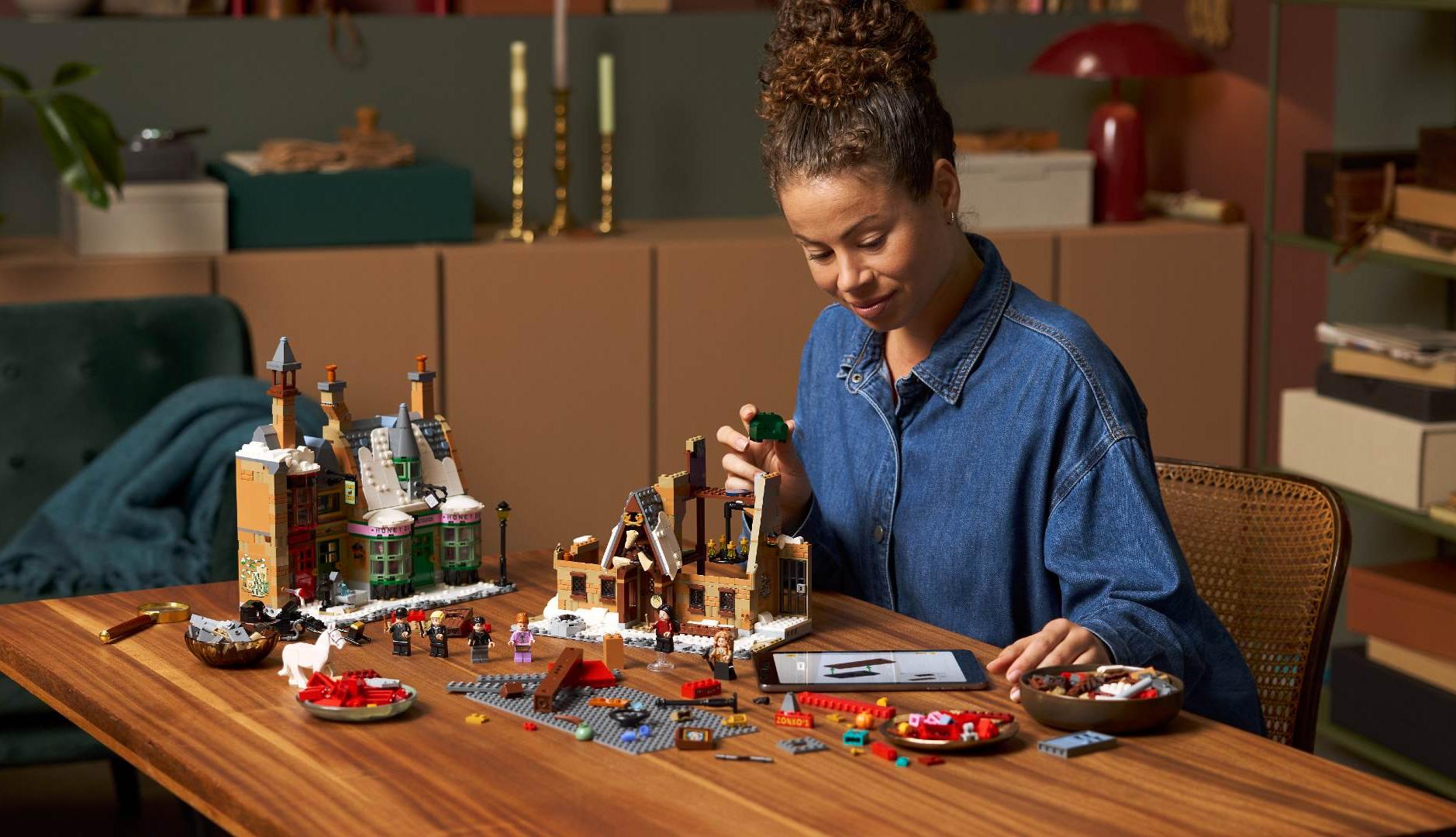
In addition, he bet significantly for the adult public, known as Afols (Adult Fans of Lego), with the launch, among others, of the Lego Architecture range in 2008, with models of emblematic architectural works. He has enhanced the segment over the last five years with lines such as Lego Art, focused on works of art; or Lego Botanicals, for flower and plants lovers.
And it is that the game has become popular among adult consumers due to their positive influence on the development of skills such as creativity, imagination or reflection, and also to combat conditions such as anxiety.
But, undoubtedly, the revitalization of the Lego brand has gone through the strategic linkage to entertainment and collaborations with the large players of the sector. The company has capitalized the growing fan phenomenon, both of its own brand and others, through a strong license strategy.
In the early 2000s Lego already had lines, such as “Harry Potter” or “Star Wars”, whose sets have become the object of collecting. Moreover, the new model of the Death Ship, which will go on sale in October, will be, with 9,023 pieces, the largest in the Lego Star Wars range, and also the most expensive in the brand’s history, with a price of $ 999.99.
To those collections have joined others such as the Disney, Marvel or DC universe, or concrete sagas the films “Batman”, “Gru” or “Wicked”, the “Bluey” or “Wednesday” series, or the video games “Minecraft” and “Fortnite” and, the year you visit, “Pokémon”. But LEGO has also cemented its appeal in alliances with brands from other industries, such as fashion with Nike, or sport with formula 1. All they have allowed Lego to approach the passions of millions of consumers worldwide and reinforce their character like Love Brand.
The incursion into entertainment is not limited to assembly sets, but also includes productions around its universe. In 2014 the company premiered, along with Warner Bros. Pictures, the film “The Lego Movie”, which told the story of a minifigure whose destination is to save the Lego universe from an evil tyrant. Subsequently, he has released other films set in his Batman or Ninjago line, as well as the sequel to the film in 2019; and video games that have exploited the acquired licenses.
The company has also overturned its efforts to strengthen ties with its community of followers and consumers. He has done it, among other things, through co-creation initiatives such as LEGO IDEAS, a platform that allows users to present their original sets and models to be evaluated by the company and be converted into official products. And also physically approaching consumers with projects such as “Lego Gaming: The Exhibition”, an exhibition that unites the brand with video games and arrives in Madrid on October 2.
Pilar Vilella, Brand Director of Lego in Spain, France and Portugal, throws other keys to the company’s success, one of them being the de -stationalization of demand. And, through its licensing strategy and link to outstanding cultural events, Lego has made the purchase of its products not limited to Christmas or birthdays, but that consumption occasions extend throughout the year.
Vilella also refers to a challenging and efficient marketing plan, in constant search of the most shocking campaigns to reach the audience. As part of this goal, Lego has sophisticated its commercial communication, strengthening ties with the cinematographic world and proposing authentic blockbusters.
Proof of this is his last campaign, “Never Stop Playing”, devised by the In-House agency of Lego, Ola, and starring actor Tom Holland; or the plurianual sponsorship agreement with Formula 1, which has left an image for the story with the parade of conductive replicas of the cars made with their bricks.
At the same time, LEGO has also prioritized the digital approach, assigning resources to the development of its online presence, electronic commerce channels and loyalty programs. He has also overturned his efforts in sustainability with the intention of adapting to both the competitive environment and the changes in consumer perceptions.
Lego began incorporating parts and elements made from sustainable materials in 2018, and last year he said that half of the acquired materials occurred with sustainable resources.
Lessons of a brick to brick road
There are many changes undertaken by Lego throughout the last two decades to transform their business and raise its brand to the current status that it holds, not only as Love Brand, but as a cultural icon. From the company they share that the route has not been simple, but they point out to feel very proud of the good moment that Lego is going through.
This is what leads Pilar Vilella AA extracting a key lesson from the entire process: that you always have to have your feet on the ground, in the good and bad times, and act with humility before a market in constant evolution. It also points to the continuous surveillance of the dynamics of the environment and hard work as essential, as it is also to recognize the mistakes, learn from them and act quickly.
“Our value proposal is based on the unlimited possibilities of our brick”
“Having a mission and clear vision are fundamental to maintain a long -term firm route and not get carried away by volatility”, Says the brand director of Lego in Spain, France and Portugal, in statements to Reason.WHY. “Our value proposal is based on the unlimited possibilities of construction of our brick and on it all our plans pivot”
Ultimately, Lego’s trajectory – both his resurgence as his present buoy – has been guided by a maximum: the lasting attractiveness of his brick, capable of transcending languages, cultures, ages and interests to offer creative construction experiences to people around the world. “The Lego game has evolved over the decades, from wood toys to the iconic bricks, through digital experiences. But there is something that remains the center of everything we do: develop recreational experiences that inspire and develop the builders of tomorrow”, Concludes Vilella.