
The Just Eat application will no longer be just a space to discover restaurants, consult menus or place orders. The company also wants to take advantage of the different interactions that occur during the purchasing experience to offer new opportunities to advertisers. To this end, it has announced the launch of JETads, an advertising platform based on artificial intelligence that will allow brands to reach consumers before, during and after placing their orders.
The initiative is part of the development of retail media, an advertising model that takes advantage of commercial environments and the behavioral data of its users to offer advertisers communication spaces and segmentation and measurement tools. In the case of Just Eat, the proposal is based on an activity that, according to the company, includes 59 million consumers, 592 million annual orders and more than 342,000 associated establishments in 14 markets.
JETads brings together Just Eat’s advertising solutions on a single platform and uses artificial intelligence technology developed by Prosus to identify consumption patterns, anticipate needs and select the ads that may be most relevant in each context.
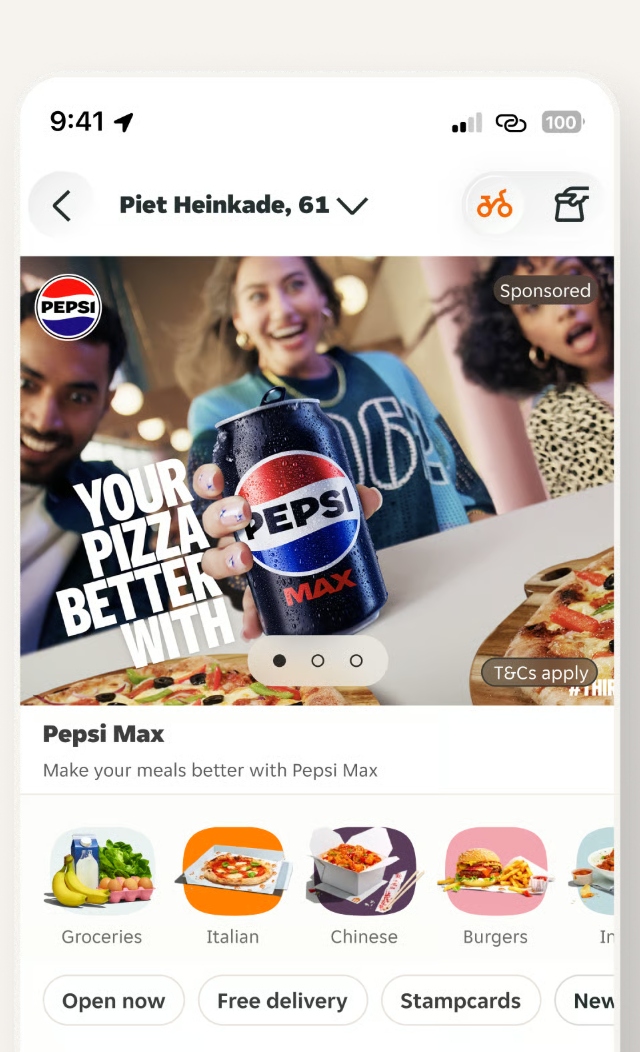
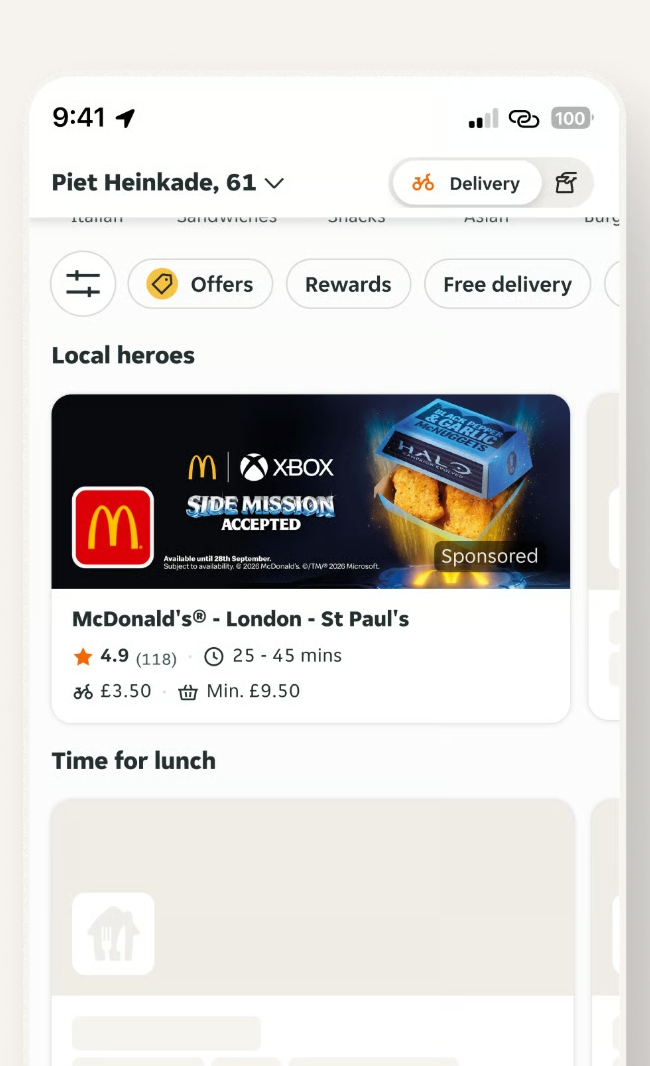
Its approach responds to one of the main opportunities of digital advertising linked to commerce: reaching the consumer when they are expressing a purchase intention and having information that allows advertising investment to be related to certain commercial results.
Advertising during search, purchase and waiting for the order
The new platform is aimed at three groups of advertisers, for whom Just Eat has designed differentiated proposals based on their activity and the moments in which they can connect with consumers.
For partner restaurants and supermarkets, JETads offers promotional spaces in the search and navigation sections of the application. The objective is to increase its visibility when users are exploring establishments and evaluating the different options available before placing an order.
This modality allows businesses to compete for consumer attention in a phase especially close to the purchase, in which the position and presence of an establishment within the platform can influence its consideration.
Mass consumer brands may use formats to promote products in the shopping cart
Mass consumer brands, for their part, will be able to use native advertising formats to promote products while users prepare their shopping baskets. The tool incorporates Just Eat’s own audience segments and a closed-loop measurement system (closed-loop measurement), which allows you to link advertising activity with subsequent actions, such as adding a product to the basket or completing an order.
This measurement capacity constitutes one of the platform’s main commercial arguments, since it offers advertisers information on purchase results, beyond common indicators such as impressions or clicks.
The third proposal is aimed at brands in sectors other than food and supermarkets, which will be able to display advertising after the consumer has completed the payment. Just Eat identifies in the order waiting time, which can reach 30 minutes, an opportunity to connect with users who continue to pay attention to the application, even if they have already completed their transaction.
In this way, the company expands the reach of its advertising inventory to advertisers whose products or services are not necessarily part of its commercial offer. The time that passes between purchase and delivery thus becomes part of the spaces that Just Eat intends to monetize through advertising.
AI to anticipate what each consumer wants to buy
The technology that powers JETads is Prosus Large Commerce Model (LCM), an artificial intelligence model specialized in commerce that analyzes consumer behavior to identify preferences and predict possible needs. The system uses information from billions of interactions between users and establishments associated with Just Eat. From this data, it seeks to recognize patterns that allow improving both audience selection and ad placement.
The company explains that the model can adapt commercial recommendations to circumstances as specific as the day of the week or the time of consumption. Thus, the proposals that a person receives on a Friday night may be different from those that are shown to them on a Tuesday at lunchtime.
You can also identify recurring behaviors, such as a family’s typical household orders, and use that information to determine which restaurants or products may best fit your needs.
The difference with respect to advertising segmentation based solely on general consumer categories lies in the ability to incorporate the context and purchasing behavior to estimate which offer may be most relevant at any given time. According to Just Eat, this technology will improve the efficiency of campaigns by targeting ads towards consumers who show signs of interest and favor the acquisition of customers with a greater probability of repeating their purchases.
However, the company has not yet provided quantified results on the increase in sales or the advertising return obtained through the new platform.
Seeks to make it easier for advertisers to reach the most appropriate audiences
“JETads was born with the aim of responding to the new opportunities offered by artificial intelligence in the field of advertising. From the beginning, we have wanted to take advantage of the full potential of this technology, instead of replicating models that already work”said David Cerdan, head of Strategy and Business Intelligence at Just Eat.
The manager explains that the objectives of the initiative are to make it easier for advertisers to reach the most appropriate audiences and offer consumers proposals relevant to their interests. In this sense, it considers that the combination of the commercial dimension of Just Eat and the technology of Prosus will allow progress in optimizing the advertising investment of its collaborators.
The platform is now available to advertisers in the 14 markets in which Just Eat operates, although the company has not detailed the rates or commercial conditions of the different solutions.
More info: JETAds