Artificial intelligence has lowered the barrier to entry to creative production to an unprecedented point. Today an idea can be visualized, prototyped, edited and presented with a speed that just a few years ago would have required much larger teams, budgets and time. But this accessibility is also generating an underlying question for the industry: if producing is becoming easier, what separates a relevant idea from just another piece of digital noise?
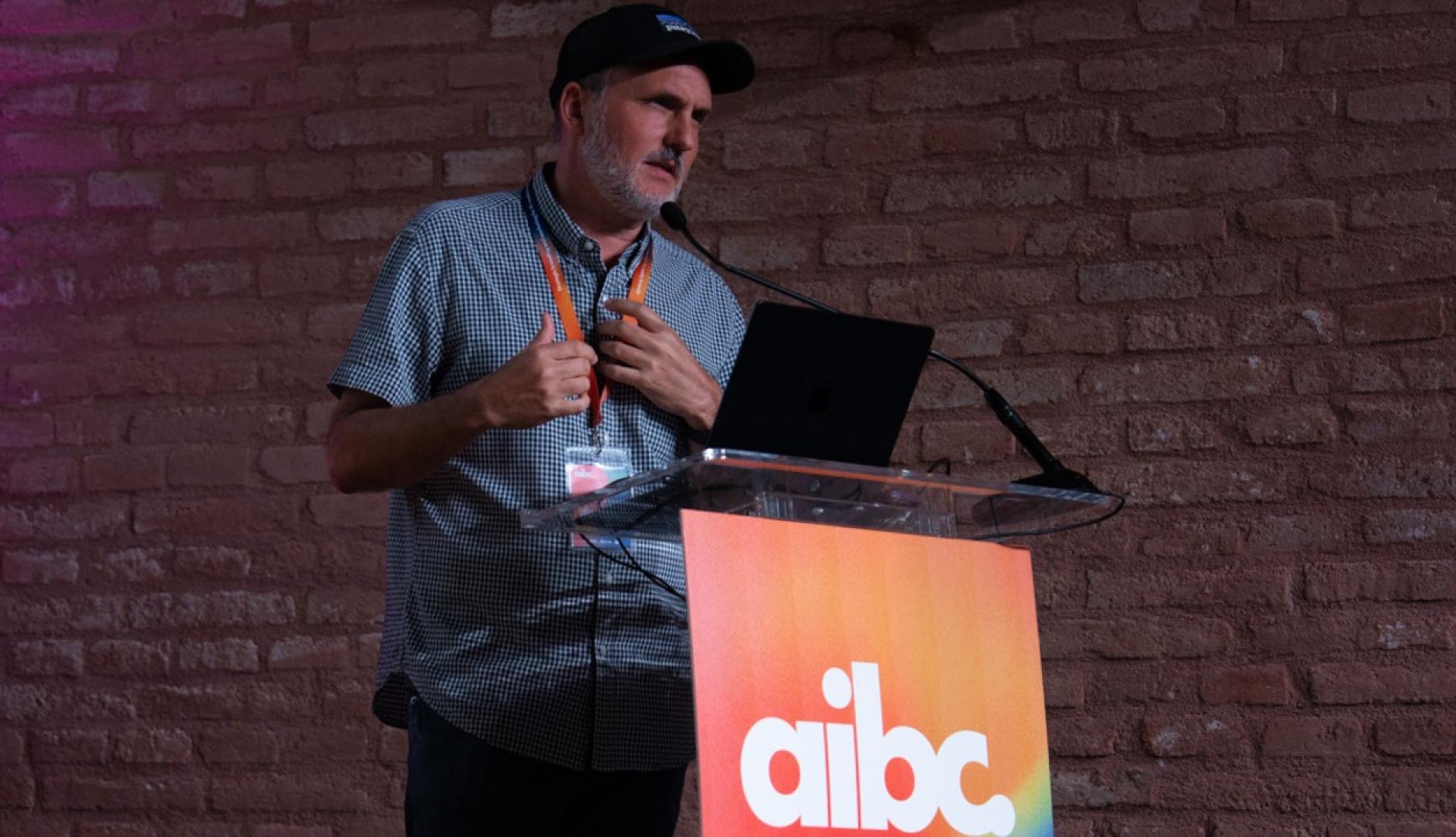
That was one of the central reflections of the presentation by Joakim Borgström, Creative Director and founder of native artificial intelligence start-ups, at the AIBC 2026 event, promoted by the Buzz team with the collaboration of Krea as creative partner and Linkvids as audiovisual production partner. The premise of the meeting was to analyze the impact of artificial intelligence on business from a practical, strategic perspective connected to creativity, brands and business growth.
“The interesting thing is to talk about the capabilities that these tools can give us”
Borgström articulated his intervention around an idea: the debate on AI should not focus so much on which tool is in fashion as on what new capabilities a person, a team or a brand can develop. “I’m not here to talk about specific tools”he noted at the beginning of his presentation. “The interesting thing is to talk about the capabilities that these tools can give us.”
The creative explained that tools like Photoshop, Word or Google helped design, write or search, but that the new generation of artificial intelligence systems introduces a substantial difference: “Now tools can think, talk, look, write, draw, prototype and build with you.” That ability, he said, changes the question for agencies and advertisers: beyond deciding which application to use, it is about assessing what type of creative, strategic or productive “superpower” can be developed from it. For Joakim Borgström these are the 5 superpowers that AI gives us: think, explore, do, connect and launch.
However, Borgström dedicated a good part of his speech to warning about the reverse of this accessibility. If AI is used without judgment, he argued, it does not necessarily improve creativity. “If we use AI poorly, we are not going to improve creativity, but we are going to make the noise worse”he stated. In his opinion, the industry has been competing for years for increasingly fragmented attention, saturated by brief stimuli, constant interruptions and algorithmic dynamics that push towards compulsive content consumption.
From there he introduced a criticism of excess production. Borgström compared certain digital formats with “junk food” and defended the need to also think about a “slow content” slower, deeper and capable of sustaining attention in a different way. In this context, he warned that the current ease of generating images, videos, simulated activations or pieces of visual entertainment can fill the Internet with apparently attractive content, but empty of message.
“Everything seems super nice, but if you scratch a little, maybe there is nothing behind what they are saying”he pointed out. And he summed up the problem with a particularly direct phrase: “Content made because it can be done, not because it deserves to exist.” For Borgström, this excess is fueling a new form of digital pollution: “AI slop is the new spam.”
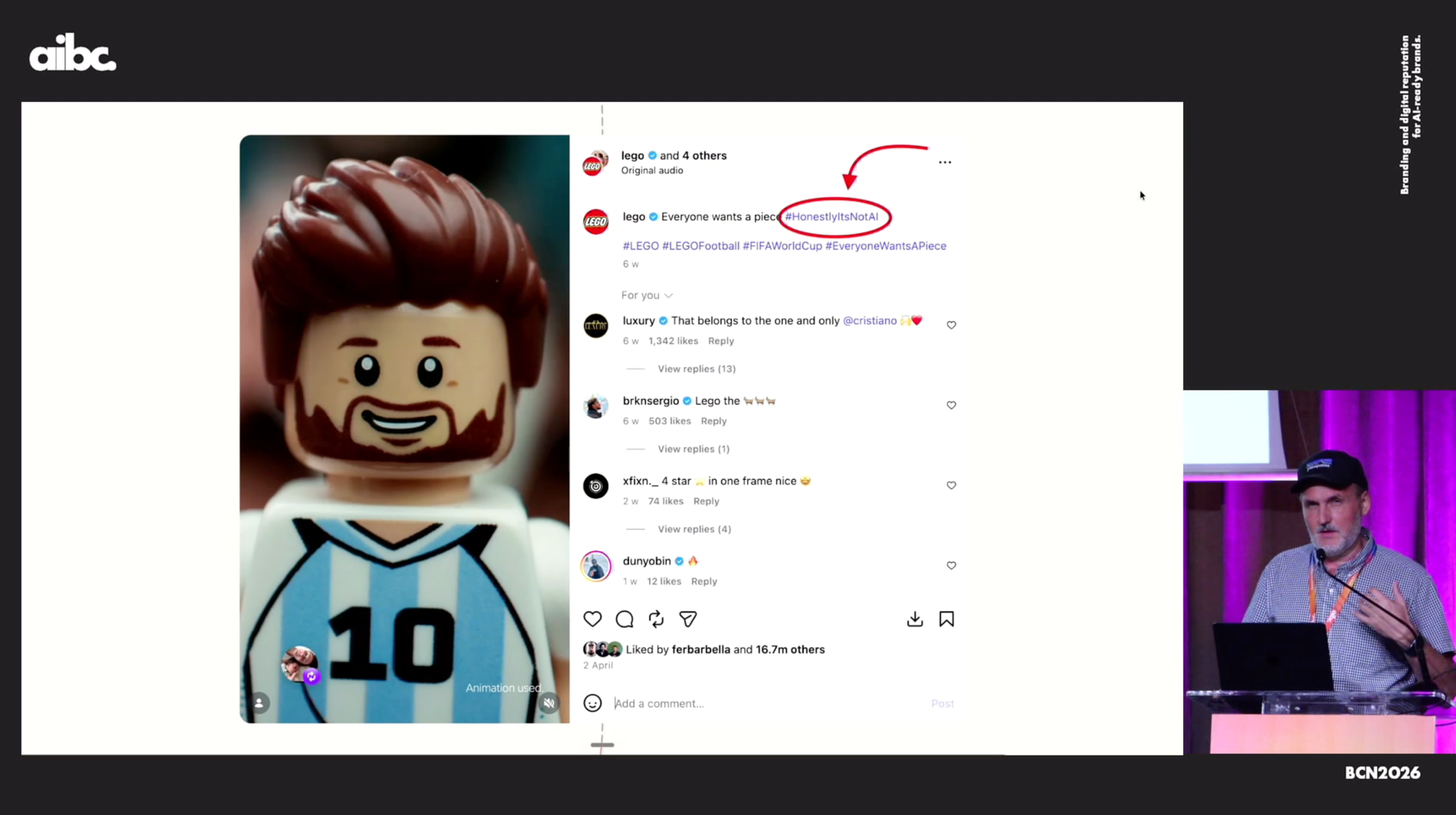
The speaker linked this reflection to an emerging trend: brands that are beginning to explicitly indicate when a campaign has not been generated with artificial intelligence, as in the case of Lego on these lines. He mentioned, among other examples, actions in which the making of acquires value as proof of authenticity, craft and human presence. In his reading, not using AI – or demonstrating when it has not been used – can begin to operate as a differential signal in an environment saturated with synthetic images.
Borgström’s central thesis, however, was not defensive. He did not pose AI as a threat to creativity; rather like an expansion of capabilities that requires more judgment, not less. “The opportunity is not to produce more for the sake of producing more”he pointed out. “The opportunity is to think better, explore better, test earlier and build things we couldn’t build before.”
There he placed one of the most relevant ideas of the presentation: access to tools has been democratized, but the criteria have not. “AI democratizes the ability to execute, but it does not automatically democratize judgment or creative taste”he stated. For Borgström, experience is not obsolete in this new context; On the contrary, it can gain value. “If you have judgment, context and memory, AI becomes much more powerful”he defended.
Direct the process with intention
In his opinion, the differential capacity of creative professionals will be increasingly linked to knowing what to ask for, what to discard, what to improve and when to stop. That is, to direct the process with intention. Technology can multiply versions, accelerate prototypes or expand visual routes, but it does not by itself replace cultural memory, intuition, sensitivity or the ability to discern whether an idea deserves to be developed.
The presentation also addressed the impact of AI on professional profiles and the traditional agency model. Borgström pointed out that for decades the advertising career has tended to progressively separate senior profiles from doing: juniors executed, seniors directed, and leaders coordinated. For him, this model responds to a time when producing was complex and necessarily required many layers of specialization. But AI is disrupting that logic. “One person today can do everything”he maintained, to explain that the boundaries between profiles will be increasingly liquid. “A strategist can prototype. A creative can program. A producer can build systems.” In this scenario, a new combination of value arises that involves curiosity, judgment and the ability to do.
With AI, many ideas no longer have to remain in an explanation, a mock-up or a static presentation
One of the most significant points of his intervention came when talking about the relationship between ideas and software. Borgström argued that, with AI, many ideas no longer have to remain in an explanation, a model or a static presentation. They can take on a functional form from very early stages. “Now we can have an idea, talk about that idea, prototype it, test it in real time and, if it works, even launch it together with the client”he explained.
This change, he stated, also modifies the relationship between agency and advertiser. Instead of presenting an idea for the customer to imagine, today’s tools allow them to see it, touch it, interact with it, and evaluate it before making a decision. “The customer can interact with the idea, they can feel what the idea is before buying or producing it”he pointed out.
For Borgström, this new logic also forces us to raise the quality of the briefing. If AI accelerates processes, it also accelerates errors when there is no clarity. “The brief becomes much more important”he pointed out. “If there is no clarity, judgment and intention, AI only accelerates confusion.” Likewise, he considered that clients will need new ways to evaluate ideas, understand what is being presented to them, and give feedback more accurately.
The risk of homogenization
The last part of the presentation took the conversation to the field of brands. Borgström warned that, if all companies work with the same tools, the same generic models and similar prompts, the risk of homogenization will be increasing. Faced with this, he defended that brands will need to develop their own intelligence, not limit themselves to accessing external models.
In his vision, that intelligence should connect each company’s story, tone, personality, products, customers, decisions and visual identity. From there, he proposed the concept of “brand brain”: a kind of brand brain capable of helping to think, decide, create, evaluate and maintain coherence.
Borgström defined it as a guardian of the brand and as a possible support tool for CMOs, not aimed at replacing their function, but rather at helping them ask better questions, make better decisions and better protect the company’s identity. That system could be used to evaluate whether an idea is aligned with the brand, whether it has been done before, what an agency is really selling, what is missing from a campaign, or what risks and opportunities exist.
The conclusion of his intervention thus pointed to a change in the nature of creative work. AI changes how production is produced and can also change what a brand can be and what capabilities it decides to build. “Creativity no longer always ends in a piece”he pointed out. “Increasingly it can end up in a new capacity for the brand.”
In that sense, Joakim Borgström’s presentation at AIBC 2026 left a warning and an opportunity. The warning: producing more does not equal creating better. The opportunity: in an environment in which execution accelerates, the true differential will be in the criteria and the ability to develop our own systems that amplify the identity of the brands, instead of diluting it in the average of the models.
Here you can see the full presentation by Joakim Borgström: