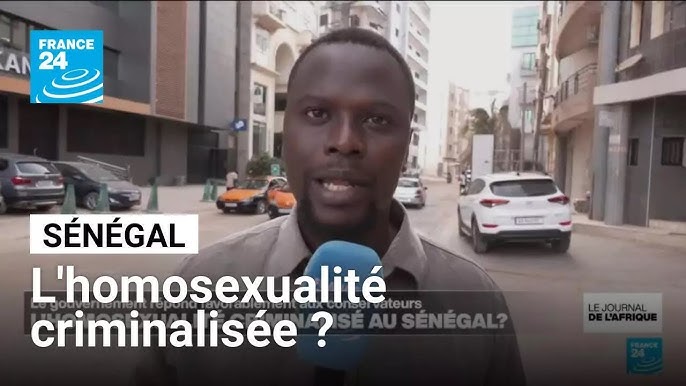
In many countries around the world, loving someone of the same sex can cost freedom or even life. While Senegal has just drastically toughened its laws against homosexuality, here is an update on its criminalization around the world.
In France, same-sex marriage has been legal since 2013. Since then, the rights of the LGBTQ+ community have continued to progress. But this reality is very different in many countries around the world. According to 2025 data from the International Association of Lesbian, Gay, Bisexual, Trans and Intersex People, homosexuality remains punishable by law in 64 countries. A figure down compared to the 113 countries recorded in 1990. But this remains alarming in view of the abuse suffered by those concerned in these places of the world.
Prison for some, death for others
Many states sentence homosexuality to heavy prison sentences. In 2024, Mali criminalized homosexuality with a penalty of up to five years in prison, and Trinidad and Tobago did the same in 2025 with a sentence of seven years in prison. In Nigeria, twelve states in the north of the country sentence male homosexuality to death under Sharia law, while in more moderate states, sentences range from ten to fourteen years in prison. In Russia, although homosexuality is not officially a crime, LGBT propaganda has been banned since 2013. In 2023, the movement was even declared an “extremist organization”.
Even more serious, in twelve countries around the world, homosexuality is punishable by death: Afghanistan, Saudi Arabia, Brunei, the United Arab Emirates, Iran, Mauritania, Nigeria in certain regions, Uganda, Pakistan, Qatar, Somalia and Yemen. In Uganda, since May 2023, “aggravated” homosexuality has become a capital crime. Situations that send shivers down your spine.
Senegal, a significant step backwards regarding homosexuality
The case of Senegal is one of those that has made the most noise recently. On March 11, 2026, Senegalese high authorities adopted a law drastically strengthening the repression of LGBT+ people. From now on, “unnatural acts” are punishable by sentences ranging from 5 to 10 years. Any promotion for the LGBT+ community is also prohibited. These laws were brought by Prime Minister Ousmane Sonko. No opposition was really notable. UN human rights chief Volker Türk called the law “deeply concerning”. He believes that it “violates” fundamental human rights.
The authorities immediately implemented these measures. They were accompanied by a wave of visible and documented arrests and repression. From February 2026, the police arrested nearly twenty men suspected of homosexuality for “unnatural acts”. Some people film these arrests and publish them on the networks. Videos, for example, showed men arrested at their homes. On the latter, we see a crowd shouting homophobic insults and mocking the decrees. Unfortunately, these seemingly impossible scenes are much more common than we imagine.