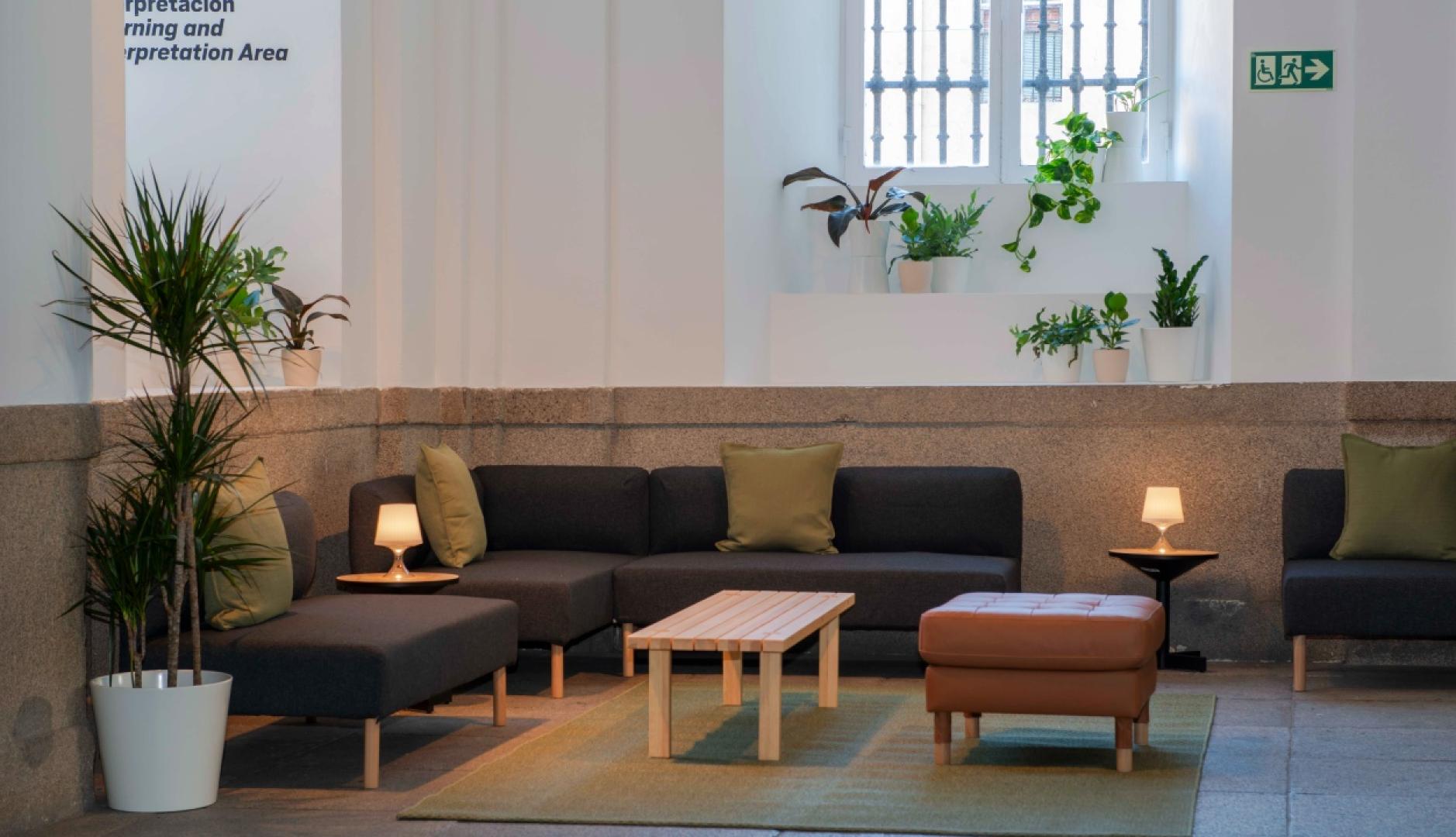
The Reina Sofía Museum and Ikea have signed a patronage agreement to renew part of the visitor experience at the museum’s main headquarters. The collaboration focuses on the design and creation of different spaces in the cloister on Floor 2 of the Sabatini Building, based on the supply and installation of furniture, complements and accessories by the Swedish company.
The project aims to enable more comfortable, versatile and welcoming areas to promote rest, meeting, reflection and the development of cultural, social and educational activities. The initiative is part of the Reina Sofía’s desire to reinforce its dimension as a welcoming place, beyond the strictly exhibition visit, and to generate spaces adapted to different audiences, including children, adults and participants in its educational programs.
The intervention seeks to improve areas that functioned as passage or waiting areas
The museum’s main headquarters, made up of the Sabatini Building and the Nouvel Building, has an approximate area of 84,000 square meters and a flow of visitors distributed among different accesses, connections and itineraries. In this context, the intervention seeks to improve areas that until now functioned mainly as passage or waiting areas, giving them a clearer function within the visitor’s route.
One of the most representative spaces of the Sabatini Building is its cloister, characterized by high vaults, stone arches and windows open to the garden, where garden areas, fountains and sculptures coexist. It is precisely on Floor 2 of this environment where the museum has redesigned areas linked to the Savia educational program, as well as the meeting point for other activities.
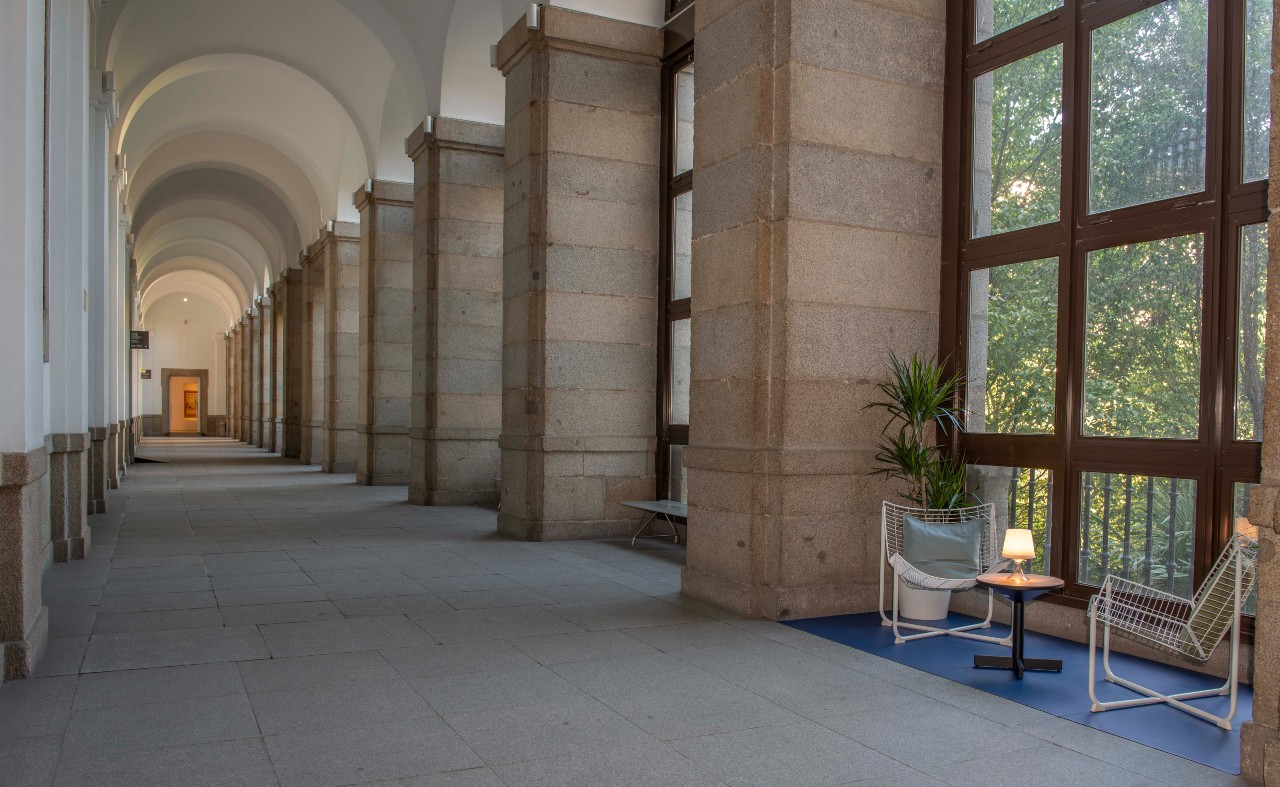
Ikea has developed the interior design project for these common areas with a proposal that seeks to convey a certain feeling of home to the museum. The approach incorporates the essence of Scandinavian design – functional, accessible and welcoming – and adapts it to the needs of a high-traffic space, through practical, durable, versatile and comfortable solutions.
The intervention aims to unify the language of the Reina Sofía Museum with the warmth associated with the home and with a design designed to facilitate permanence. The idea is that the visitor can stop, rest, talk or reflect before or after touring the collections and temporary exhibitions, without these moments being disconnected from the cultural experience.
“Even in a museum there is something that remains essential: the feeling of home”
“We have joined forces to transform some of the common areas on Floor 2 of the Sabatini Building into something more than just transit areas: places designed to be, feel and connect, get excited, reflect”said Laura Galarreta, General Director of Communication and Institutional Relations at Ikea Spain, through Linkedin. The board explained that the museum was looking for comfortable spaces to promote the cultural, social and educational development of children and adults, and that the Ikea interior design team has designed areas where people can learn, rest, reflect and meet other people. “Because even in a museum there is something that remains essential: the feeling of home”he pointed out.
A more open and welcoming museum
The project also reinforces a reading that is increasingly present in cultural management: that the visitor’s experience does not depend solely on the artistic programming and also depends on the physical, emotional and functional conditions that make the visit possible. In large-scale museums, intermediate spaces, rest areas and meeting places can be decisive in extending the time spent and making the tour more accessible.
“Integrating the essence of Scandinavian design in a high-traffic space, with durable, practical, versatile and, above all, comfortable solutions, designed for all audiences, this project reflects very well something that at Ikea we deeply believe in: that design is a way to improve the experience”Galarreta pointed out.
The intervention thus connects with Ikea’s positioning around democratic design and with the museum’s commitment to strengthening its role as an accessible and social cultural space.