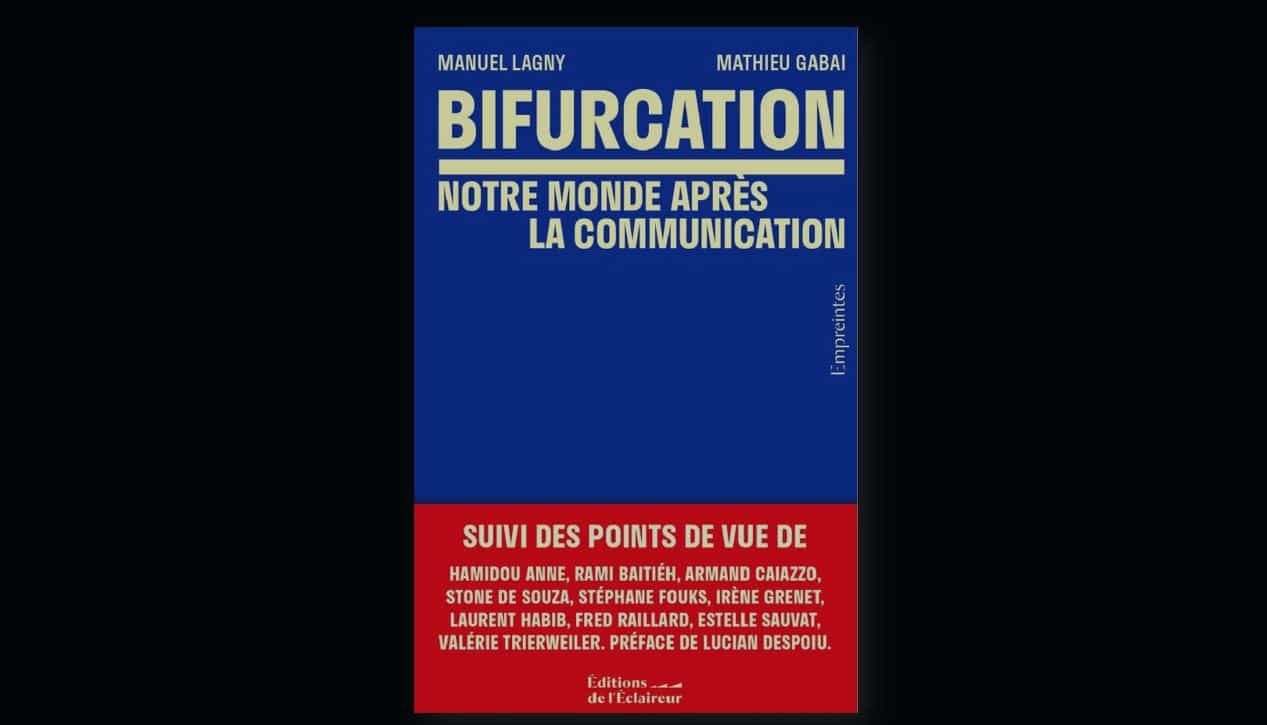
Everything is going fast. Scandals explode. Opinions are decided. The “proof” is circulating in screenshots. We read, we react, we share, then we doubt. In this climate, one question keeps coming up. Who to believe. And above all, how to keep a cool head when information is overflowing everywhere. In their book Bifurcation, Manuel Lagny and Mathieu Gabai offer a reading key to get your bearings. The book does not dictate what to think. It helps to understand how the world works today, in the age of networks, controversies and competing narratives. It offers guidelines for sorting information, maintaining a critical eye and remaining an actor rather than being subjected to it.
Take back control of what we believe
The problem today is not the lack of information. It’s excess. Everyone is talking. Everyone comments. Everyone “analyzes”. We move from one topic to another in a few minutes. We string together contents that contradict each other. We end up knowing a little about everything, without being sure of anything.
Bifurcation starts from this simple observation. When there are too many versions, the primary skill is no longer finding information. It’s knowing how to read it. To understand what is solid and what is mainly opinion. To identify what is based on facts and what is based on emotion.
The scroll produces ready-to-wear opinions
On the networks, everything happens quickly. An extract becomes truth. A video becomes a verdict. A sentence becomes a camp. The more it shocks, the more it circulates. The simpler it is, the more it works. Nuance struggles to survive in a world that rewards immediate impact.
The book recalls an essential idea. What is viral is not necessarily true. What is popular is not necessarily reliable. And what makes you react doesn’t always make you understand. Information can be true, but taken out of context. It may be false, but told with confidence. It can be uncertain, but shared as a certainty.
In this atmosphere, the challenge is not only to avoid fake news. The challenge is not to get carried away by the general rhythm. Because speed can create errors. And sometimes, it creates manipulations.
Confidence no longer comes from words
Before, we believed that a good speech was enough. Today, words alone no longer hold. Trust is earned differently, through consistency, through actions, through proof. A promise without results is worthless. A perfect image is no longer enough. A speech does not convince if reality says the opposite.
Bifurcation explains this shift. We no longer judge only what is said. We observe what is done. We no longer just follow messages. We follow signals. It’s the details that speak. The decisions. Behaviors. The concrete effects.
Power in this world is no longer just in slogans. It is also in the systems that organize what we see and what we remember. Platforms don’t show the world as it is. They sort it. They amplify certain subjects. They make others invisible. They influence what becomes important.
A method to no longer suffer
What the book provides is a compass. The authors summarize their approach in three simple verbs. Inform, map, project. Informing means returning to the facts, seeking evidence, stabilizing what is verifiable. Mapping means understanding who says what, why, and how the stories conflict. To plan is to take a step back, to see where it leads, to anticipate rather than suffer.
It is not a complicated method. It’s a posture. A way to regain control over what we believe. A way to stay calm in a world that pushes you to react.
Solid optimism
When everything becomes blurry, we can slip into cynicism. Telling yourself that everything is manipulation, that everything is equal, that nothing is reliable anymore. Bifurcation offers something else. Lucid optimism.
Not the one who says everything will be fine. The one who says it is possible to understand, sort and decide. That it is possible to remain critical without becoming suspicious of everything. That it is possible to be connected without being swallowed up. That it is possible to learn to read the world, even when it moves too fast.
In an age where we scroll faster than we think, this book points out the obvious. Understanding is already acting. And knowing how to read reality today means regaining control.