Honor has taken advantage of the MWC in Barcelona in 2026 to transfer its ambition in artificial intelligence from software to physical hardware. Under the umbrella of its vision of “Augmented Human Intelligence” (AHI), the company has articulated its roadmap around three pillars: the Alpha Phone, the Alpha Store and the Alpha Lab, and has presented two developments that condense this approach, its first humanoid robot and the so-called “Robot Phone”.
James Li, CEO of Honor, has placed the announcement within that strategic architecture: “With the human as our lighthouse, we navigate the growth of AI by integrating IQ and EQ. We are exploring the new device paradigm with Alpha Phone; the new ecosystem paradigm with Alpha Store; and the new paradigm of a silicon-carbon civilization with Alpha Lab.”
Honor’s first humanoid robot
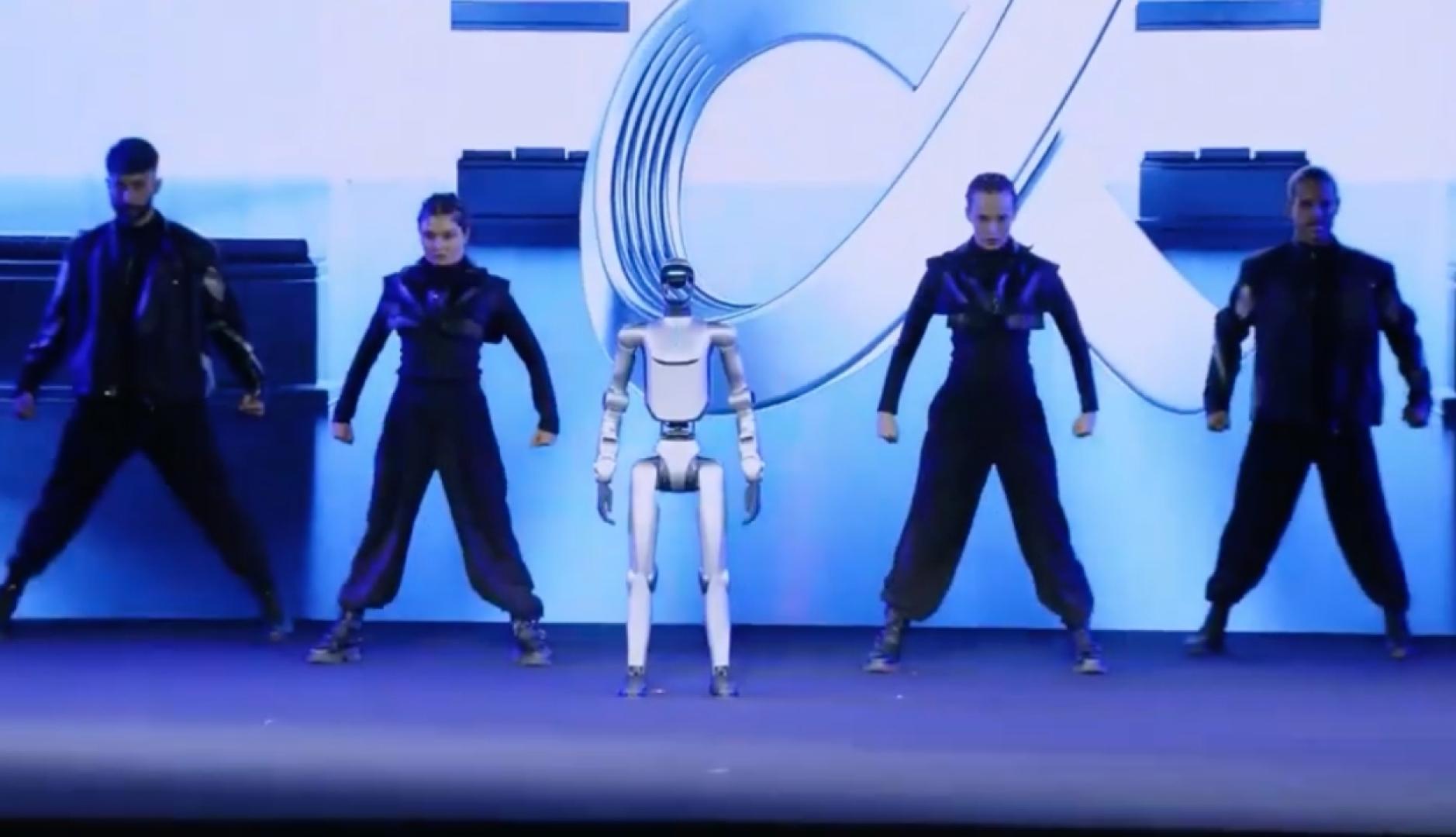
Honor has shown its first humanoid robot on stage, which interacted and performed a dance demonstration during the event. The company has not detailed technical specifications or commercial calendar, but it has defined three priority scenarios for its implementation: purchasing assistance, supervision in professional environments and human support.
Its ecosystem will allow future robots to recognize people, understand their needs and offer personalized assistance
The strategy differs from the classic approach of specialized robotics manufacturers. And Honor maintains that its competitive advantage lies in user knowledge, accumulated through smartphones and connected devices. This ecosystem continuity, according to the company, will allow future robots to recognize people, understand their needs and offer personalized physical assistance from the first interaction.
To present the humanoid robot, Honor designed a choreography with human dancers on stage, with synchronized and precise movements that evidenced the android’s coordination and response capacity. The staging, conceived as a technical and visual demonstration, culminated in a clean execution after several rehearsals. The brand has shared a video behind the scenes in which it shows the initial failures and the adjustments that the team had to resolve until reaching the final result.
Robot Phone: intelligence embodied in the smartphone
More than a new model, the Robot Phone functions as a conceptual prototype of what Honor calls “a new kind of smartphone.” The proposal combines multimodal AI, capable of identifying sound, movement and environment, with a mechanical system integrated into the device itself.
The central element is a 200 MP camera mounted on an articulated arm with four degrees of freedom (4DoF) architecture and three-axis stabilization. Honor has developed its own micromotor, designed to reduce size without compromising strength, which has made it possible to integrate an ultra-compact gimbal system within the phone’s chassis.
The technical result enables:
- Intelligent real-time subject tracking
- Advanced stabilization in motion with Super Steady Video mode
- AI-assisted 90° and 180° rotation movements (AI SpinShot)
- Video calls with auto tracking at all angles
- Gesture responses through tilts or movements synchronized with music
Honor frames this evolution as a step towards calling embodied AIthat is, artificial intelligence integrated into form, movement and spatial perception.
From invisible AI to physical AI
Honor places artificial intelligence as a structural element of industrial design. His vision proposes a convergence between hardware, software and physical perception, in which the device processes data and also occupies space, moves and responds contextually.
With the Robot Phone as a prototype and the humanoid robot as a declaration of intent, the company moves its discourse from algorithmic optimization to the materialization of AI in physical objects.
Although the focus of the announcement was on robotics and embodied AI, Honor has also introduced the Magic V6, its new flagship foldable phone. With a thickness of 8.75 mm when closed, the device reinforces the commitment to advanced hardware optimized for AI-assisted productivity. The company completed the update of its ecosystem with the MagicPad 4 and the MagicBook Pro 14, consolidating its strategy of transversal integration of intelligence in mobile phones, tablets and laptops.