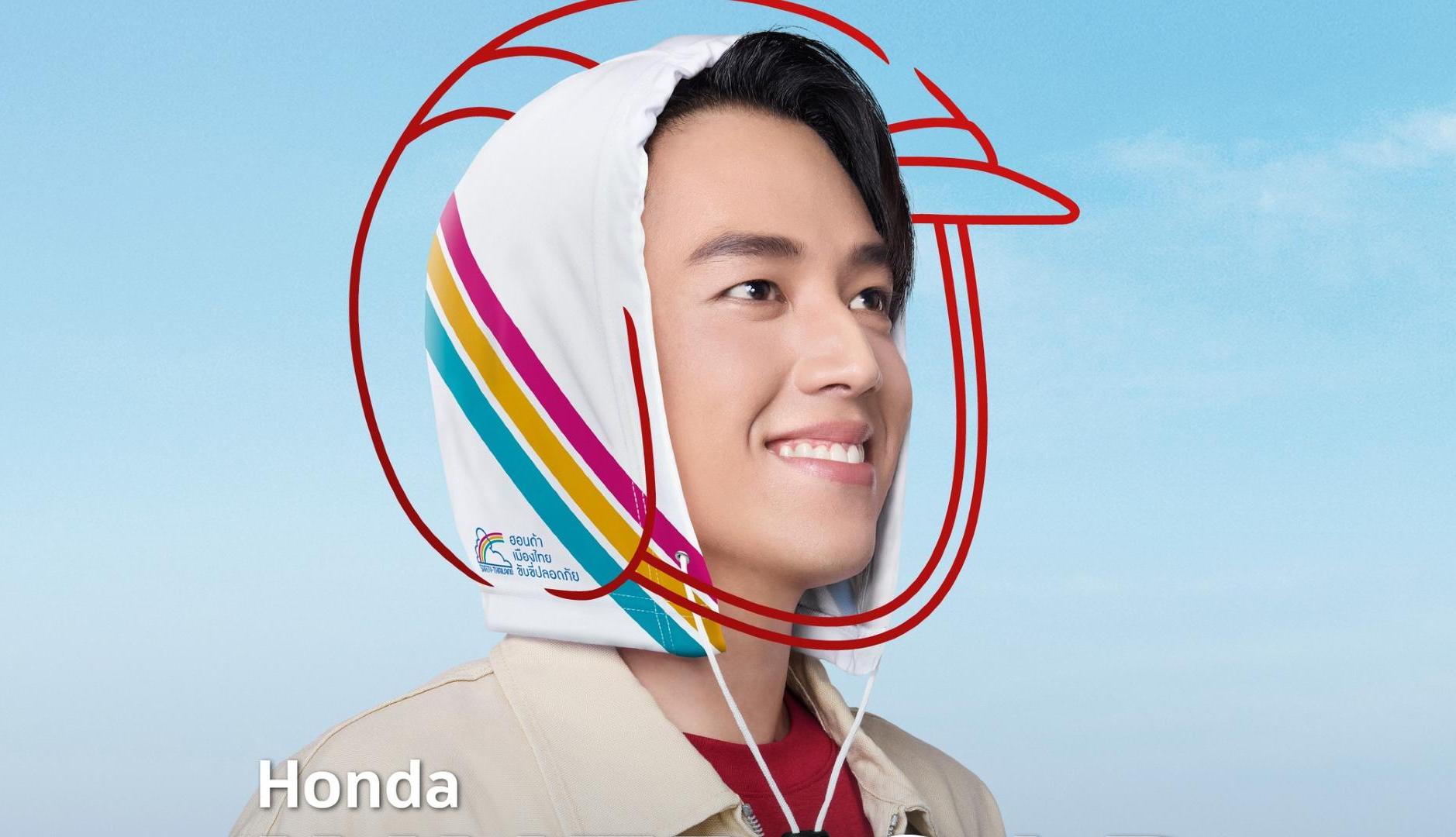
Using a helmet that dozens of people have used before can lead many people to avoid basic safety principles. And in a city like Bangkok, where motorcycle taxis transport thousands of users every day, this evasion poses a high risk of mortality. But the Honda automobile company proposes a hygienic protector to promote road safety among tourists and residents.
Over the last few months, it has developed the “Inner Cap” campaign, together with the Dentsu Thailand agency, with which it has promoted the use of a disposable liner to place under the helmet and, in this way, encourage passengers to wear the helmet when using the motorcycle service.
With this, the company, through its safety platform, Honda Safety Thailand, hopes to reduce reluctance to use helmets. Hygiene is the main barrier, according to the brand’s research, when it comes to wearing the accessory, since it passes from hand to hand among dozens of strangers throughout the day. “Inner Cap” directly addresses this concern.
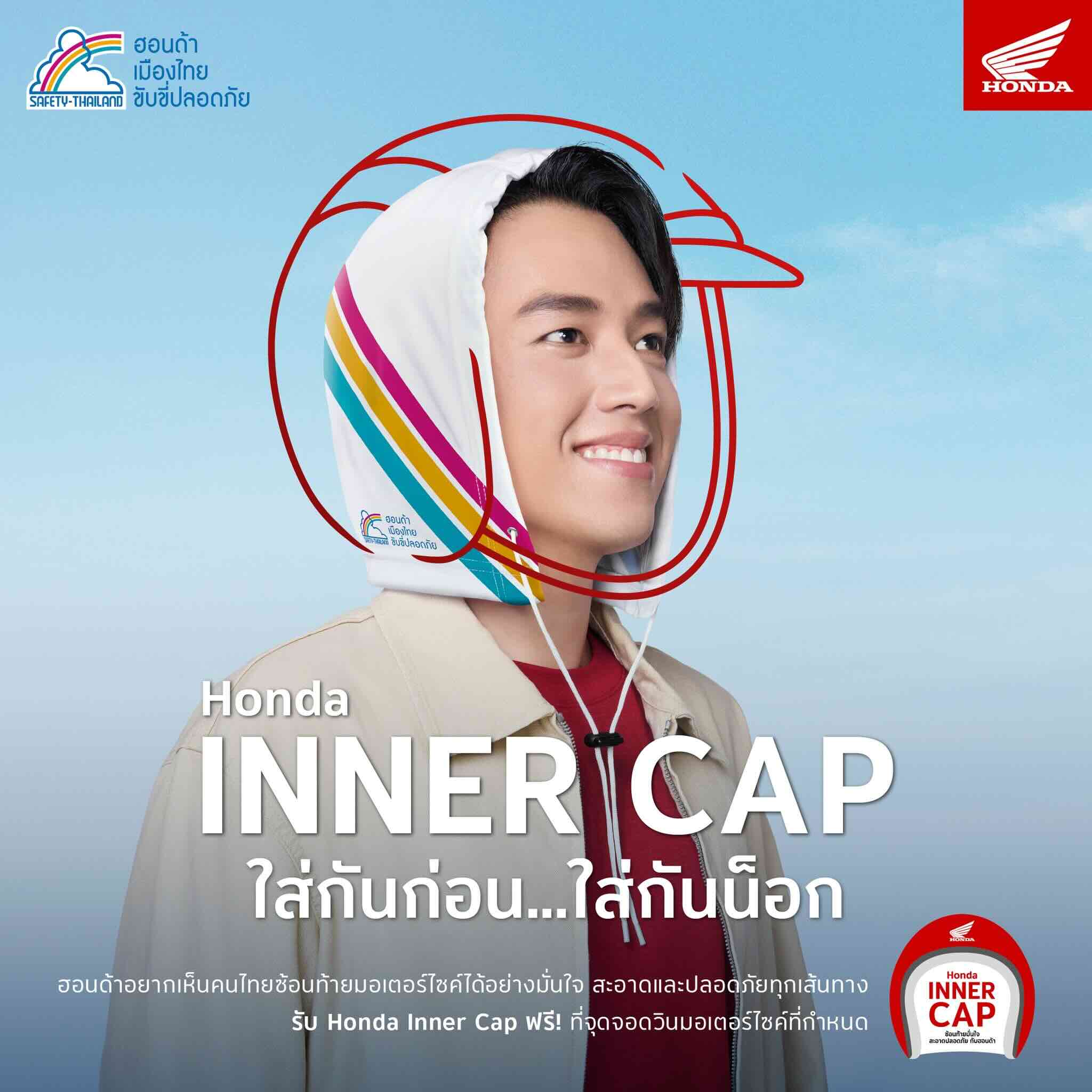
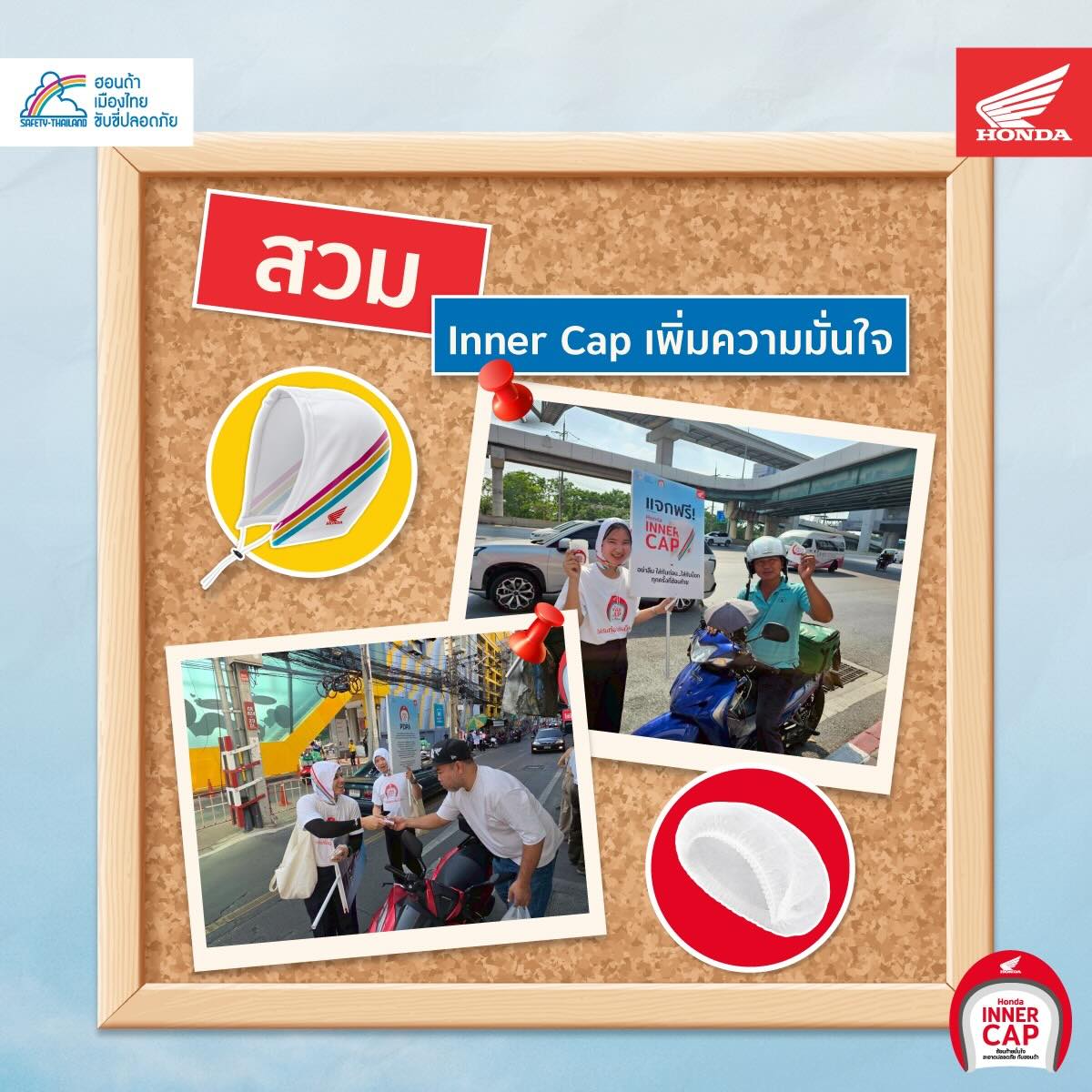
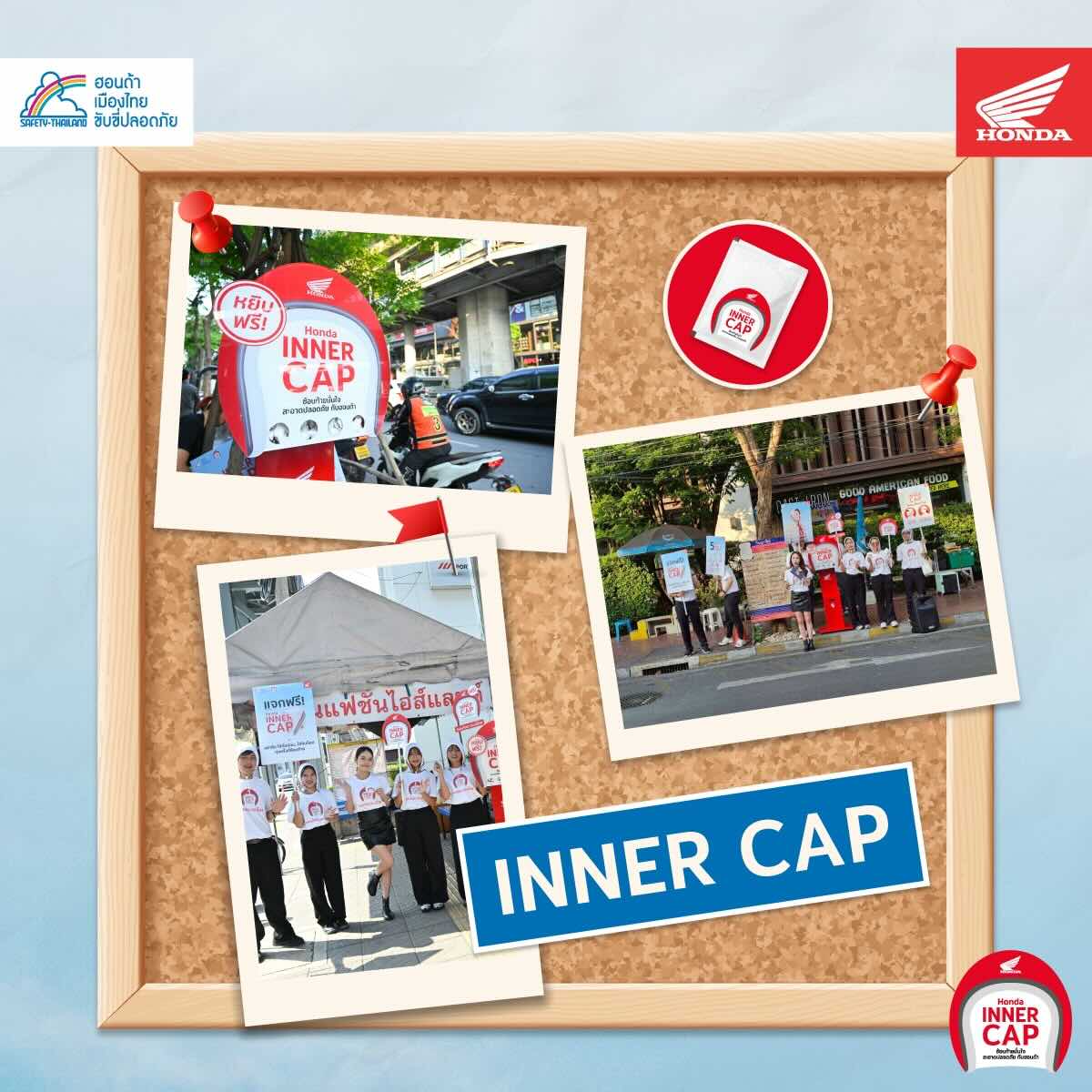
Thus, since last February and throughout May, Honda has distributed the protector for free at motorcycle taxi stops in Bangkok, the point where passengers usually decide whether to wear the helmet or not. With this strategic placement, the campaign has reached passengers at the moment of decision, making safety the most convenient option and linking it to the brand.
The action has been made known through Facebook, with messages and creatives that reinforce the idea that the passenger is as important for road safety as the driver. “Honda Inner Cap. Put it on the inside… put it on the outside,” is the main claim of the initiative, which has been accompanied by other phrases that have influenced the company’s commitment, such as “Honda wants Thais to drive motorcycles with confidence, cleanly and safely on all their journeys.”
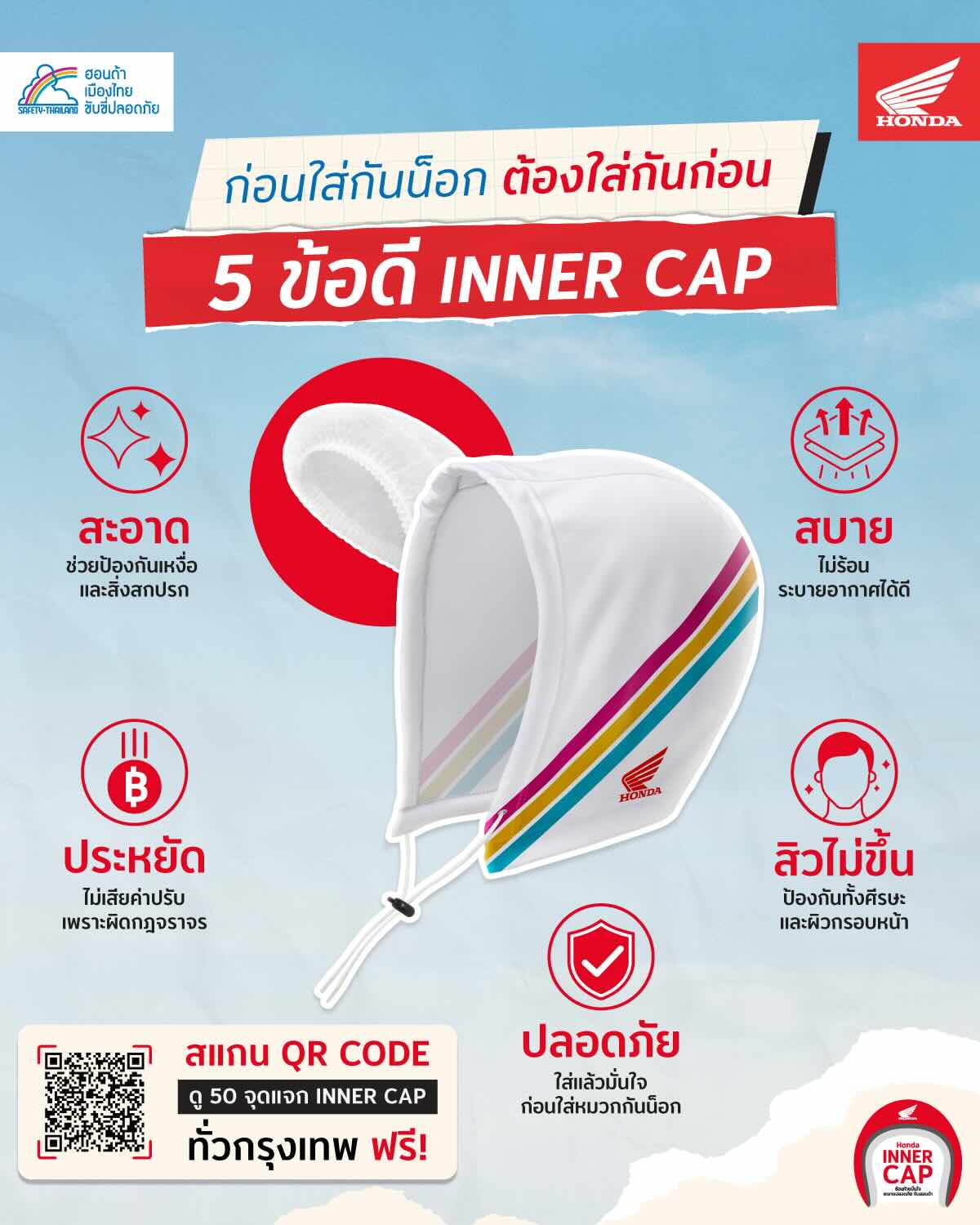
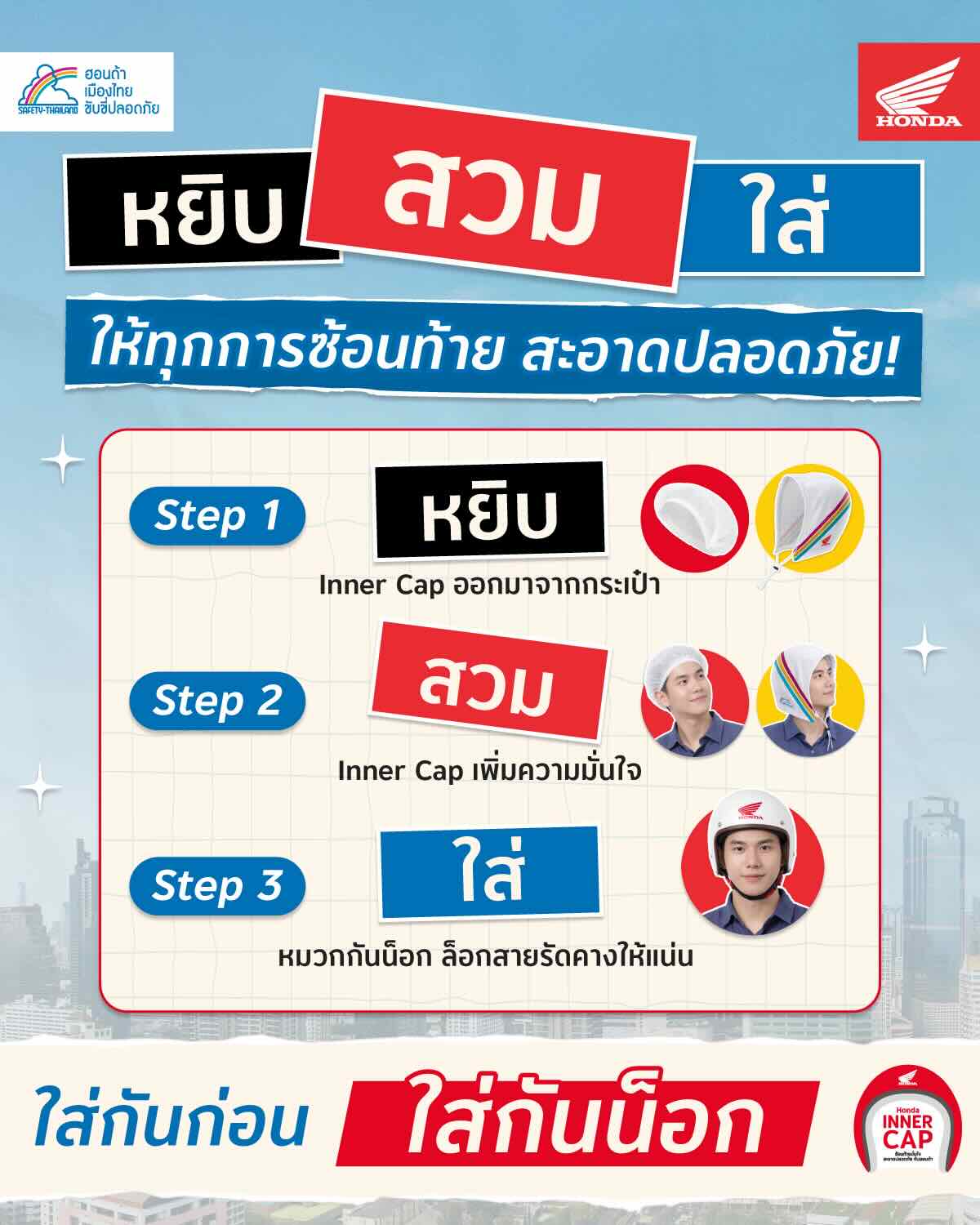
In addition, he has shared instructions on how to use the protector, or the advantages it offers. Among them, he highlighted that it helps protect against sweat and dirt, that it is comfortable and does not cause heat, that it protects the skin and hair, and that it facilitates savings since it helps avoid fines for breaking traffic rules.
It has also shared a map and a list with all the points where users have been able to get the Inner Cap for free.

On the other hand, it has also involved motorcycle taxi drivers through Honda Inner Cap stickers placed on the back of their helmets. In this way, it has boosted the reach of the campaign organically, and aroused the curiosity of passengers even before the initiative’s stands arrived.
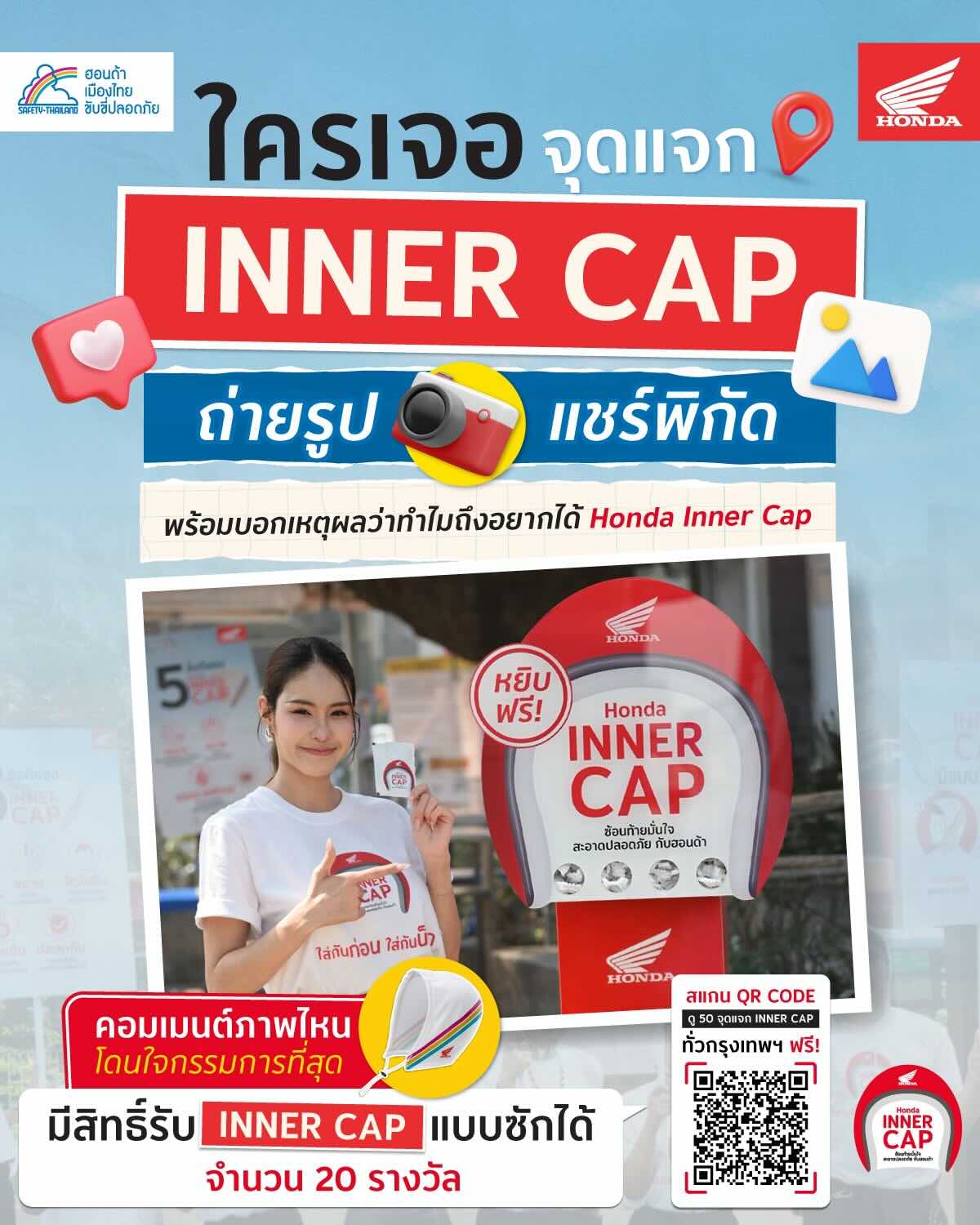
Honda has also held giveaways for washable protectors through Facebook. To participate, those interested had to take a photo at one of the Inner Cap stands, indicate its location and comment on the company’s publication the reasons why they want the protector.
“Road safety is only possible when wearing a helmet, and we have learned that people do not make unsafe decisions out of carelessness, but because the safe option hits an obstacle.”said Suphot Phonphongkhachon, General Manager of Road Safety Promotion Function at Honda Thailand. “Inner Cap represents the result of considering road safety from the perspective of an individual human decision, made in thirty seconds, based on the everyday reality of how people get around Bangkok”.
For its part, the agency assures that the initiative has sought to get closer to users. “For this campaign, we sought to understand each person along the way, sitting with passengers, at stops, in traffic, and uncovering the completely rational objection to using a shared helmet, an objection that no one had taken seriously enough to do anything about.”explained Subun Khow, Creative Director at Dentsu Thailand.
This is the second time that Honda focuses on passenger protection, standing out among traditional road safety campaigns that focus on the driver. Last year the company held “Protect The Power Of Dreams,” which it held on Children’s Day in Thailand to remember the importance of protecting a child’s future from the back seat.