Glovo has informed the unions of its intention to apply an Employment Regulation File (ERE) that could affect up to 750 delivery workers in around 60 Spanish cities. The company assures that the measure is part of a reorganization aimed at guaranteeing the viability of the service and avoiding closures in certain areas. As stated in a statement, the platform will continue to operate normally in around 800 locations, although it has already reduced its presence in more than fifty cities.
The restructuring comes less than a year after the company adopted the labor model derived from the Rider Act, which forced delivery platforms to hire delivery drivers who previously operated as freelancers.
In July 2025, the company announced that it had more than 14,000 delivery drivers hired directly, within an ecosystem that, according to union estimates, could reach 30,000 delivery drivers between direct workers and personnel hired through intermediary companies.
In parallel to the change in operating model, user criticism proliferates on the internet
But in parallel with the change in operating model, in recent months, user criticism related to the quality of the service has proliferated on the Internet. Among the most frequently mentioned problems are long delays, orders that never arrive, or delivery people who do not pick up orders at stores.
Some recent reviews reflect this discomfort: “If I could give them less than 100 stars, I would. It’s been four times since I placed an order and they canceled it. The problem is that they charge me and who do you complain about. Terrible service”points out a user in a review published this March. “It is not the first time we have ordered and the delivery person does not show up or appears almost two hours later when the app said 35 minutes”comments another client in a review published in January. “More than an hour waiting for my order and in the end they called me saying that the delivery man’s shift had ended”another user claims.

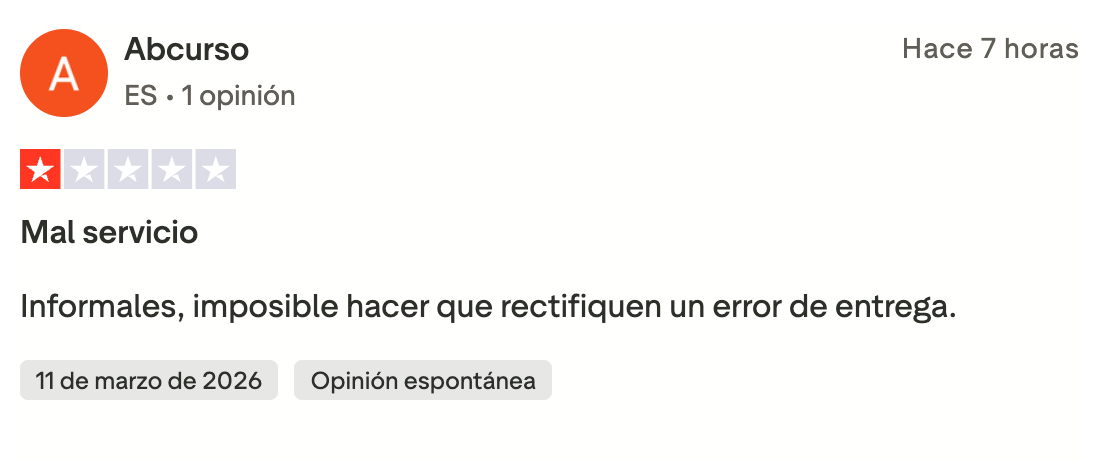

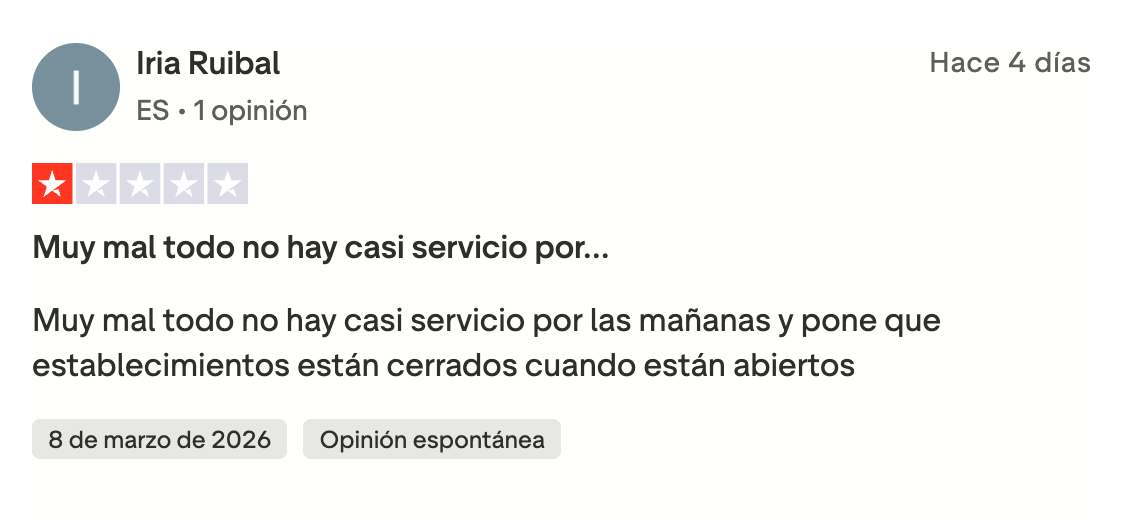
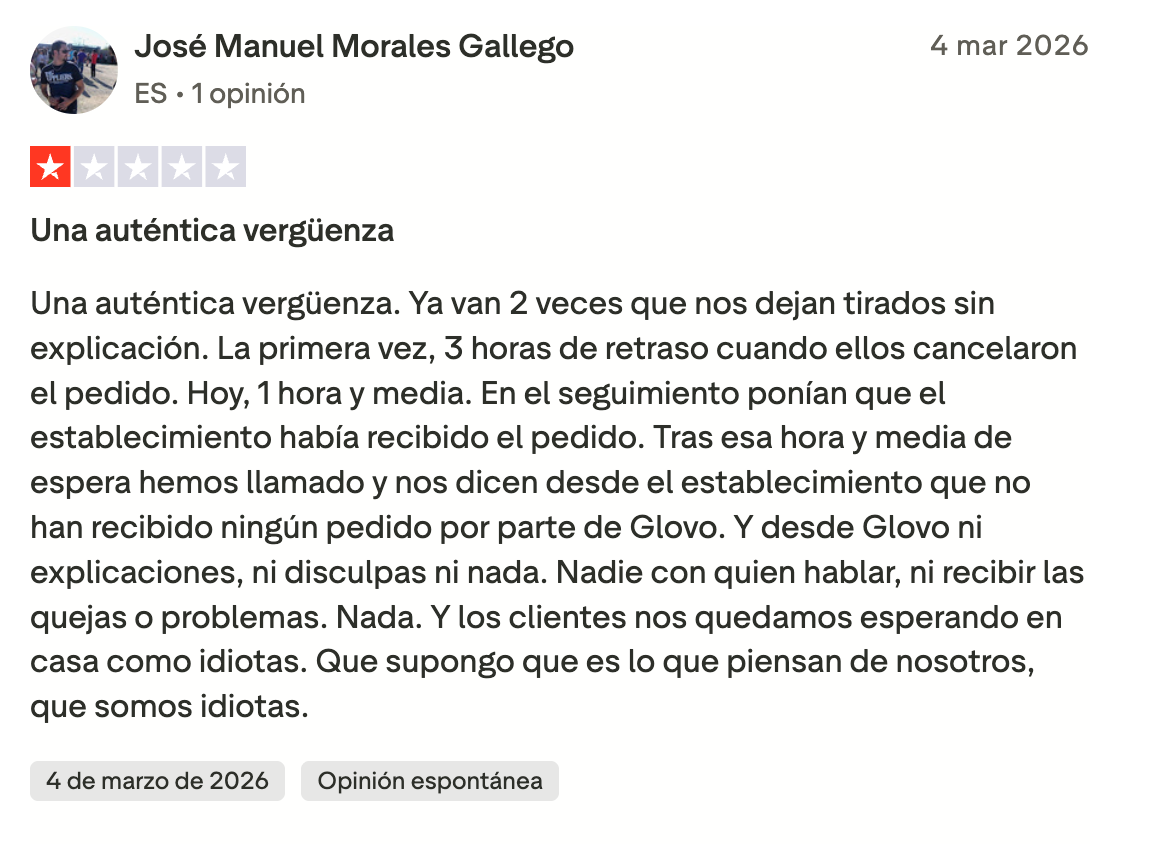
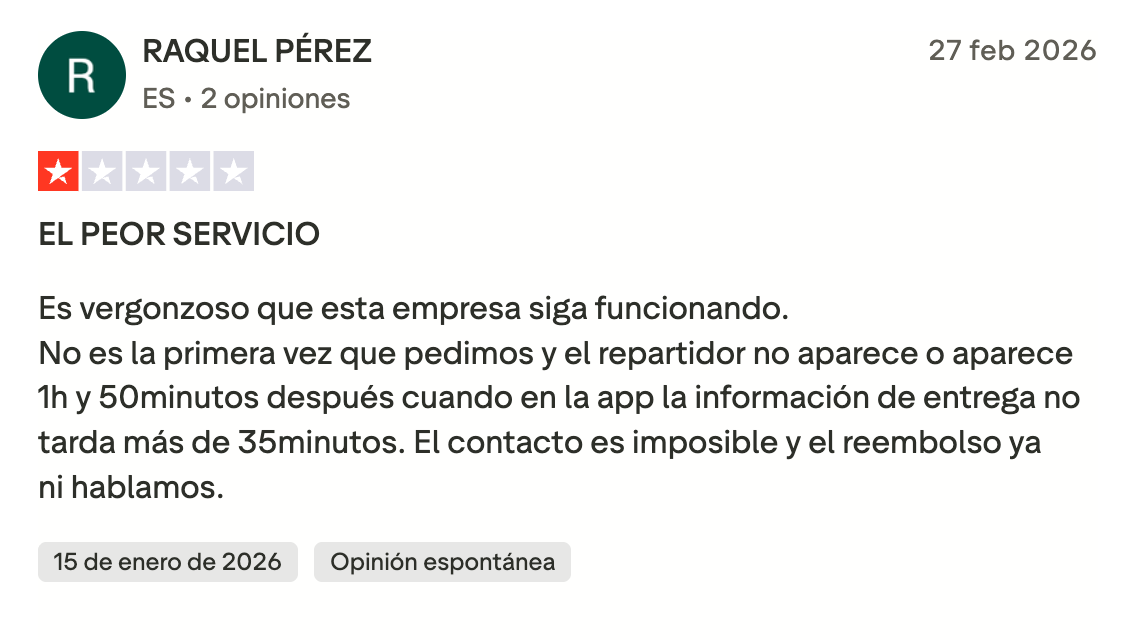

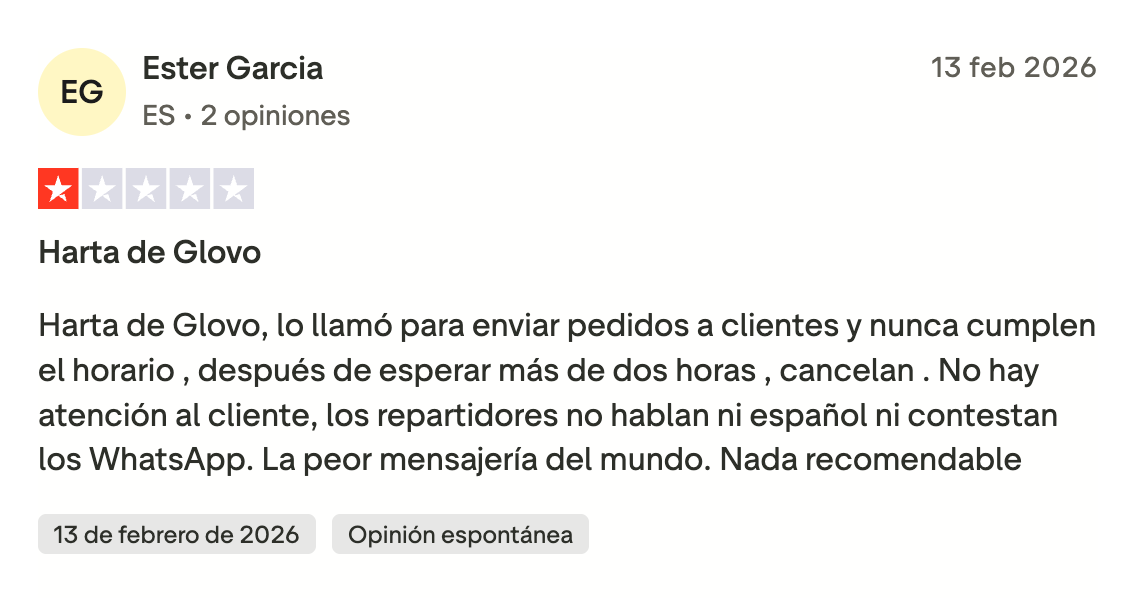
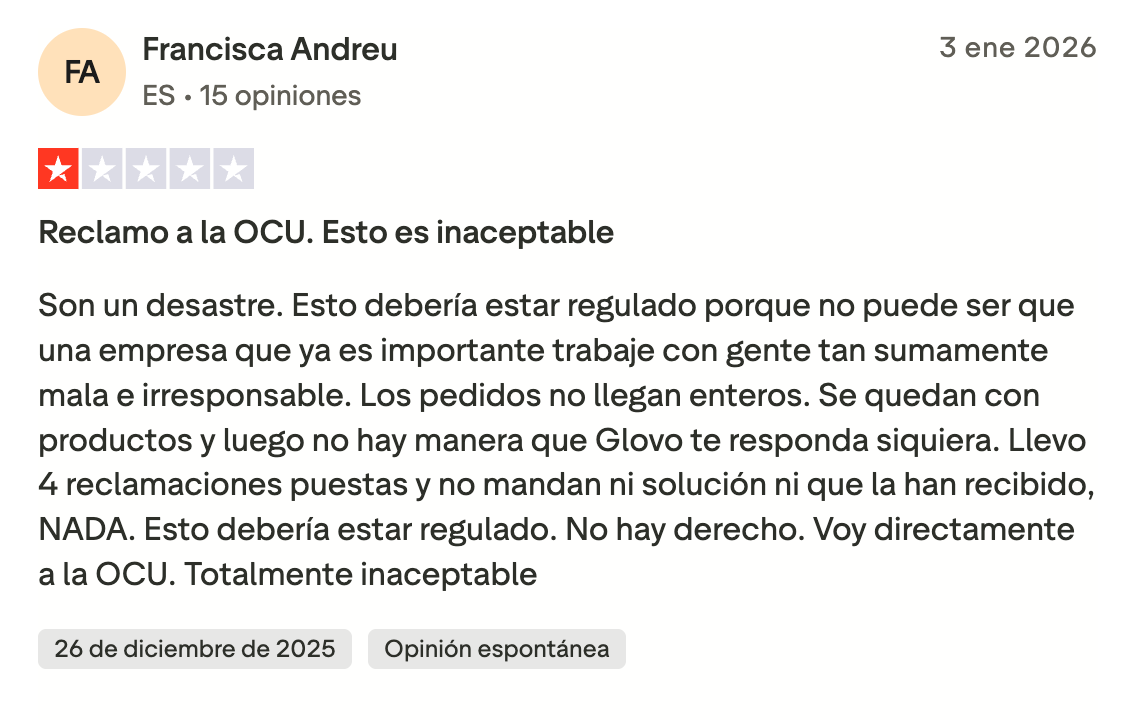
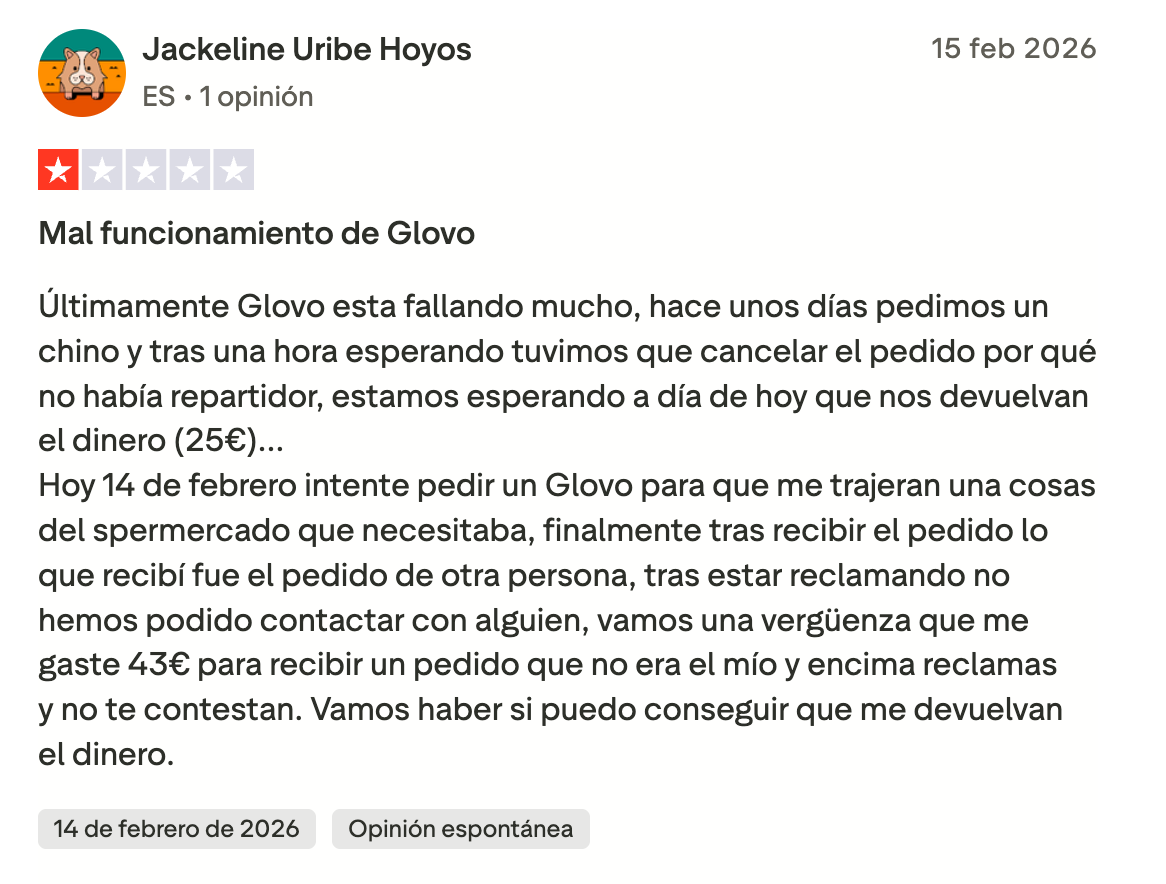
These types of comments are also repeated on social networks, where some users report difficulties in contacting customer service or claiming refunds when the order is not completed.
Some criticisms even connect the current problems of the service with the change in the labor model introduced after the Rider Law. Some users maintain that the experience has worsened since delivery workers stopped operating as freelancers. “In the time of self-employment people lived like a motherfucker,” A user recently commented on X when referring to the current operation of the platform.
In this context, the company itself has begun to collect information about the experience of its users. In recent weeks, Glovo has sent customers in Spain a satisfaction survey in which they asked about different aspects of the service, such as delivery times, incidents with orders or general evaluation of the experience with the application. Sending this query points to an attempt by the company to evaluate the operation of the service and detect possible operational problems in its delivery network.
The ERE announcement coincides with the launch of a new brand campaign worked with Gut Madrid
The announcement of the ERE also comes after several months of tension with the unions.
Organizations such as CCOO and CGT had previously reported dismissals of delivery workers in different cities under justifications such as delays or absences, which led some centers to talk about a possible progressive staff adjustment.
CGT has assured that, in recent weeks, there have been hundreds of additional layoffs, especially in Barcelona and other cities.
A new brand campaign for Glovo
The announcement of the ERE also coincides with the launch of a new communication campaign for the brand. This week, the agency Gut Madrid presented “Para lo que quenee”, its first campaign for Glovo, with which the company seeks to strengthen its positioning in an increasingly competitive category.
The campaign revolves around the app’s search bar, which asks the question “What do you need?” and acts as a common thread for different everyday situations in which the platform can solve user needs: from ordering food to watching a movie to buying supermarket products or small household items.
“We worked on a creative idea capable of highlighting Glovo’s versatility from a close and recognizable narrative”explains Ramiro Rodríguez Gamallo, Chief Creative Officer at Gut Madrid. For his part, Marwan El Montaser, Director of Communication at Glovo, points out that the campaign seeks to show how the platform can accompany users. “at any time, big or small.”
The campaign will be broadcast in more than 14 markets, with a presence on television and digital.
The case of Glovo reflects the tensions that the home delivery sector is experiencing in Europe, where platforms have had to adapt their operating models to new labor regulations while maintaining expectations of speed and availability of the service. In this context, the company now faces the challenge of reorganizing its delivery network while trying to strengthen its value proposition to users and restaurants.