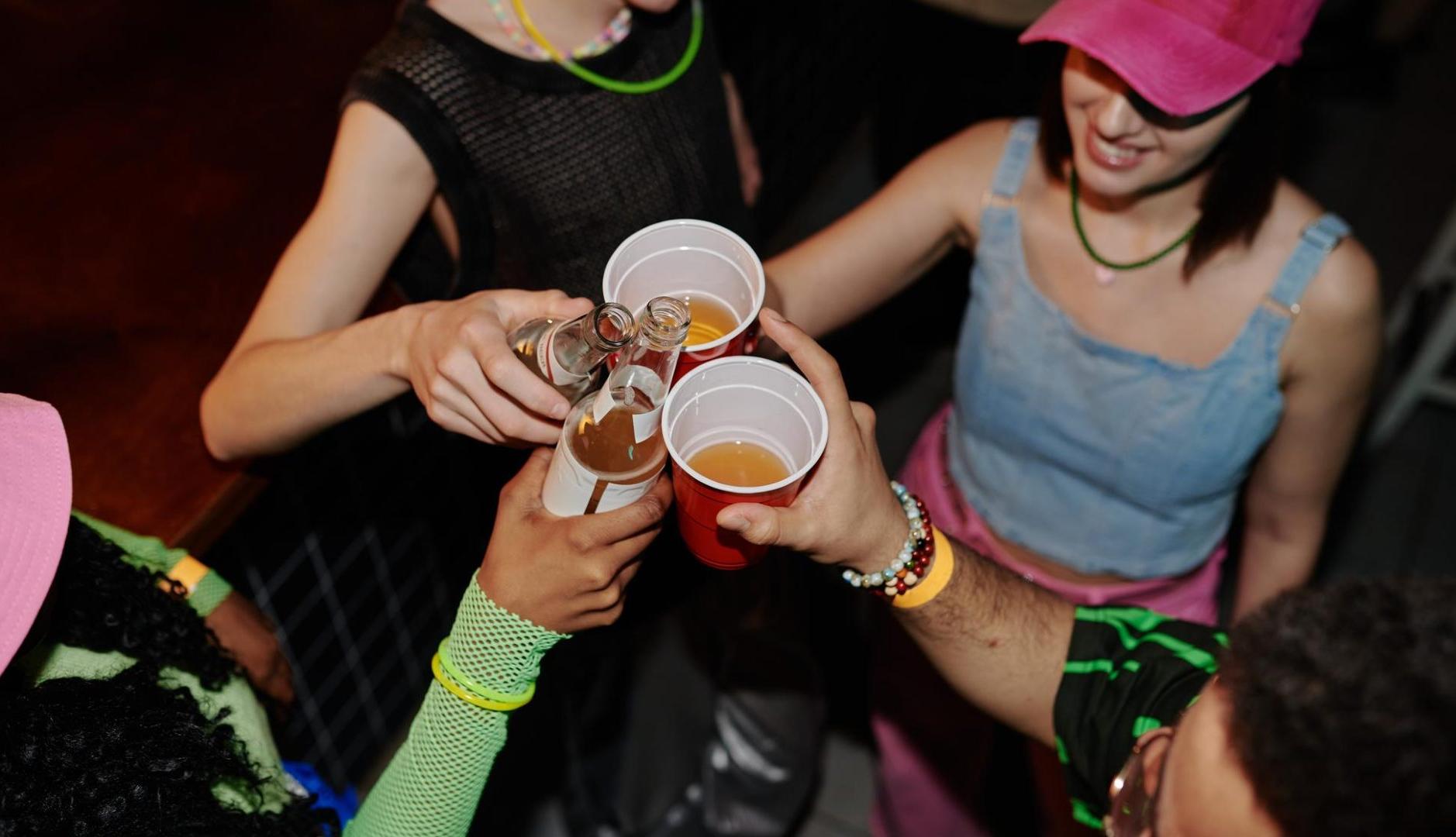
There is a general idea circulating in the sector that Generation Z consumes less alcohol than their predecessors. The change in trend is attributed, among other things, to a growing interest in healthy habits, the increase in the cost of nightlife or the establishment of habits derived from the pandemic period. However, beyond reductionist headlines, the data indicate that alcohol consumption among young people continues.
This is according to the biannual analysis by IWSR, the research firm in the beverage sector, which has considered a sample of 32,000 individuals of legal drinking age in 15 different markets, including Spain, Japan, the United States, South Africa, Mexico and Canada. Contrary to widespread belief, research indicates that young people have increased their alcohol consumption.
Generation Z and alcohol consumption
Specifically, the findings indicate that Generation Z currently represents 17% of the total drinking population and the rate of alcohol consumption among young people of legal drinking age stands at 74%. As more young people reach the legal drinking age, this generation’s alcohol participation rate is expected to reach 75%.
The consumption rate of Generation Z has gone from 66% to 74% in three years
The figure is significantly higher than the 66% recorded three years ago, and is close to the alcohol consumption rate of the total adult population, which is 76%. This demonstrates a late incorporation into alcohol consumption derived, in part, from the impact of the pandemic during the age at which people usually start drinking.
In contrast, alcohol consumption among Baby Boomers is gradually decreasing. Its rate is the lowest of all generations, and is at 71%, which is two percentage points less compared to three years ago. For their part, Millennials lead alcohol consumption, with the highest rate, now at 81%. Generation X follows with an average of 77%.
However, slight variations are observed depending on the market. In the United States the general rate of alcohol consumption is 70%, a figure that rises to 71% among Generation Z. However, in the United Kingdom it is 82% (76% for young people). Meanwhile, in India the rate is 77%, a substantial increase from 67% three years ago.
The data aligns, for example, with the Bacardi Cocktail Trends Report for 2026, which noted that 73% of young people between 18 and 29 years old drank alcohol in the last month. However, he pointed out that they lean toward lower-strength options or consumption earlier in the day and at more planned and conscious times.
The influence of Generation Z on the beverage industry
This is also reflected in the IWSR analysis which, beyond participation in consumption, points out that the influence of Generation Z is transforming the beverage industry, leading new habits that are far from their predecessors. Among other things, data indicates that 84% of Generation Z young people report having consumed cocktails in the last six months; and 49% claim to follow government health recommendations on alcohol consumption. And 18% report having consumed alcohol with five or more people the last time they drank.
The analysis also indicates that moderation has become a structural change, rather than something cyclical, in a context in which healthier lifestyle choices and concerns for well-being become more important. And the conscious and active decision to moderate alcohol consumption cuts across all generations and all markets.
IWSR reports significant decreases in the frequency of consumption and in the amount ingested on each occasion: it has gone from the 4.4 drinks per occasion recorded in 2024 and 2025, to the current 3.9 drinks.
“The number of people who drink remains constant, but the frequency and amount of alcohol we consume per occasion are decreasing” comments Marten Lodewijks, President and CEO of IWSR, in a statement. “This is due to continued economic uncertainty, but there is increasing evidence that where incomes are rising, alcohol consumption is not growing at the same rate.”.
The findings are in line with those shared by the research firm NIQ in early 2026 in relation to alcohol consumption in the United States. It noted that beer, wine and non-alcoholic spirits in 2025 generated $925 million in off-premise sales, 21.9% more than the previous year. These types of products already represent 0.8% of total alcohol sales.
Non-alcoholic products are consolidated as a complement, not competition, of traditional drinks
It also echoed the trend towards moderation and the consolidation of non-alcoholic products in the market: 47% of establishment customers combine alcoholic and non-alcoholic drinks on the same consumption occasion; and 93% of those who buy non-alcoholic beverages also purchase alcohol, which positions non-alcoholic beverages as a complement, not a competition.
Specifically, young people have a preference for ready-to-drink beverages and intense flavors. As for beer, they prioritize unique flavor and high-quality ingredients,
Companies in the industry have responded to this trend over recent years with a greater variety of beverages with different alcohol levels and ready-to-drink cocktails, thus adapting to a wider range of occasions. Proof of this is the move made in 2021 by Pernod Ricard to promote the creation of the low-alcohol category and the launch of two new references, Beefeater Light and Ballantine’s Light; or the union of Absolut and Sprite or Coca-Cola and Jack Daniel’s to offer their combinations.