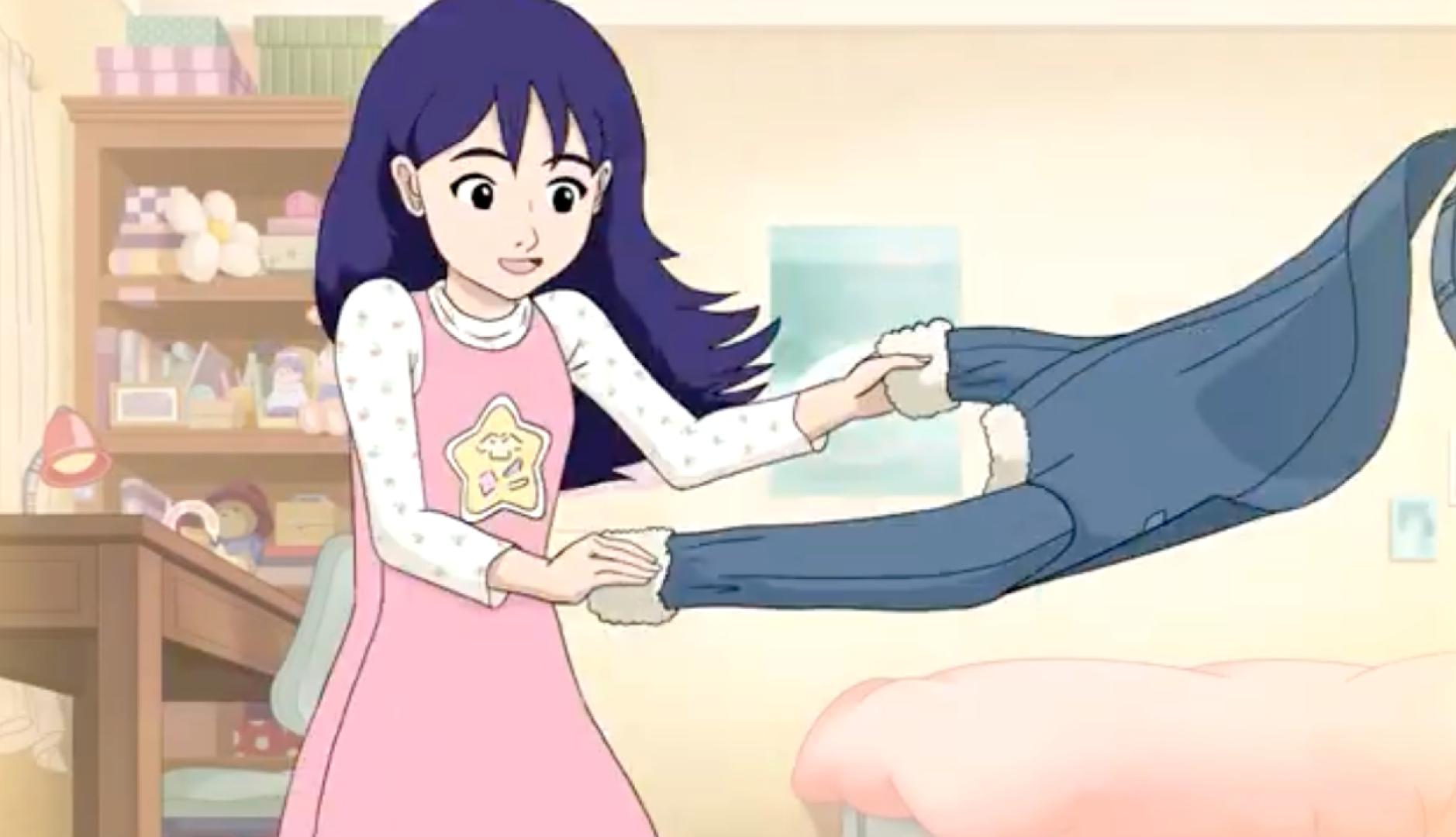
Gap enters the territory of animation with a delicate and evocative campaign to present its collaboration with designer Sandy Liang, known for her aesthetic sensitivity and her contemporary reinterpretation of femininity. The capsule collection fuses Gap’s classic silhouette with Liang’s playful and sweet look through pieces such as pleated miniskirts, vegan fur denim jackets or sweatshirts with bows.
For the first time, Gap turns to an animated film
But, beyond the clothes, what distinguishes this campaign is its tone: for the first time, Gap uses an animated film – directed by visual artist Annie Choi – to tell the story of a girl in the Lower East Side who finds, in a magical closet, the door to a universe of fantasy, creativity and style.
“If you are a millennial, you will remember when these types of animations were present in our daily lives. Gap has always had the ability to connect with different decades emotionally”explains Fabiola Torres, Chief Marketing Officer of Gap, in statements to adweek. The collaboration with Liang is not coincidental: the designer, now a mother, constantly plays with nostalgia and achieves a natural connection between generations. “It’s so Sandy, but so Gap at the same time”summarizes Torres.
The audiovisual proposal is inevitably reminiscent of Studio Ghibli films, and not only aesthetically. The choice could not be more pertinent. A recent study published in the journal JMIR Serious Games has confirmed that this type of content – such as “My Neighbor Totoro” or “Kiki’s Delivery Service” – can have a positive impact on the mental health of young people, promoting calm, imagination and a sense of purpose. The researchers, from institutions such as Imperial College London or Georgia State University, emphasize that “Immersing yourself in the conscious awe of a Ghibli film can cultivate essential human capacities such as tranquility, exploration, and happiness.”
Gap is now fully in line with that same emotional line to offer a serene, restorative and symbolic visual experience in the face of a hyperactive advertising culture. “Young people feel increasingly anxious and sad. Creative initiatives like this offer an emotional refuge from this overload”explain the authors of the study.
This campaign is part of a broader strategy to revitalize Gap’s cultural positioning. Since the arrival of Richard Dickson as CEO in 2023 – from Mattel, where he led the global relaunch of Barbie – the company has undertaken an ambitious transformation that combines relevant collaborations with a profound update of its visual and narrative language. In this process, Gap has opted for figures with a strong symbolic load and the capacity for intergenerational connection: one of its recent campaigns brought together Gwyneth Paltrow with her teenage daughter Apple Martin, from a contemporary and emotional perspective. It has also incorporated Katseye, the K-pop girl group born in the reality show “The Debut: Dream Academy”, as part of its effort to connect with Generation Z from global and current codes.
All of this under the creative direction of Zac Posen and the marketing leadership of Fabiola Torres, who have helped Gap regain cultural presence without giving up its roots. “People don’t want us to be just a brand, they want us to feel like a person”says Torres.
The limited edition collection with Sandy Liang, aimed at women and girls, is launched in a context in which Gap seeks to win back both nostalgic consumers and new generations who discover the brand for the first time.