British manufacturer Dyson has been putting small home appliances in the hands of consumers for more than three decades. Vacuum cleaners were the first devices it launched, to which hair dryers and straighteners, fans, headphones or lamps were later added.
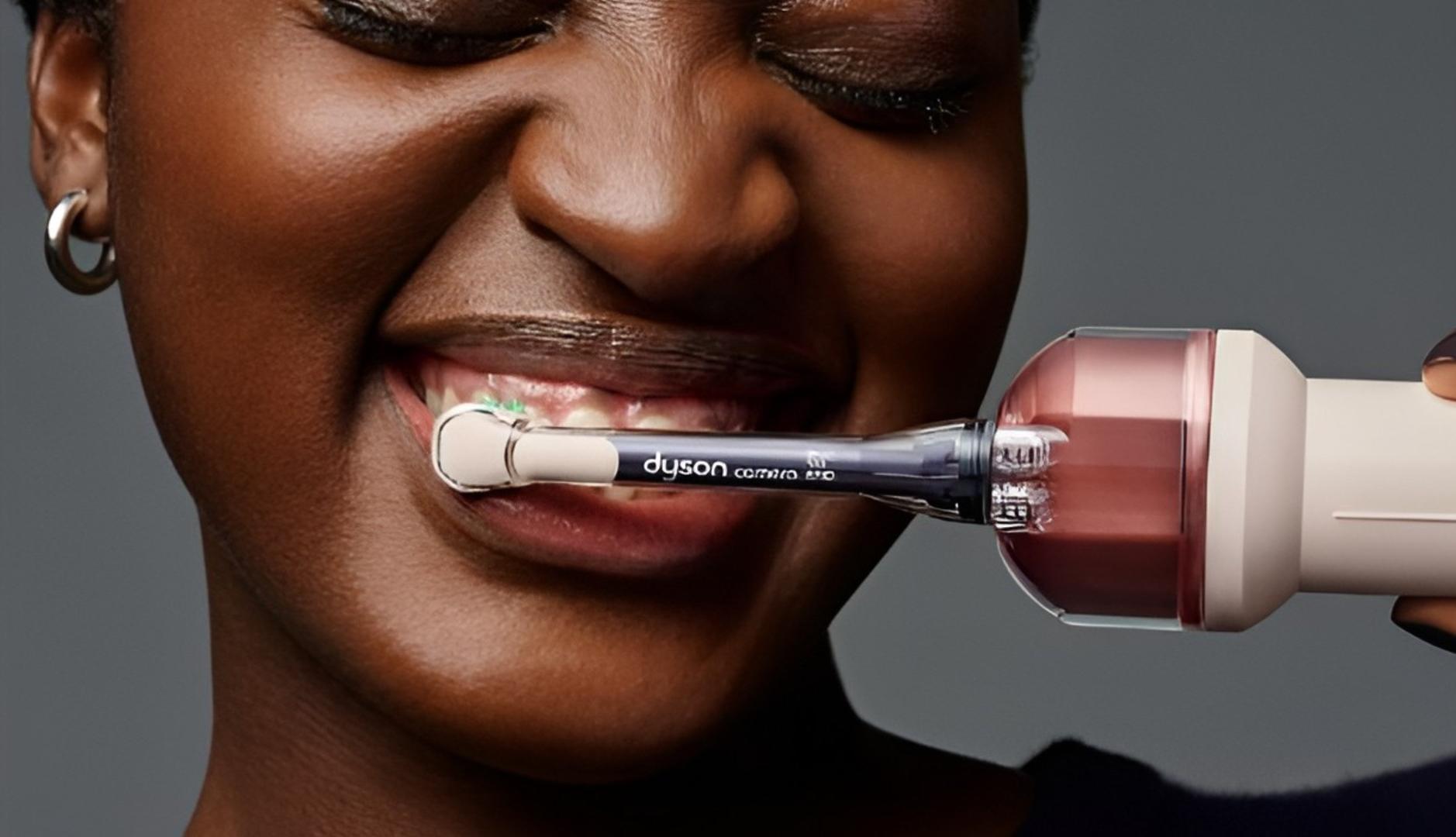
Now, the company is once again diversifying its portfolio and expanding its brand with an innovative electric toothbrush that, in a resounding exercise in innovation, includes a camera and artificial intelligence for optimized brushing.
The Dyson Camera Jet is at the forefront of the category with a combination of the latest technology. It has a 100,000 pixel camera, powered by a system called Gap Optical Targeting that, thanks to artificial intelligence and machine learning, detects, tracks and identifies interdental spaces in real time. This is possible thanks to training in which up to 470,000 dental images collected during the development of the brush have been used.
The camera has a Wi-Fi and Bluetooth connection, which allows you to view the inside of the mouth live through your mobile phone with a dedicated application that also includes cleaning guides, educational videos and hygiene tips, offering added value through dissemination. On the other hand, the company ensures that it has maintained the focus on privacy and no images are recorded or stored in the product or in the cloud, remaining private for the user.
Once the interdental space is identified, the device enhances cleaning through a precise jet of mouthwash that helps eliminate plaque. Unlike traditional oral irrigators, which typically use a needle-like jet, the Dyson brush uses a wide conical spray, which improves precision in plaque removal while applying less pressure and being gentler on gums and enamel. And the experience can be personalized by choosing between an automatic and manual mode, adjusting the intensity of brushing.
In addition, it has other functionalities and attributes, such as a reservoir that dispenses the recommended amount of mouthwash, or heads with two types of bristles and a shock absorber for adequate acoustics and comfort. These also have an RFID tag that identifies when it is connected, how many cleanings it has performed and notifies the user when it needs to be replaced.
And it’s all accompanied by an ecosystem of products, including a patented foam-free toothpaste to prevent it from interfering with camera vision and a mouthwash formulated for use with the precision jet system.
All of this is, as Dyson explains in a statement, the result of six years of research, development and engineering. The company aims for the brush to revolutionize all aspects of conventional oral care. “Our research has shown that people often overlook the areas where plaque forms: the spaces between teeth. We wanted to solve three fundamental problems: how to see those spaces, how to remove plaque, and how to improve brushing effectiveness.“commented James Dyson, Founder and Chief Engineer at Dyson.”Combining a camera, machine learning, precision fluid dynamics, advanced brushing technologies, connectivity and Wi-Fi, Dyson Camera Jet introduces a whole new way to maintain a healthy mouth“.
The brush, which is available in the Dyson store and at select retailers for $499.99 (479 euros), promises to elevate the premium segment of smart electric toothbrushes.
Other competing brands have also included new technologies in their devices seeking to improve cleaning results. Oral-B, for example, has the iO range, and its latest model, the 10, which also sells for almost 500 euros, has a connection to an application that allows you to track the time and coverage of cleaning, and also synchronizes with Apple Health. Phillips, for its part, has recently launched the Next-Generation Diamond Clean which, among other things, has a lighting system that offers real-time indications to avoid leaving spaces uncleaned. It comes in different models, some of which also cost close to 500 euros.
While the category is dominated by less sophisticated and more affordable options, Dyson’s foray into premium oral hygiene territory is aligned with the brand’s track record in technological innovation, added value, and consumer perception. The firm has pushed the frontiers of small appliances through futuristic, but practical and functional designs that have given it a prominent position in the sector.
Added to this are research and experimental developments that have allowed it to obtain insights that it has subsequently integrated into everyday products. Among its latest moves in this regard, Dyson created Dyson Demo VR in 2021, a virtual reality store to experience products from home before purchasing them; and proposed headphones with an integrated air purifier to address pollution in cities. In addition, it has also delved into working with robotic arms to carry out order and cleaning tasks at home.