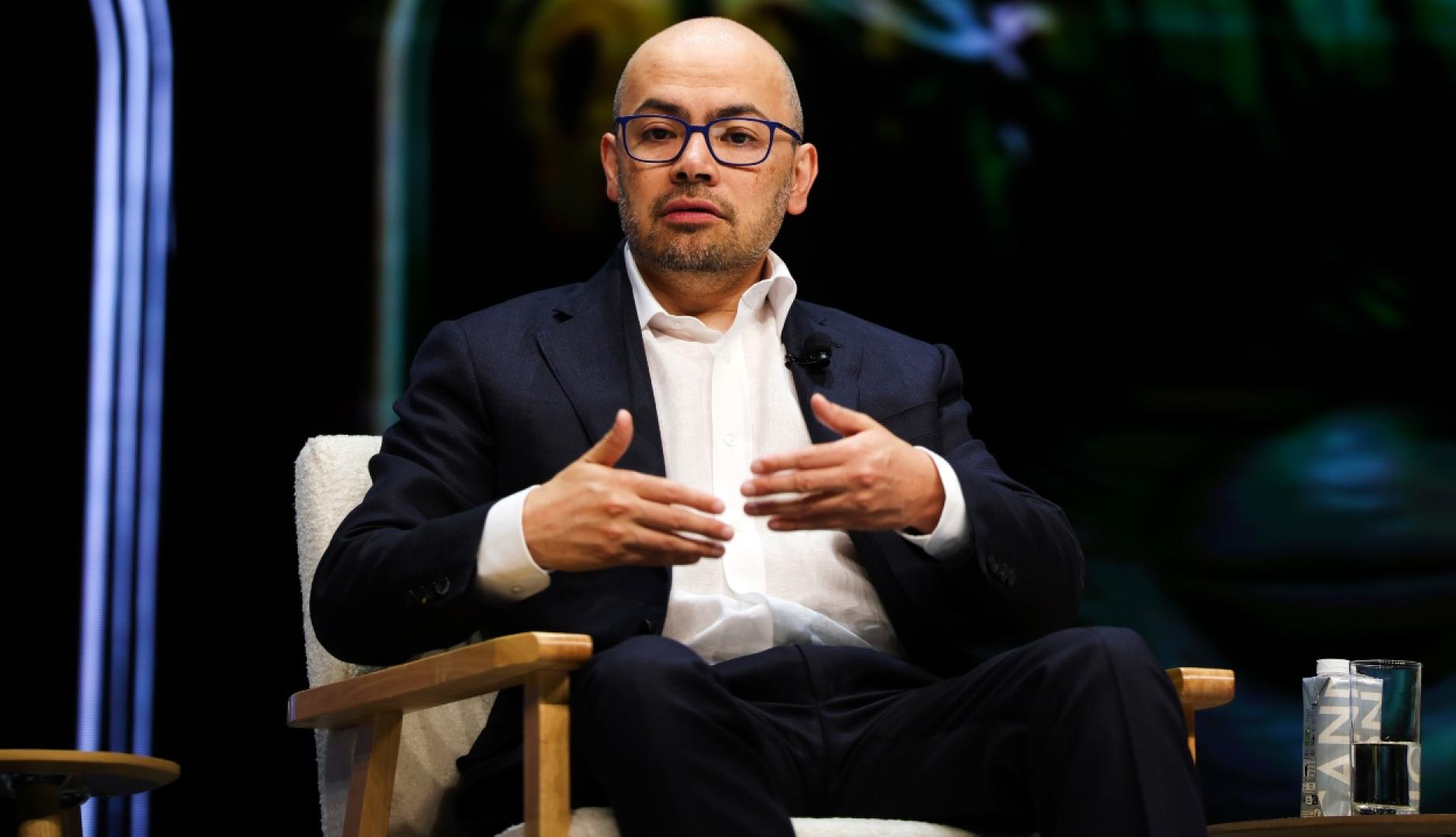
Great thinking and sophisticated exploration of artificial intelligence, and the more prosaic realm of advertising communication, went hand in hand for a while at Cannes Lions with the presence in the festival’s conference program of Demis Hassabis, Co-founder and CEO of DeepMind, and winner of the Nobel Prize in Chemistry in 2024.
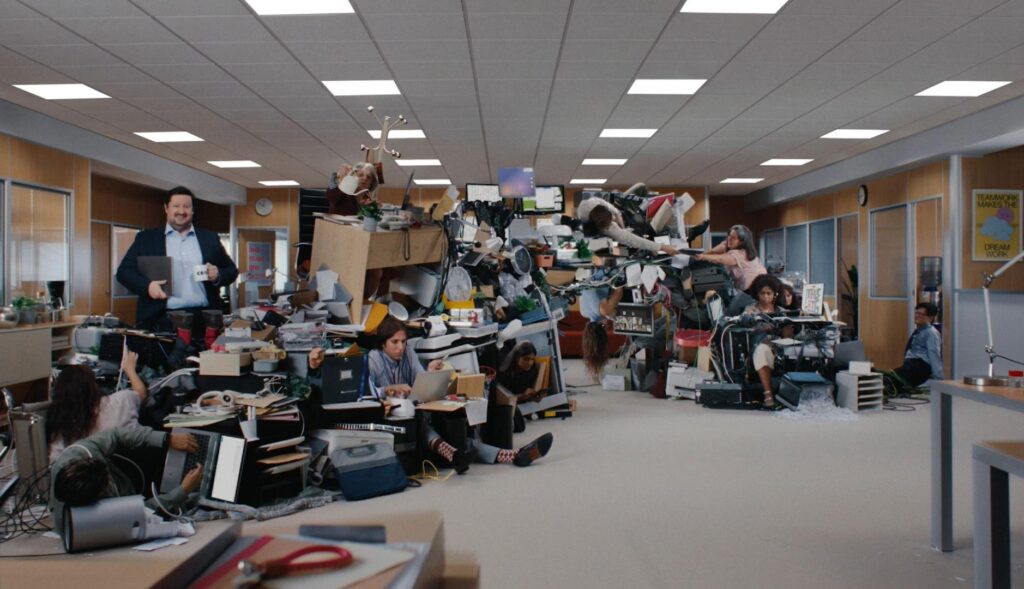
By chance, the link between DeepMind – Google’s company dedicated to AI research and development – and the festival had an added facet to the presence of Hassabis at the Palais: this occurred on Wednesday, June 24, and the day before “Project Genie”, the experimental AI prototype developed by the company that allows creating and exploring interactive worlds from text and images, had won the Grand Prix in the Cannes Lions Digital Craft competition.
“We are very proud of Project Genie, it is one of our most avant-garde projects”Hassabis said when Francine Lacqua, the Bloomberg TV anchor and editor who was going to interview him on stage, congratulated him on the award before starting the questions. “It’s basically about”Hassabis continued, “of using AI to create not just realistic video, but interactive audiovisual experiences. So, in a way, it takes me back to the beginning of my career, when I was dedicated to video game design. It’s about returning to that world with new technologies.”
Video game programming, among which “Theme Park” is surely the most famous, marked Hassabis’s first professional contact with AI, a discipline that later became the focus of his career. He founded DeepMind in 2010 and the company was acquired by Google in 2014. Among the milestones the company has achieved are AlphaGo, a program that was able to beat the world champion of the game Go, and AlphaFold, which solved the dilemma of predicting the structure of proteins, which scientists had been trying to solve for fifty years. This achievement was worth Hassabis and his DeepMind colleague. John Jumper, the 2024 Nobel Prize in Chemistry.
Demis Hassabis’s interview with Francine Lacqua in Cannes included the participation, in its final part, of Sott Belsky, once co-founder of Behance and currently partner of the independent production and publishing company A24, one of the companies with which DeepMind develops joint projects.
The leap to true creativity
“The current ecosystem is really impressive”Hassabis responded when Lacqua, to begin the talk, asked him what kind of capabilities he misses in the current grand scheme of AI. “It is truly amazing to see what has happened in the last fifteen years, which are how long DeepMind has been active. Progress is relentless and practically every week there is a new advance that is exciting and new even for those of us who work in this world.”
Referring specifically to the interviewer’s question, Hassabis commented: “I think there are a couple of pieces missing in what I would call general artificial intelligence. One is the ability to reason and plan in the long term and another, what could be called true creativity: that is, not making iterations on an already known idea or remixing existing elements, but achieving an authentic leap into new and unknown terrain. In science, for example, something like this would be developing a new hypothesis about how the world works.”
The mention of Artificial General Intelligence led Lacqua to ask him for his definition of it and Hassabis gave this: “We have always defined it as a system that shows all the cognitive abilities that human beings have. And the reason that these are an important reference is that human thinking, our brain, is the only reliable proof, perhaps in the entire universe, that there is general intelligence. And we are trying to build systems that try to do the same.”
“There are brain capabilities that AI doesn’t even come close to”
“Human intelligence has incredible things”Hassabis commented when Lacqua, following his previous words, asked him what he had learned regarding human intelligence from his work in AI. “There are brain capabilities that AI doesn’t even come close to. “It remains extraordinarily efficient in energy and data processing, and aspects such as emotions, creativity, dreams or even consciousness could be better understood when we can compare artificial general intelligence models with the human brain and discover what makes it unique.”
Fine edition
The general questions about AI gave way in the interview to those related to creativity and to start talking about them. Lacqua told Hassabis that there are already numerous AI tools and models that are regularly used in different creative activities and asked him if there are any in this area that he would like to see become a reality. Hassabis took advantage of the issue to mention Nano Banana and Omni, two Google products that are widely used in the creative field.
“The key to these models”he commented, “It’s not just the quality of the images or videos, but the possibility of editing them with enormous precision. If you want to change any detail, just describe it in natural language and the model modifies it without having to generate the image from scratch. This ability to iterate and perfect the result makes the creative process much more flexible.”
One of the main topics of conversation around AI is its eventual disruptive – or even destructive – effect on some sectors or activities, and everything that has to do with creativity is not alien to that conversation. Asked by Lacqua if he believes there are industries in which this disruption will be less than in others, Hassabis said that there is currently a great exaggeration when talking about the short-term effects of AI in certain sectors: “There will be change, but perhaps not as much as some predict. However, if we look at the medium-long term, I think the transformation that AI is going to cause is undervalued. It will mean something like the beginning of a new era for humanity.” And how does Hannabis view it? “For me, the most important thing is the application of AI to science. And the number one priority is to apply these technologies to improve people’s health.”
AI and “Jurassic Park”
Another passion of Hassabis, as he commented throughout the interview, is cinema and DeepMind’s collaboration with the production company A24 clearly connects with it. “The activity of A24”said Scott Belsky once he joined the conversation, “It revolves around the talent of filmmakers. Many times that means finding new resources for that talent to develop. What we try to do is follow them in their curiosities when looking for new ways and new means to do their work and provide them with the technology so that they can do it with the level of control and quality that they require.”
To exemplify what can happen with collaboration between AI and film, Belsky alluded to the early days of computer-generated imagery. “It was a new technology for cinema and the results were very bad until it managed to bring dinosaurs to life in films like Jurassic Park, and that changed the world of storytelling. If we look closely, we will see that this technology evolved thanks to the collaboration of technology experts and curious filmmakers.”
“The alliance with A24 is very natural for us but it is still taking its first steps”Hassabis said. “It’s too early to know what the best uses of AI will be in the film industry. As Scott says, the situation is analogous to the early days of computer-generated imagery or what Pixar started doing at the time. At first there was a lot of resistance, but now they are part of the industry standard.”
Asked if there are creative tasks that require too much human effort because AI lacks the necessary imagination or understanding, Belsky commented that for the level of storytelling required in the film industry, the problem with AI tools is the lack of control. “There are creators who don’t mind losing control to gain speed because they’re making social media ads or things like that. But I haven’t found many artists willing to make that trade-off. They don’t want to lose control: the question is what new technologies and intricate work processes may appear in the future, that we probably can’t imagine, that preserve that level of control.”
Lacqua’s interview with Hassabis and Belsky included passages dedicated to cybercrime (“One of the great challenges of developing AI is how to be able to put it in the hands of the people who are going to use it for good and at the same time restrict access to it by criminals”); to how DeepMind’s work is boosting Google’s activity in all the company’s fields of activity; and DeepMind’s adaptation of the classic “The Wizard of Oz” for its screening at The Sphere (Las Vegas).
Fvideo source: Google
But alongside all the big AI issues and ambitions that both Hassabis and Belsky expressed, the DeepMind CEO expressed one big little wish: “My dream is, and I remind my colleagues at Gmail all the time, that email is completely automated. We already have digests and AI in the inbox, but it still needs to be more robust and reliable, to the point that you can delegate all email management to it.”
And even answer emails on your behalf?Lacqua asked him.
“Potentially, but that’s the next step.”