The second Friday in January is known as “Quitter’s Day,” the time when a significant portion of New Year’s resolutions are abandoned. In Canada, 48% of the population places fitness as their main annual resolution, but data from Drive Research (2024) shows a persistent reality: nearly 92% fail to maintain that commitment beyond the first weeks. At this critical point, Decathlon has decided to intervene from an unusual angle in retail.
Together with the Rethink agency, the sports brand has launched an initiative in Canada that transforms a standard commercial policy. such as return, in a behavioral motivation tool. Between January 1 and 31, 2026, those who purchase the KIPRUN 500 WR model symbolically agree to waive their right of return for 30 days, “blocking” their resolution to remain active.
“The brand stops being a seller and becomes a responsibility partner”
Far from seeking immediate comfort, the action explicitly and consciously introduces friction. On the product page and in the store, the consumer receives a clear notice: when purchasing the shoe, they agree not to return it as a sign that they will continue to move. In exchange, members of the loyalty program receive 1,000 extra points, which they only keep if they fulfill the commitment.
“We often talk about eliminating friction in the customer experience, but here we use friction as a strategic motivation tool”explains Xavier Blais, Partner and Executive Creative Director of Rethink. “By challenging an established policy like returns, we are tapping into a deep brand truth: Decathlon truly cares about its customers staying active. The brand stops being a salesperson and becomes a responsibility partner.”
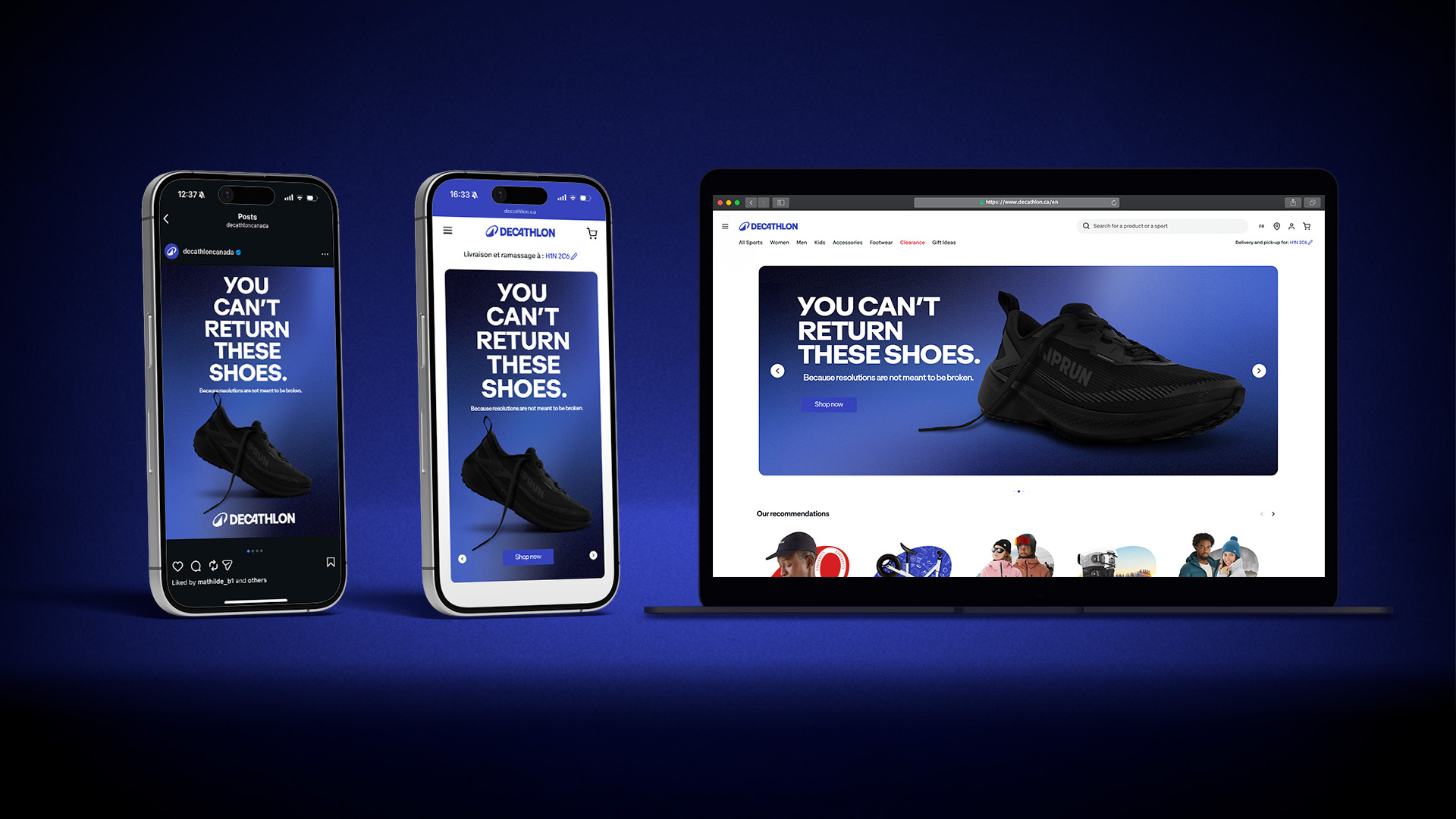
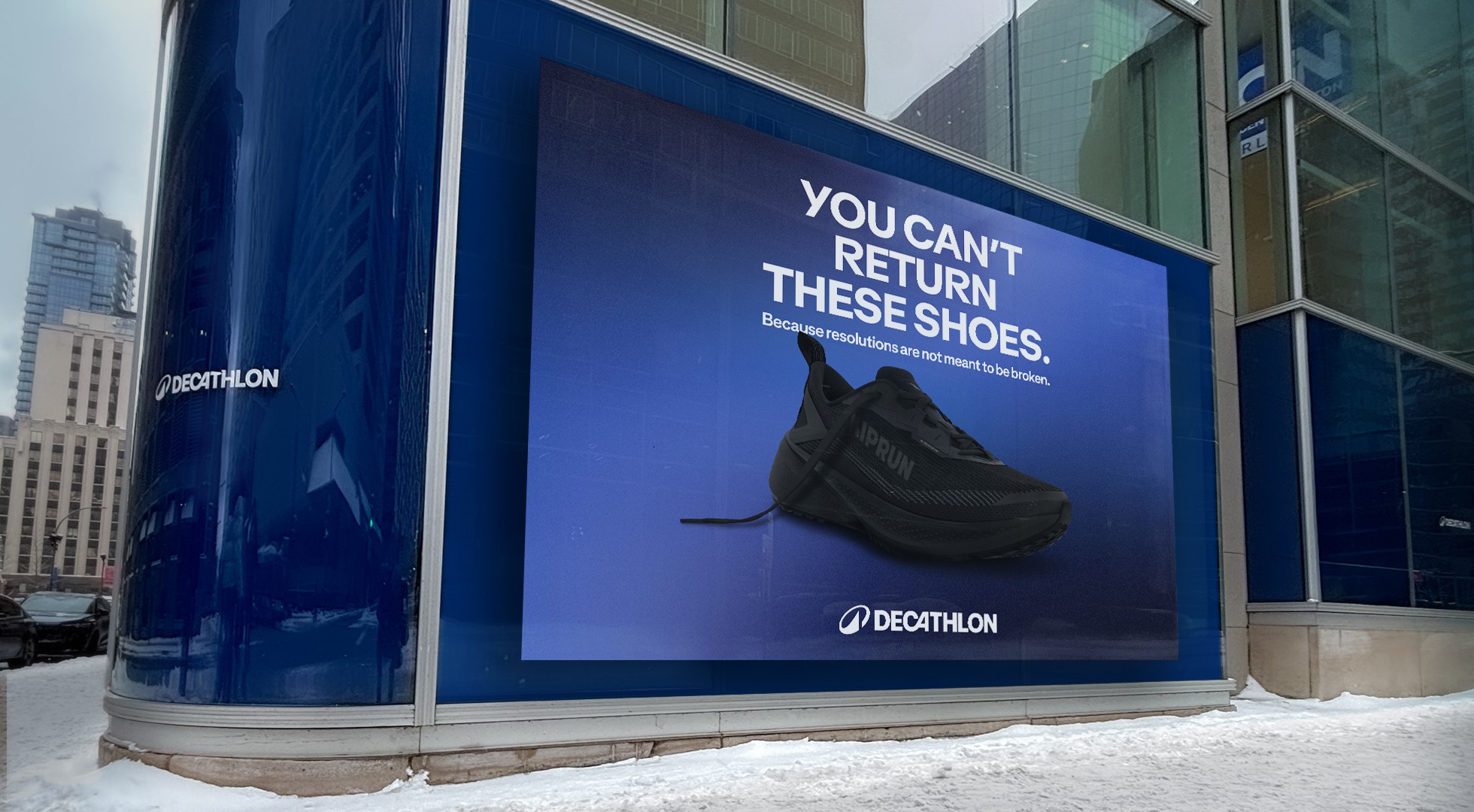
Thus, the action shifts the focus from the product to behavior. Decathlon does not emphasize technical performance or price, but rather introduces a framework of shared responsibility with the consumer. “We see that people want to start the year strong, but the temptation to give up is very easy”says Marie-Lou Blais, Director of Marketing and Communication at Decathlon Canada. “Our mission goes beyond convenience. We care about sustained well-being and people’s ability to commit to themselves. This non-returnable sneaker is a playful way to intervene at a key moment and transform a simple purchase into an act of personal commitment.”
The initiative opens the door for a retail brand to help its customers not give up, even at the cost of giving up a classic commercial advantage, launching a cultural message about perseverance, movement and long-term commitment.