
Although they are usually associated with traditional consumption patterns, Baby Boomers show in 2025 a complexity that challenges generational stereotypes. According to data from Global Web Index, three out of ten are considered high income and three quarters have savings or liquidity as financial support, above any younger generation. However, not everyone shares the same profile: between 60 and 70, many continue to work or live with children at home, while others are already retired and live very differently.
In this context, the Baby Boomer consumer profile is experiencing a significant transformation. According to a recent Global Web Index report based on more than 23,000 interviews with people between 61 and 78 years, this generation not only accumulates more assets and financial stability than later, but also adopting with decision digital and consumption behaviors that denies some stereotypes.
The Baby Boomers, a target that is technological
In terms of technology, Baby Boomers exceed children under 60 years in possession of key devices such as laptops (69% compared to 58%), Smart TVS (52% compared to 48%) and tablets (39% compared to 32%). They also stand out in the adoption of electronic readers (12% compared to 8%), which highlights a growing affinity with functional devices and focused on personal experience. In fact, more than a quarter have 5 or more devices.
This profile is not only more digital than you would expect, but also more faithful than young generations: almost half of the respondents claim to be loyal to the brands that convince them. When deciding which technological brand buying, the Baby Boomers are distinguished by taking into account the ease of use, the value for money and reliability. Therefore, brands must prioritize these qualities when it comes to marketing products for this generation. And, once the purchase is made, it is likely that their faithfulness will lead them to explore other products or services offered by the same brand, which creates opportunities for companies to deepen their commitment and increase sales.
How are Baby Boomers brands
The Baby Boomers are unique when it comes to the discovery of brands: they are more likely than their successors to discover products through more traditional media, such as television, advertisements or articles in newspapers, emails or business letters. But 32% have a Netflix account that shows ads, compared to only 9% of generation Z, thus being more likely to see streaming ads.
Although, television ads are a key channel among the Baby Boomers, with 45% stating that they discover new brands through the ads they see on television and being 39% more likely than the average consumer to discover a brand through these ads.
Therefore, diversifying advertising investment and focusing more on streaming platforms can be key to reaching Baby Boomers, which are increasingly active; Without forgetting that, for them, traditional marketing is still fundamental.
Baby Boomers are impulsive but savers
With regard to leisure, Boomers are impulsive when planning trips, with a 159% higher than average to reserve spontaneously, especially in the case of already retired people (211%).
Cultural and value experiences prefer, above standardized tourist formats such as cruises. And the Baby Boomers want to feel that they are doing a good business, even if it is an impulsive purchase, so the offers of the web pages or travel agencies are a key factor that will take into account when deciding where to go on vacation.
They look for products that improve their quality of life, but without giving up savings
This significant but reflexive investment logic is also reflected in their general consumption decisions: they seek products that improve their quality of life, but without giving up savings. This leads them to participate regularly in loyalty programs and to look for the best offers; They are more likely than other groups to opt for cheaper white brand products instead of known and more expensive brands, and compare prices, even when it comes to digital products.
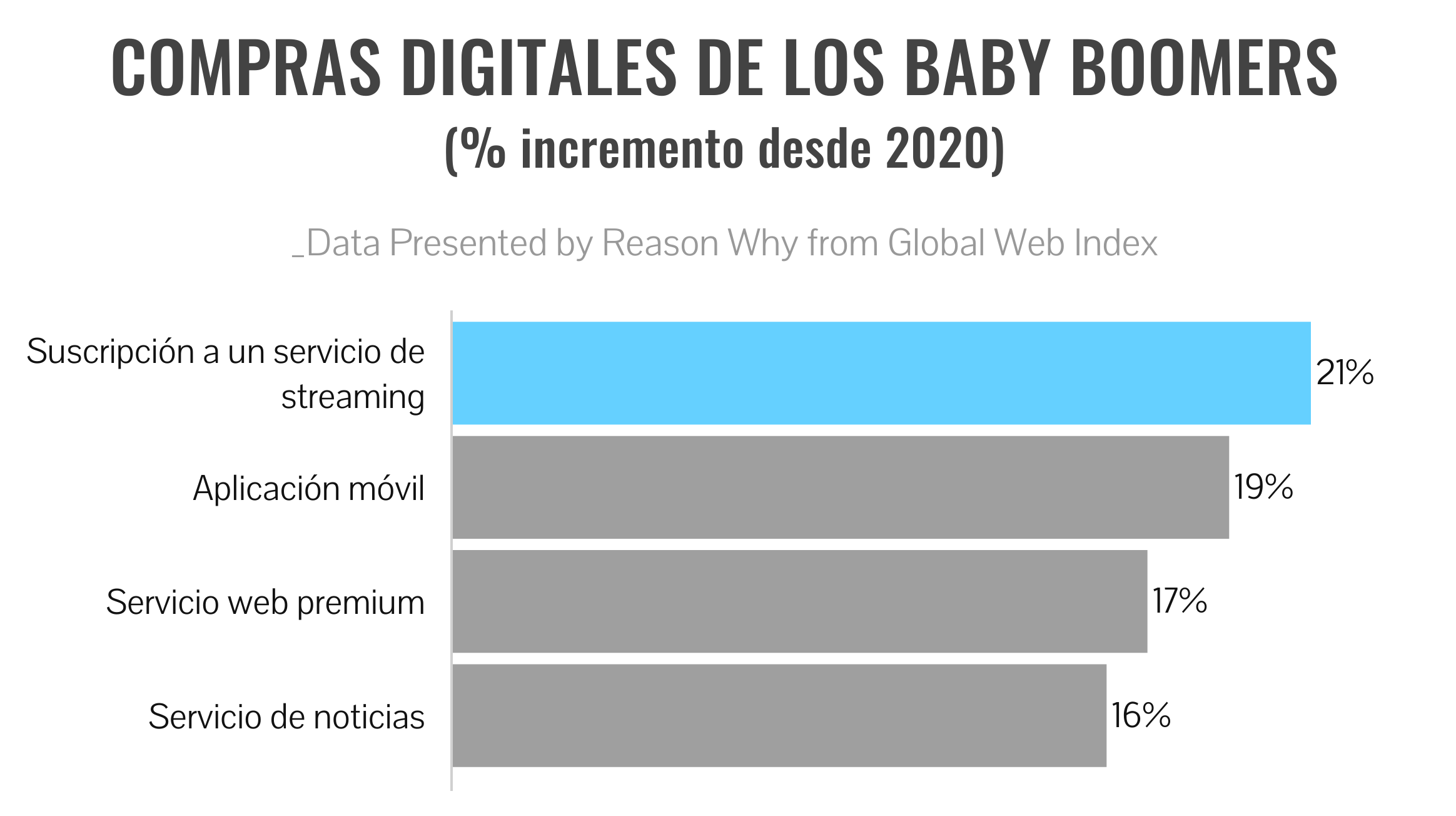
In this sense, GWI data show remarkable growth in their digital subscriptions since 2020: Subscriptions to streaming platforms have increased by 21%, purchases from mobile apps 19%, belonging to Premium web services by 17%and the subscription to a 16%news service. Despite having more income available than younger generations, Baby Boomers are not willing to spend their money for no reason. They seek subscriptions that offer useful, relevant and well presented content.
Sport and events for baby boomers
Far from a static or conservative life, the study reveals a high interest in physical exercise in this generation. 25% carry out activities such as swimming, running or gym training, and more than a fifth have follow -up devices such as smartwatches or activity bracelets, which mainly use for health purposes. This focus on well -being is also transferred to your purchase habits: almost a quarter trust technology to improve your health, opening an opportunity for brands that develop specific products for this vital stage.
On the other hand, in the specific case of the United States, the Baby Boomers are as prone as generation X and millennials, and more likely than generation Z, to carry out weekly training sessions at home. This is a valuable opportunity for brands to create products that adapt to the routines and preferences of fitness of the boomers, whether they are online fitness subscriptions, gym equipment for the home or virtual personal training services.
They have a clear predisposition to spend on experiences that they perceive as valuable on a personal level
Finally, the study also indicates a notable inclination of this generation for live events, either attending in person or following the action from home. Among those who declare sports followers, about 20% go to professional matches or competitions, a figure that exceeds 19% of younger consumers. As with trips, this behavior reveals a clear predisposition to spend on experiences that they perceive as personal level. In addition, three out of five prefer to follow sports broadcasts on television or digital platforms, which positions this generation as a key audience for subscription services linked to sport, especially those adapted to their habits of audiovisual consumption.
His interest in leisure also extends to festivals. In the United States and the United Kingdom, almost a third of Baby Boomers plan to attend so many or more gastronomic, seasonal or musical events this year that in 2024. In this area, the face -to -face experience is decisive: 75% say that a music festival would not see in streaming that they have not been able to go, which confirms that the value lies in living the moment, not only in consuming the moment, not only in consuming the moment.
For brands, this is a clear opportunity: to design strategies aligned with this willingness to invest in real and memorable experiences.
Although it is a heterogeneous profile that demands a strategic approach, something that defines the expense of the Baby Boomers is the search for a tangible emotional return.
Far from being a homogeneous or anchored group in the past, some continue to work and take care of dependent children; Others are already retired and prioritize personal enjoyment. But what UNE is a logic of consumption focused on value, functionality and experience. For brands, this requires abandoning condescension and activating specific strategies that recognize their purchasing power, their openness to change and their growing prominence in the digital economy.