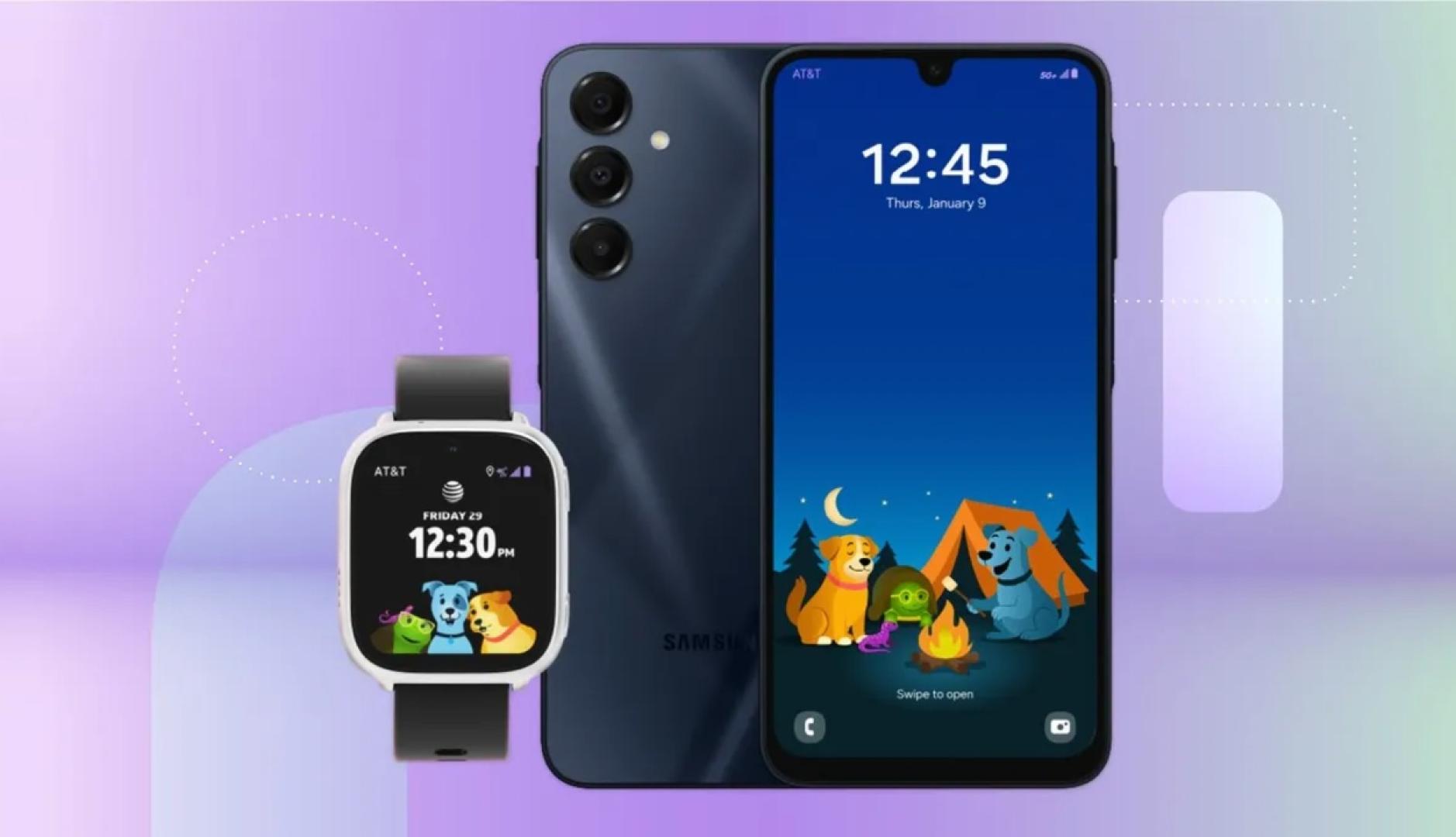
AT&T has presented AmiGo Jr., a smartphone designed specifically for children that seeks to respond to one of the great current tensions between technology, childhood and parental control. The device, developed in collaboration with Samsung, combines hardware from the Korean manufacturer with the American operator’s own control system that acts directly at the device level, and not just as an additional software layer.
Parents remotely manage applications, contacts, usage times and location
The launch occurs in a context of growing social and regulatory concern about the impact of intensive use of screens and social networks on minors. Unlike conventional smartphones with optional parental controls, AmiGo Jr. is born limited by design: parents remotely manage applications, contacts, usage times and location, with no possibility for the minor to deactivate or circumvent the restrictions.
The device is, in essence, an adapted Samsung Galaxy A16: 6.7-inch screen, 128 GB of storage, 5,000 mAh battery and a standard camera system. However, its main difference is not in the technical specifications, but in the ecosystem that surrounds it. Through the AmiGo app, installed on parents’ mobile phones, safe areas can be defined with entry and exit alerts, limit functions during school hours or only authorize previously approved contacts.
AT&T emphasizes that the initiative responds to a real demand from its customer base. According to company data, 40% of its current users are parents, and six out of ten consider the smartphone an essential safety element for children under 12 years of age. “It’s not just a decision about a device, it’s a matter of trust, security and connection”said Erin Scarborough, Senior Vice President of the company, during the presentation of the device.
The movement is not completely new on the market – there are already smart watches, simplified phones or so-called dumb phones-, but it does represent a relevant step to come from a large operator and rely on integrated controls at the operating system level. Instead of offering more tools within a standard smartphone, AT&T proposes an intermediate device: not as limited as a watch, but far from the open experience of a traditional mobile.
In addition to the phone, the company has also launched the AmiGo Jr. Watch 2, a more resistant smart watch, connected to the same control ecosystem, designed as an alternative or complement for the little ones.
In terms of positioning, the proposal is clear: a smartphone “for children” that, in reality, is designed to reassure parents. At a time when large technology platforms face criticism and litigation over the impact of their products on the mental health of minors, AT&T opts for a closed hardware solution that reduces risk at the source, without relying solely on user self-regulation.
The AmiGo Jr. is now available in the United States through AT&T, with a monthly payment model associated with a contract. For now, the company has not announced international expansion plans, but the launch points to an increasingly visible trend: the entry of operators and manufacturers into the debate about what a child’s first mobile phone should be like, not only from technology, but from brand responsibility.
More info: AT&T AmiGo Jr. Phone