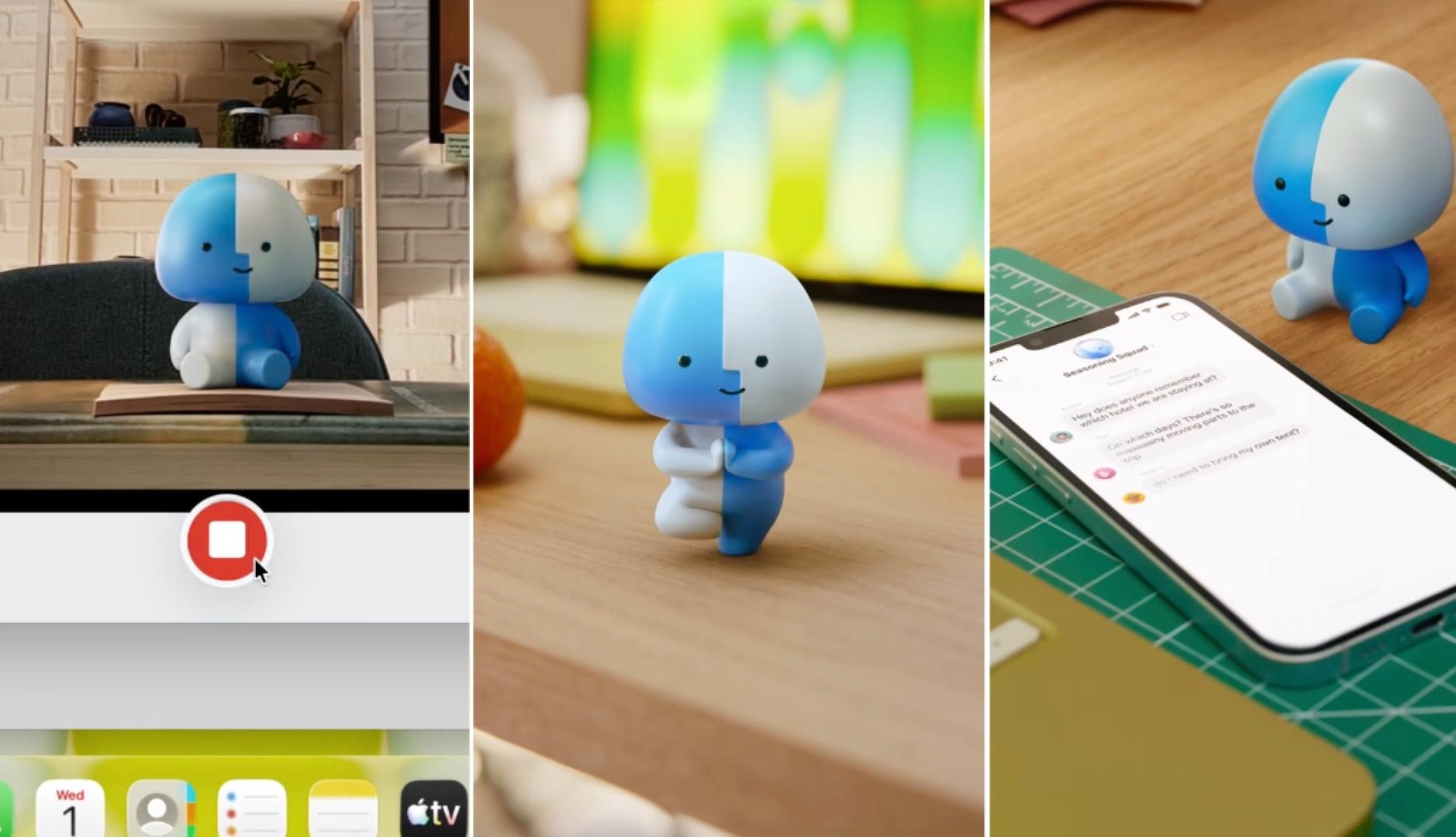
Apple has managed to activate an organic conversation around its brand thanks to a small character inspired by the macOS Finder icon. Known on the internet as “Finder Guy”, but also as “Fin the Finder” or “Lil Finder Guy”, the creature has appeared discreetly in TikTok content without any type of official presentation. Far from being an anecdotal detail, its emergence has triggered rapid appropriation by the digital community, which has turned it into an object of worship, reinterpretation and conversation.
The movement occurs within the framework of the launch of the MacBook Neo, but responds to a broader cultural logic. And, recently, Apple has opened a parallel account on TikTok with a more experimental and native approach to the platform, differentiated from its main channel, which is more focused on polished advertising pieces. In this new space, the brand adopts codes typical of internet culture, combining aesthetics, humor and light formats to connect with Generation Z and Generation Alpha.
The success of the “Finder Guy” character fits into a very specific aesthetic and consumer trend: the obsession of new generations with “cute” and collectible figures such as Smiski, Sonny Angel or Labubu. Its design, based on rounded shapes, childish proportions and constant expression, responds exactly to the visual codes of this type of objects, designed to be consumed, reinterpreted, shared and converted into identity.
Added to this is a layer of technological nostalgia. The character refers to a period of Apple associated with more expressive, colorful and experimental devices, such as the iMac G3, far removed from the minimalism dominant in recent years. For a generation that did not live through that moment, this aesthetic works as an aspirational imaginary that involves a more playful and less distant technology.
One of the most relevant aspects of this case is Apple’s decision not to formalize the character. At the moment, there is no official naming, no specific campaign, nor a closed narrative. However, that void has been filled by the community, which has generated theories around the mascot, mockups, 3D models and even product proposals around “Finder Guy.”
Unofficial versions of “Lil Finder Guy” made by the Basic Apple Guy blog
The result is an effective strategy: Apple moves its communication towards a more open terrain, where creativity is not only emitted from the brand, it is built with the audience. In this sense, “Finder Guy” is more than a character since he represents the fact that even the most controlled brands are learning to let go of part of the story to remain relevant.