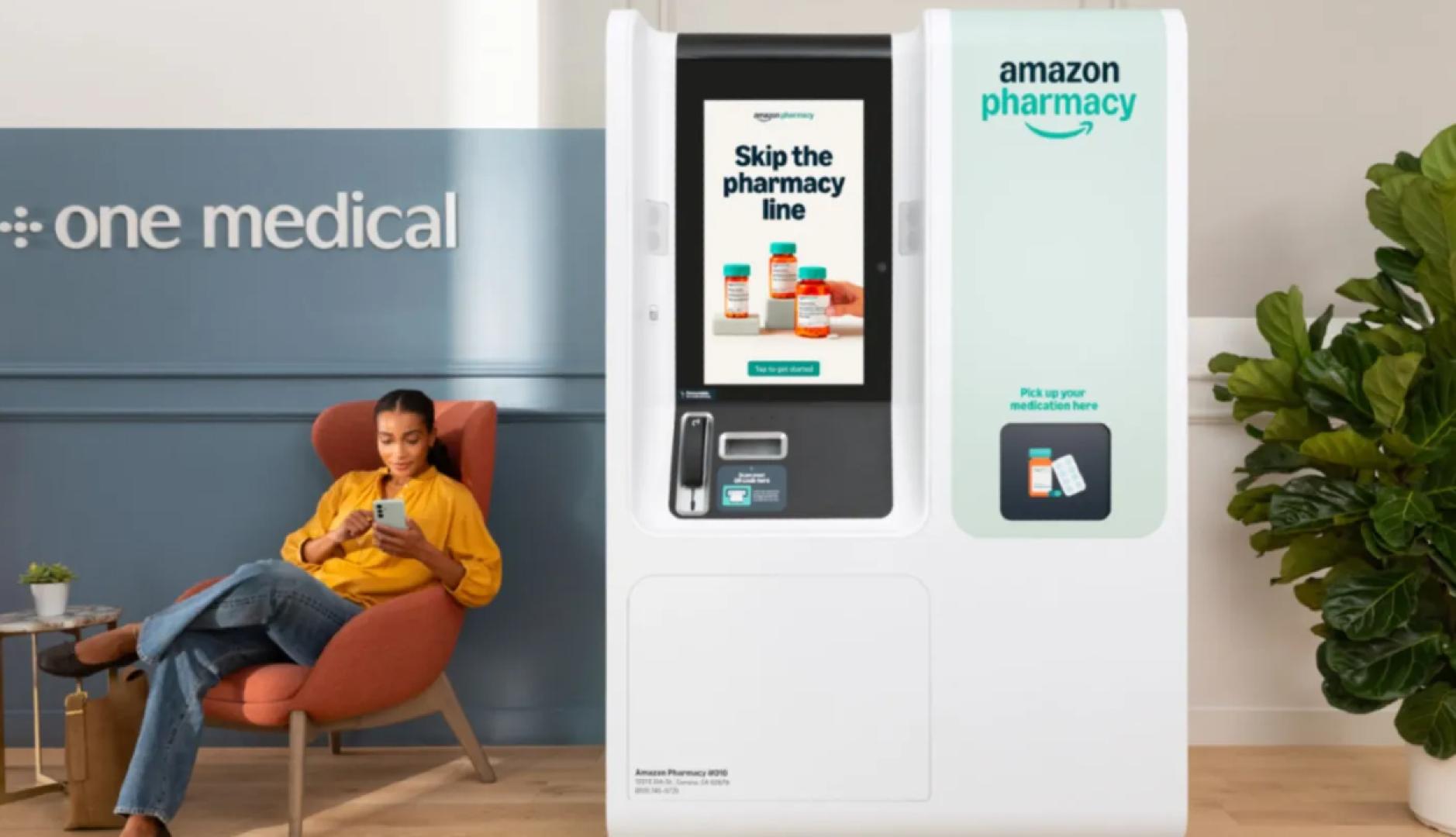
Amazon continues to expand its presence in the healthcare sector with an innovation that reconfigures the experience of picking up medications. Starting in December, patients attending One Medical clinics in Los Angeles will be able to obtain their medications directly from vending machines installed in the center itself, right after their consultation. The service will initially launch in that city, with plans to expand to more locations in the coming months.
They will be stocked with common drugs such as antibiotics, inhalers or hypertension medications
The new Amazon Pharmacy kiosks They will be stocked with a wide variety of common drugs such as antibiotics, inhalers or hypertension medications. However, they will not include controlled substances or medications that require refrigeration. The specific assortment will adjust to the prescription patterns of each clinic.
According to Amazon, these machines represent a solution to a known problem: many patients do not pick up their medications due to the inconvenience of having to go to a pharmacy. “We know that when patients have to make an extra trip after seeing the doctor, many prescriptions are never picked up”says Hannah McClellan, President of Operations at Amazon Pharmacy. “By bringing pharmacy directly to the point of care, we remove a critical barrier and help patients start their treatment right when it matters most: immediately.”
Competition against traditional pharmacies
The procedure will consist of the doctor sending the prescription to the Amazon pharmacy, where it will be validated by a company pharmacist. The patient can then pick up the medication at the kiosk using a QR code from the Amazon mobile app. Thus, the process promises to be resolved “in a matter of minutes.”
In addition, users will have access to telephone or video call consultations with Amazon’s pharmaceutical team to resolve any questions, in an experience that seeks to replicate the attention of the traditional counter in pharmacies.
The measure comes at a particularly delicate time for physical pharmacies in the United States. Large chains such as CVS, Rite Aid or Walgreens have closed numerous stores in recent years, due to falling margins on the sale of medicines and growing digital competition. This situation has reduced access to in-person prescription collection, especially in areas with lower population density or less access to transportation.
With this new infrastructure, Amazon not only advances its objective of verticalizing the medical experience within its ecosystem, from the appointment to the medication, but also reinforces its strategy to capture a greater share of the pharmaceutical market. Picking up a prescription in the future could be more like grabbing a soda from a vending machine than waiting in line at a local drugstore.