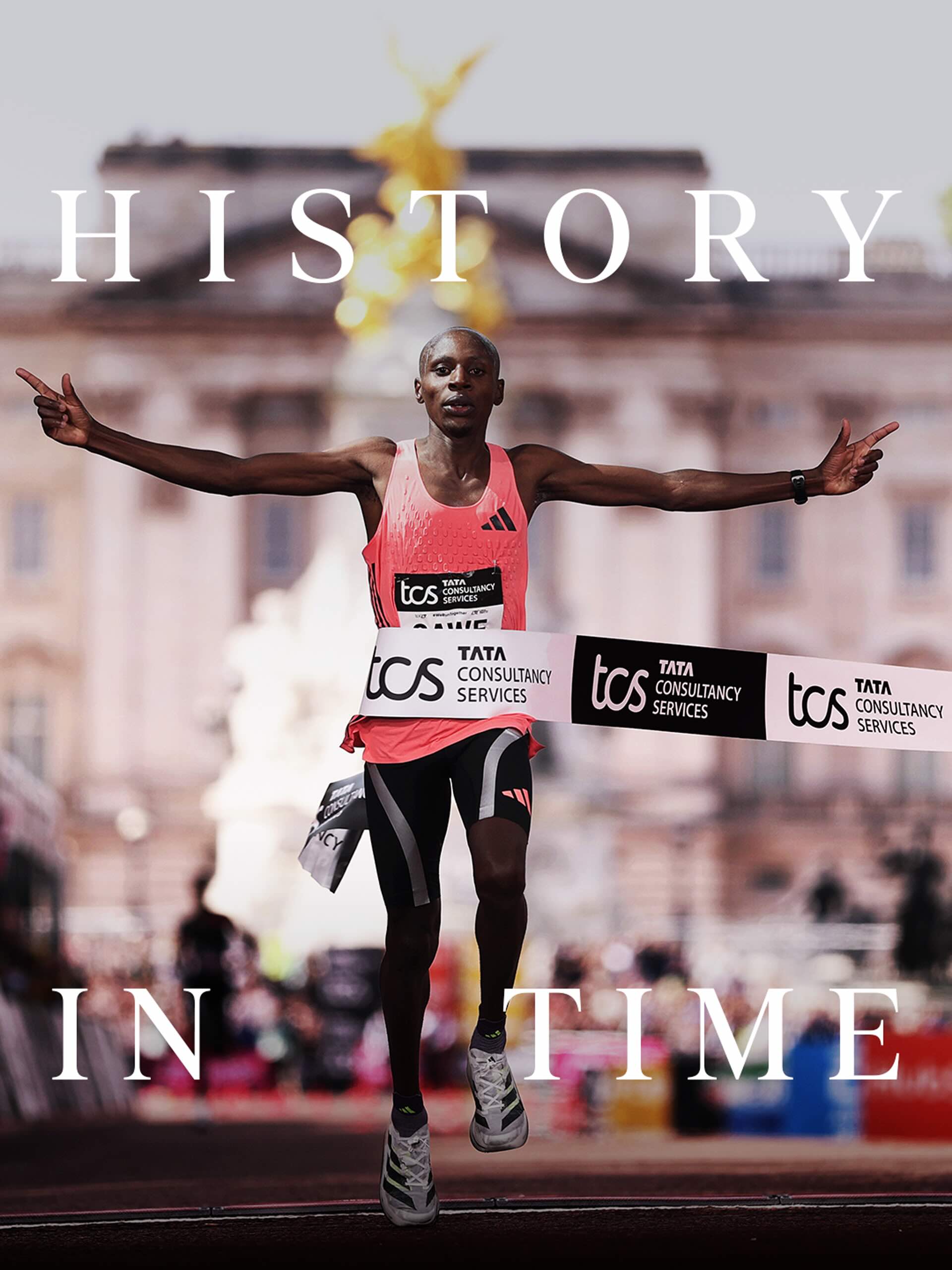
On Sunday, April 26 in London, athlete Sabastian Sawe made history by becoming the first person to run a marathon in less than two hours in an official race. He has achieved this, in part, thanks to the Adizero Adios Pro Evo 3 shoes, which has also made Adidas the protagonist of the feat.
In addition to Sawe, who completed the route in 1 hour 59 minutes and 30 seconds, setting a new world record, the brand also accompanied Yomif Kejelcha. which came in second position with a time of 1 hour 59 minutes and 41 seconds; and Tigist Assefa, who set a women’s record by completing the marathon in 2 hours 15 minutes and 41 seconds.
“This is a testament to years of hard work and dedication.”
All of this represents, as the German company has pointed out in a statement, the beginning of a new era in athletics. “The Adidas family is extremely proud of the historic achievements of Sabastian and Tigist, who set the best times ever recorded in a marathon“, commented Patrick Nava, General Director of Adidas Running. “This is a testament to the years of hard work and dedication they have put in, together with our innovation team, to create an exceptional, milestone shoe: the Adizero Adios Pro Evo 3.”.
The sneakers
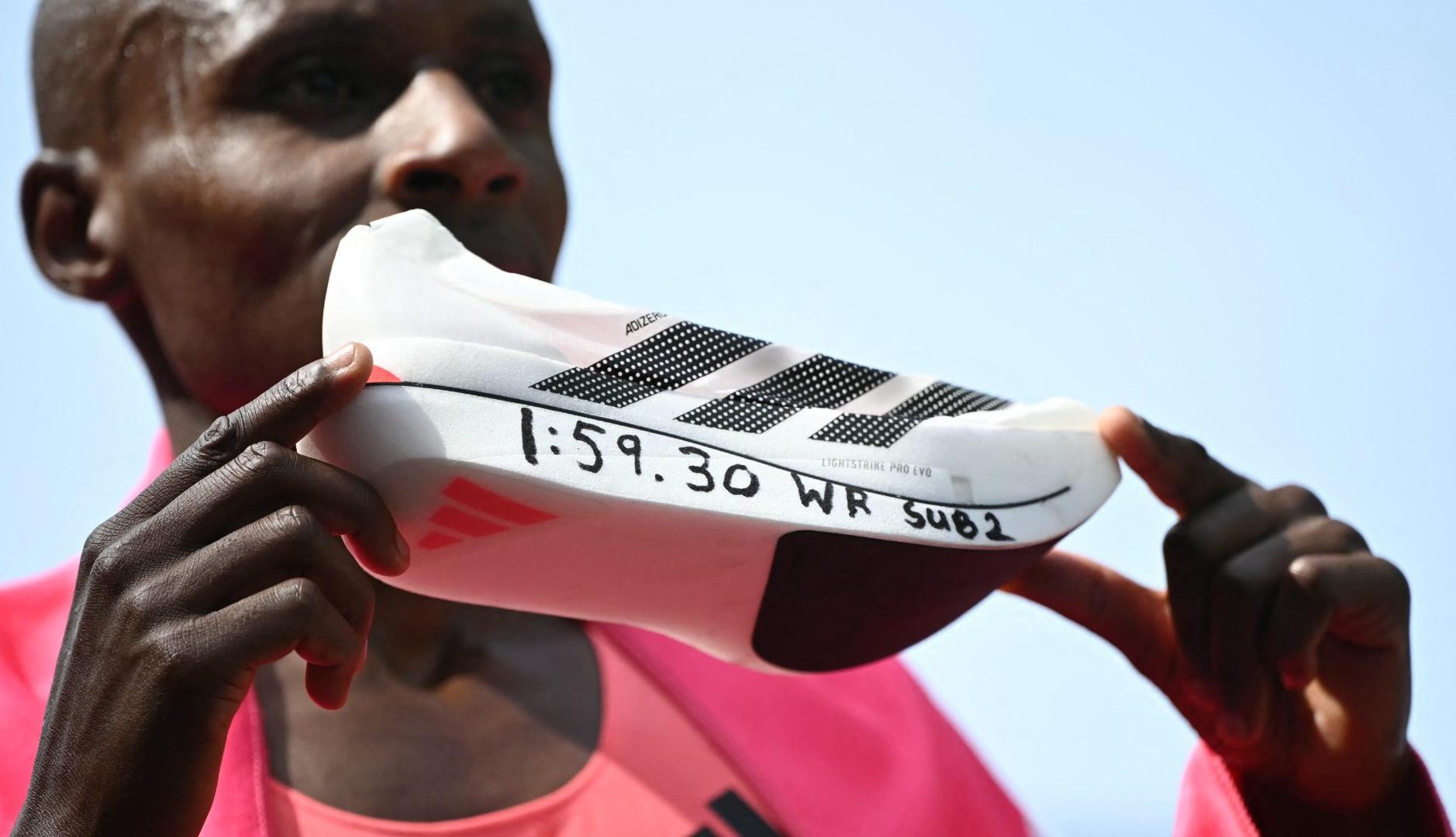
The shoes that have helped make the feat a reality are the lightest and fastest that Adidas has ever created, the brand explained in a statement. As part of the Adizero range, its design is the result of three years of cutting-edge research and a commitment to innovation in the field of high-performance sports footwear.
It is the first Adidas competition shoe weighing less than 100 grams. At 97 grams, the Evo 3 is 30% lighter, offers 11% more energy return in the forefoot and improves running economy by 1.6% compared to the previous model, as explained by the brand.
It features a number of key innovations. Among them, a lighter and more reactive foam sole, with a height of 39 mm, which maximizes cushioning, propulsion and energy return in each stride. The sole incorporates an integrated carbon system that provides stability, and Continental rubber to provide reliable traction at high speeds, without compromising weight.
The upper features a minimalist white finish, contrasted by three black stripes, and an ultralight design inspired by kitesurfing sail technologies.
“We were not only looking to improve what we had done before, but we wanted to see how far we could go. We completed more than a dozen iterations, working closely with our athletes and testing in various environments“, commented Patrick Nava at the time of the presentation of the shoes. “It was a long process, but the result is something that we think really changes the feel of a racing shoe.”.
The shoe debuted at the London Marathon, and has had a very limited launch through registration from April 25 on the Adidas website and in specialized stores. However, the brand will launch a broader launch in the fall and the Adizero adios Pro Evo 3 will be priced at 500 euros.
Adidas work
Breaking the two-hour barrier is a fundamental step in Adidas’ trajectory in running, as well as the consolidation of its entire proposal around the Adizero franchise, which was launched in 2020. Since then, as the brand points out in a statement, it has helped athletes achieve more than 200 victories in important athletics and racing competitions, in addition to breaking 24 world records.
Among them, the one achieved by Tigst Assefa herself, who already made history with the brand in the 2023 Berlin Marathon by establishing a new world record in the women’s marathon, registering an incredible time of 2:11:53. It competed with the Adidas Adizero Adios Pro Evo 1, then the brand’s lightest shoe, weighing 138 grams, establishing the range as Adidas’ vanguard in performance footwear.

Adidas Running has made the race held in the British capital a key point of its marketing strategy, and has promoted its connection to athletes over recent weeks under the “Sub2″ concept; an idea that alludes to the ambition of leaving the mark below two hours, and which was launched in 2017 when it established the strategic objective of linking itself to the milestone. With the claim “You Got This”, the brand has shown its support for Sabastian Sawe, sharing inspirational images and part of its preparation process.
What was achieved this year in London, with two men running under two hours, has boosted Adidas’ performance on the Frankfurt Stock Exchange. On Monday, the day after the record set by Sawe, the company’s shares rose 1.5%. However, the firm has accumulated a drop of 18% since the beginning of the year due to the impact of the tariffs established by Donald Trump and the effect of the conflict in the Middle East.
Nike’s efforts
Sawe’s record with Adidas poses a blow to its main rival, Nike, which over the last decade has worked strategically to be present when the 120-minute marathon mark was achieved and, in this way, consolidate itself as a leading brand in the field of running.
In 2017 he launched “Breaking2”, a project that brought together athletes such as Eliud Kipchoge, Zersenay Tadese and Lelisa Desisa, along with a team of scientists, coaches and specialists, to achieve the desired goal. A first attempt was made in Monza, Italy, with the Nike Vaporfly Elite, one of the first with a carbon fiber plate, but Kipchoge was only 25 seconds away from the mark. However, with this Nike began to forge a global narrative in the territory of running that combined innovation, science, storytelling and marketing.
Later in 2019 in Vienna, Eliud Kipchoge managed to run the marathon distance in 1:59:40, during the Ineos 1:59 Challenge. The initiative, sponsored by the automobile company Ineos, had technical support from Nike; but the mark was not approved as a world record due to the controlled conditions of the event and because it was not an official race.
On that occasion, Kipchogue wore the Nike Alphafly Next%.
Despite not achieving the objective, the attempt in Vienna was the validation of Nike and its years of investment in research and product development, as well as in storytelling, since it sent the message to the running community that limits can be overcome and legitimized the brand’s positioning around the emblematic “Just do it.” In addition, its relationship with the athlete, who became an Olympic medalist in Tokyo in 2020 and broke the marathon world record in 2022, was consolidated as a pillar of the company’s strategy.
The relationship between the brand and the runner is maintained, and it seems that it will continue to be key in the future, following the publication made by Nike after the milestone achieved by Adidas in London. Through Instagram, the sports firm has shared a minimalist image in which only the logo appears next to the phrase “The clock has been started again. There is no finish line“, from which it is inferred that the company will continue working both on the development of new products and on supporting athletes.

The publication takes place just a few days after the controversy generated around its advertising campaign within the framework of the Boston Marathon. The brand placed a sign in its Newbury Street store that read “Runner welcome. Walkers tolerated.” User criticism said it was discriminatory and led Nike to remove the poster and apologize, acknowledging that it did not align with its mission of making sport inclusive for all.

The legacy of brands
Having achieved the goal of running a marathon in less than two hours, it is expected that Adidas and Nike will embark on a new strategic battle to determine leadership in the territory of running and the design of high-performance products. It will also be, as the last decade has shown, a fight for storytelling in which marketing, innovation and purpose will play a fundamental role.
However, the feat leaves history with both a new record and evidence of the undeniable contribution of brands to sporting progress. With Adidas and Nike at the forefront, and many others strengthening the ecosystem, what was achieved in London is a reflection of an industry that has managed to combine technology, design and commitment to promote a new frontier in human performance.