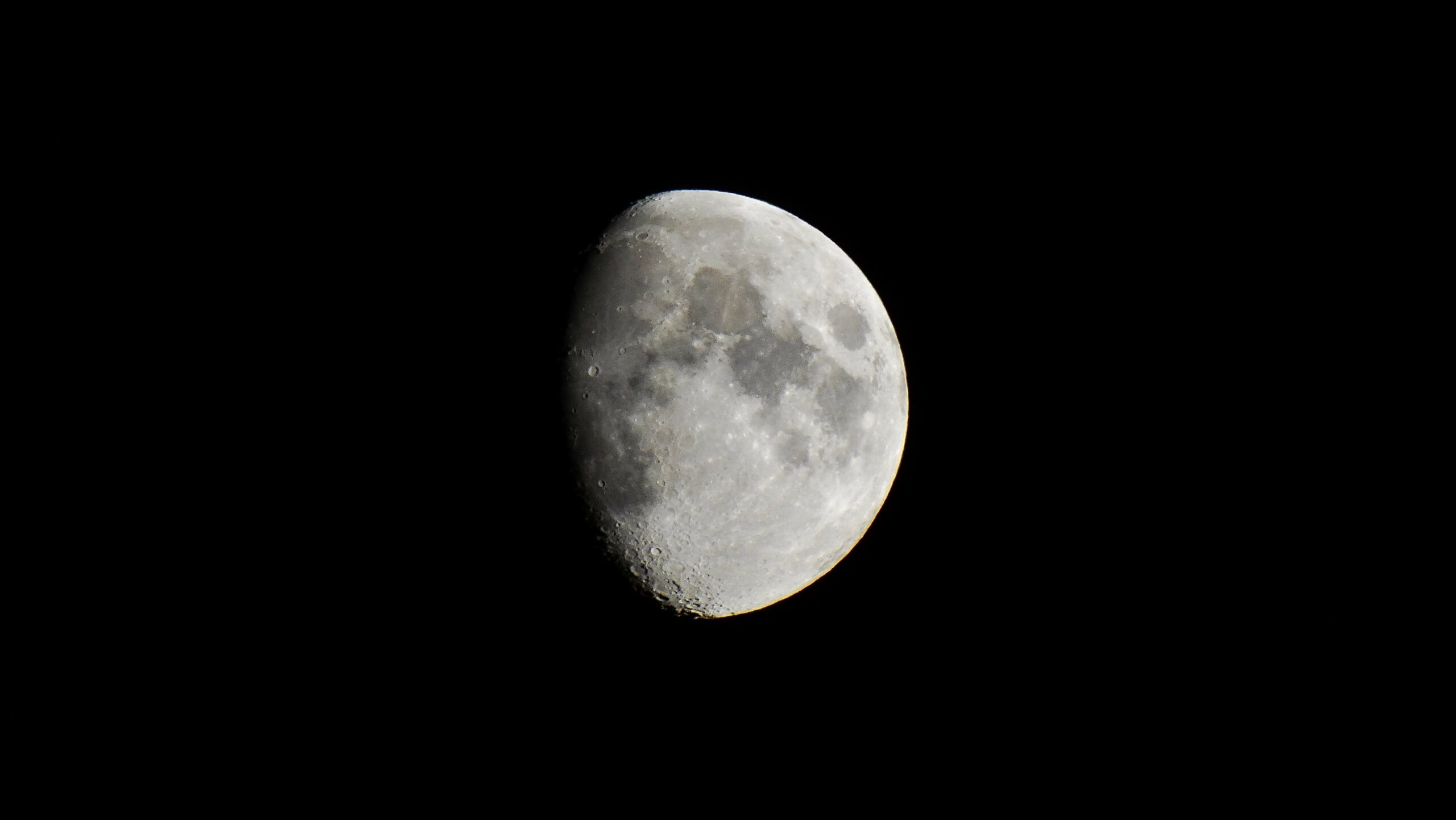
While the Artemis 2 mission is on its way to the Moon, let’s come back to a simple principle which is the time to reach our satellite.
Since Neil Armstrong took his historic first steps on the Moon in 1969 during the Apollo 11 mission, the question of how long it takes to complete an Earth-Moon trip continues to fascinate scientists, engineers and the general public. With interest in lunar exploration returning thanks to programs like NASA’s Artemis, it’s pertinent to look at how long it takes for a space shuttle to complete this impressive journey.
The historical framework of the Apollo missions
During the Apollo missions, the average duration of a trip to the Moon was about three days. The astronauts, powered by the powerful Saturn V rocket, took approximately 76 hours to travel the approximately 384,400 km separating our planet from its natural satellite. This period was a function not only of speed, reaching up to 40,000 km/h in the translunar transfer phase, but also of favorable launch windows determined by the relative position of the Earth and the Moon.
Current technological advances
Since the 1960s and 70s, space technologies have evolved considerably. Today, thanks to the optimization of flight trajectories, the use of more efficient propulsion and the advancement of navigation systems, a modern shuttle could theoretically reach our natural satellite in similar times. Companies like SpaceX are considering manned lunar missions that could potentially reduce that time through advanced propulsion technologies and lightweight structures.
The Artemis program and its objectives
The Artemis program, initiated by NASA, aims to return to the Moon. The Orion spacecraft, designed for this mission, must also complete this journey in approximately three days, although the goal is to minimize transit times while ensuring mission safety and efficiency. The first unmanned test of the vessel made it possible to reassess the capabilities and adjustments necessary for future manned missions.
The Challenges of Fast Travel
Reducing the duration of an Earth-Moon trip nevertheless poses significant challenges. Shorter flight durations would increase fuel consumption and G-forces experienced by the crew during acceleration and deceleration. Thus, the balance between efficiency, cost, and safety remains crucial. Additionally, the impact on onboard life support systems cannot be ignored, requiring adjustments to ensure the well-being of astronauts during the journey.
Conclusion
In conclusion, although current and future technologies promise potentially faster trips to the Moon, the estimated time for such a trip remains around three days. This delay reflects a trade-off between speed, security and economic viability. As space exploration continues to advance, it is exciting to think about innovations that could bring our vision of increased accessibility to space even closer, serving not only scientific exploration but also, one day, space tourism.