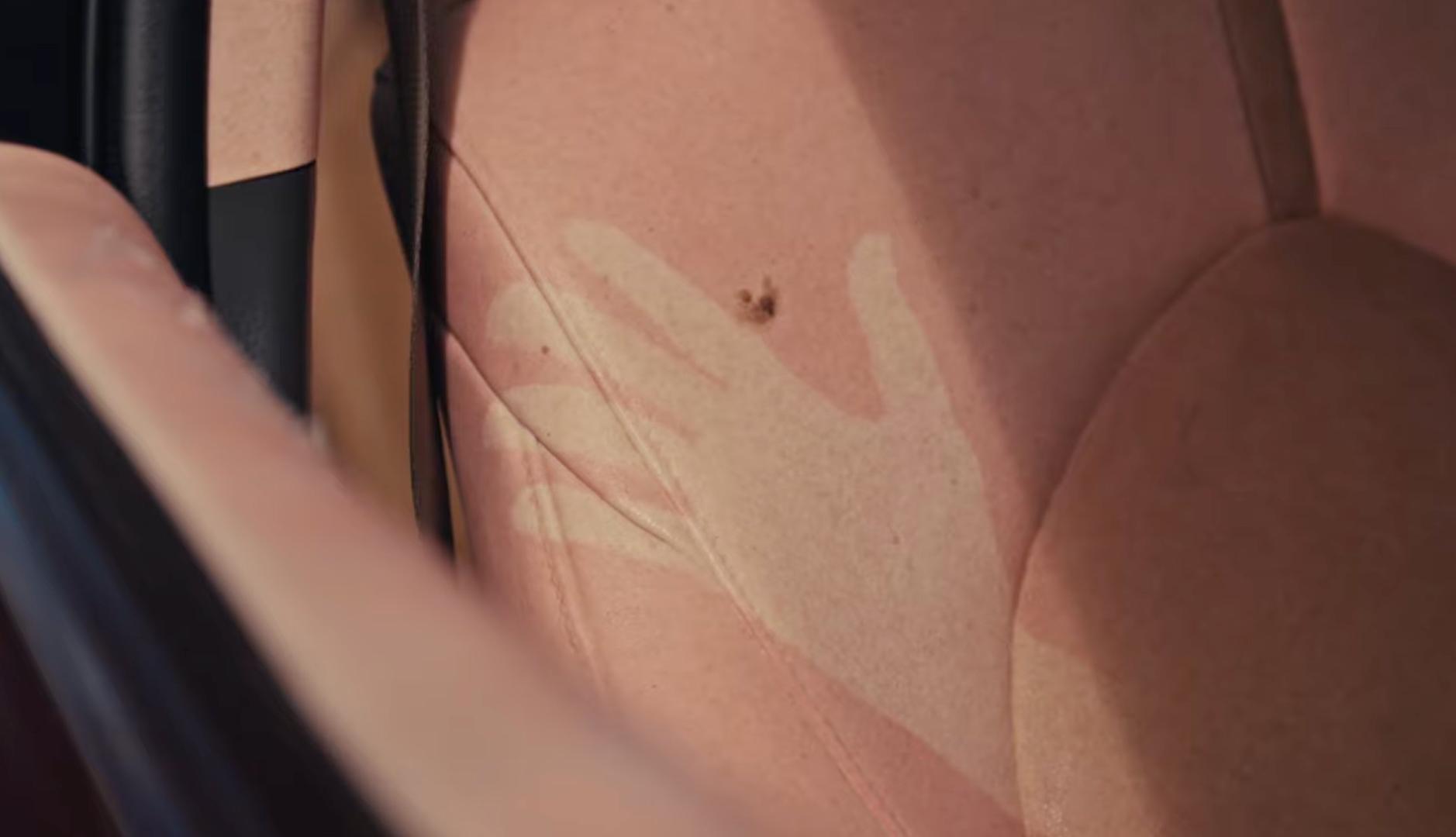
On the beach, in the pool, hiking in the mountains… We are aware of the importance of sun protection outdoors, but sometimes we forget the impact that sun protection can have on our skin while behind the wheel. To make this visible, the Australian chain of mechanical workshops MyCar Tire & Auto has created “The Sunburnt Car”, which reflects the risks associated with ultraviolet rays and driving.
The upholstery shows the reaction of the skin to exposure to the sun’s rays
The installation was carried out in collaboration with the creative agency TBWAEleven Australia and the design and special effects studio Odd Studios. Together they have created a car completely upholstered with synthetic leather designed to react visibly to exposure to the sun’s rays and, in this way, reflect the exposure to which the skin is subjected while driving and convey the damage that the sun can cause.
Thus, with a hyper-realistic recreation of the skin, the vehicle shows effects such as burns, peeling, irritations, moles or melanomas. The objective is to warn drivers of the importance of protecting their skin during one of the most common exposure situations in daily life: inside the car.
“The truth is that every time you drive, radiation passes through the glass, silently and constantly damaging your skin. No alarms. No warning signs. Until it’s too late“, they explain from MyCar on the website dedicated to the initiative. “We’re dedicated to putting people first, so we wanted to highlight the real damage your skin suffers from driving in the Australian sun”.
The campaign, according to Little Black Bookis based on research carried out by the brand that reveals a big difference between the perceived and actual protection in the car. While 92% of Australians say they protect themselves from the sun, 72% do not protect themselves when driving or traveling in a vehicle. Additionally, 70% believe they are protected from the sun inside the car, even though standard windows do not completely block ultraviolet rays.
In this sense, the objective of the installation has been, through detailed work on the synthetic leather, to show the reaction to exposure to the sun. To do this, the company has had the advice of Dr. Joanneke Maitz, surgeon and researcher specialized in burns and reconstructive surgery at Concord Hospital, who in a making-of video delves into the importance of protecting yourself when driving.
The campaign also features Anne Gately, author of “Sunburnt” and melanoma survivor, as an ambassador for the initiative.
“The Sunburnt Car” has been presented in an installation in Circular Quay, in Sydney, where users have been able to explore live the effects of the sun on the skin inside the car. The initiative is complemented by “Sun Spot” stickers, which are sensitive to ultraviolet rays and change color when detecting radiation, offering drivers and passengers a simple signal to think about protecting themselves before exposure increases.
MyCar has created 55,000 of these stickers that they offer for free through their website and in their more than 275 establishments throughout the country. This responds to another of the insights found in their research: 66% of Australians would consider a visual reminder in the car to use sunscreen or other protective measures before driving useful.
The campaign has also included the participation of influencers and content creators to amplify the initiative and the brand’s awareness message. The company assures that the action is part of its commitment to people, which goes beyond tires and vehicle maintenance.