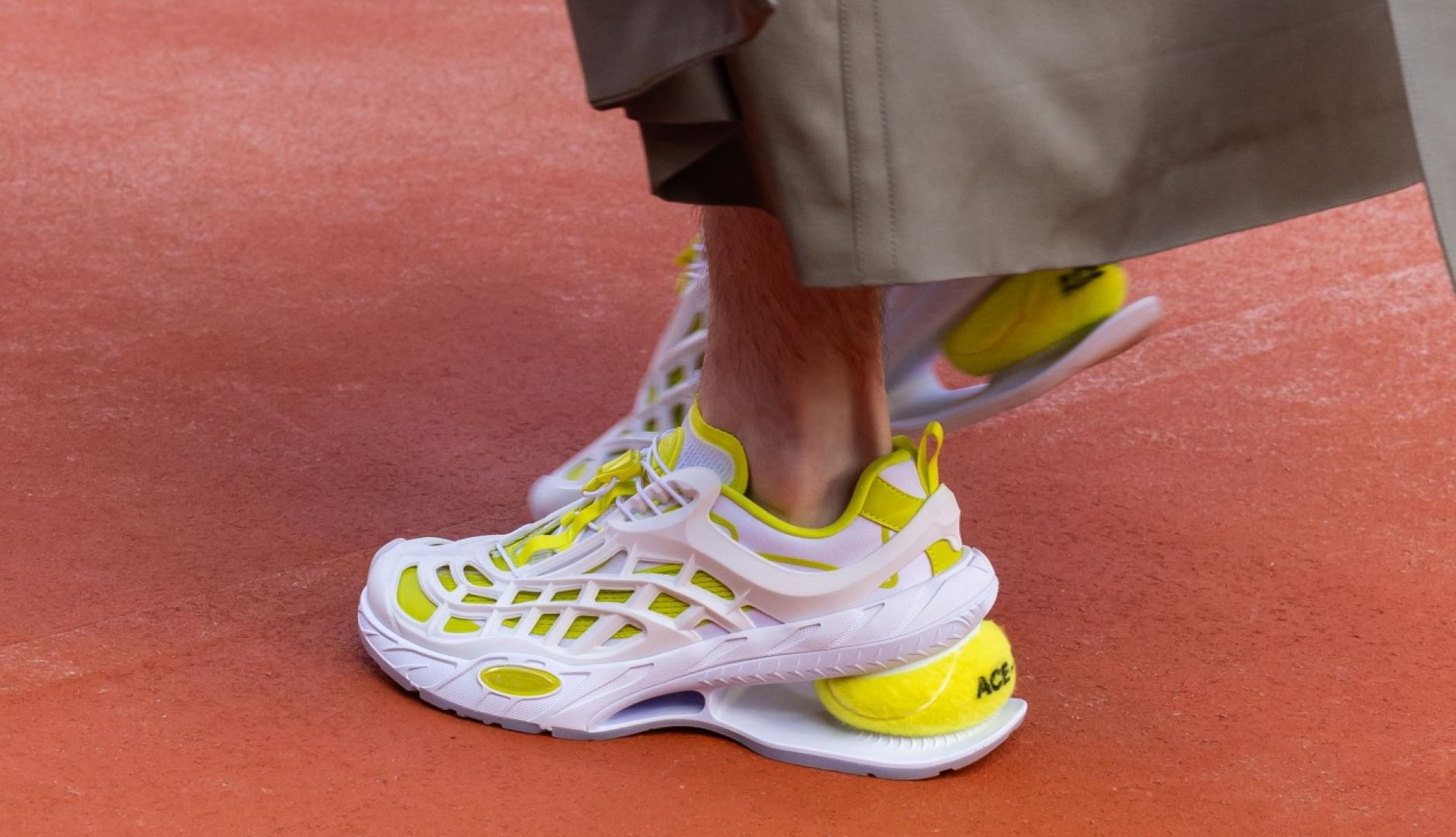
A tennis ball acting as a wedge under a shoe. It is one of the images with which Lacoste has brought runway elements back to fashion in its spring-summer 2027 collection, presented during Paris Fashion Week.
The proposal, developed under the creative direction of Pelagia Kolotouros, includes the new ACE-T1, a sculptural sneaker whose outer structure is cage It is inspired by the tension of the tennis net. But it is one of his reinterpretations that takes the exercise one step further: the silhouette appears elevated on a wedge shaped like a tennis ball.
The model is part of a family developed in three versions: sneaker, wedge and lace-up heeled shoe. In all of them, Lacoste starts from sports footwear to progressively modify its codes and take them towards silhouettes that are closer to fashion.
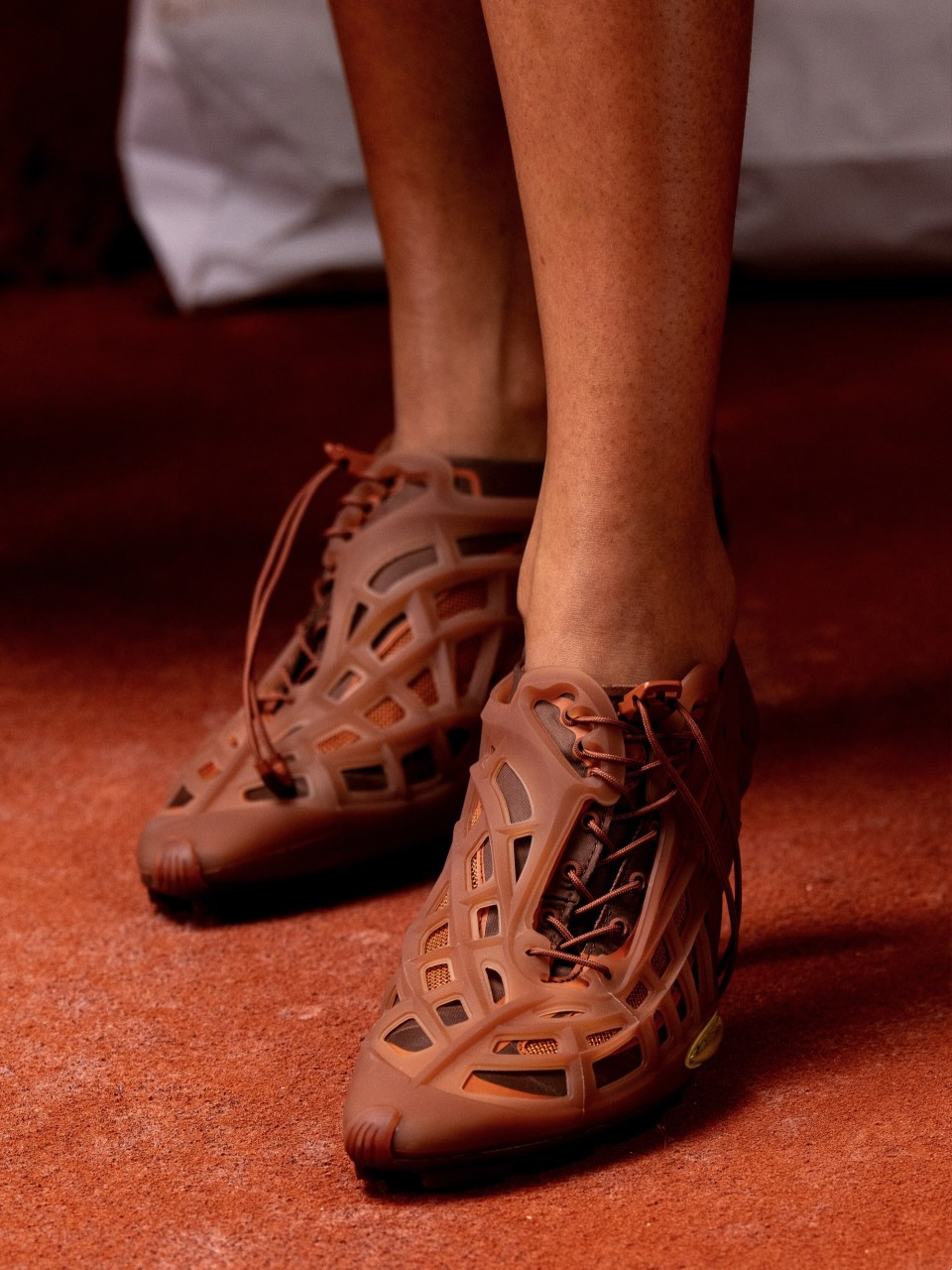
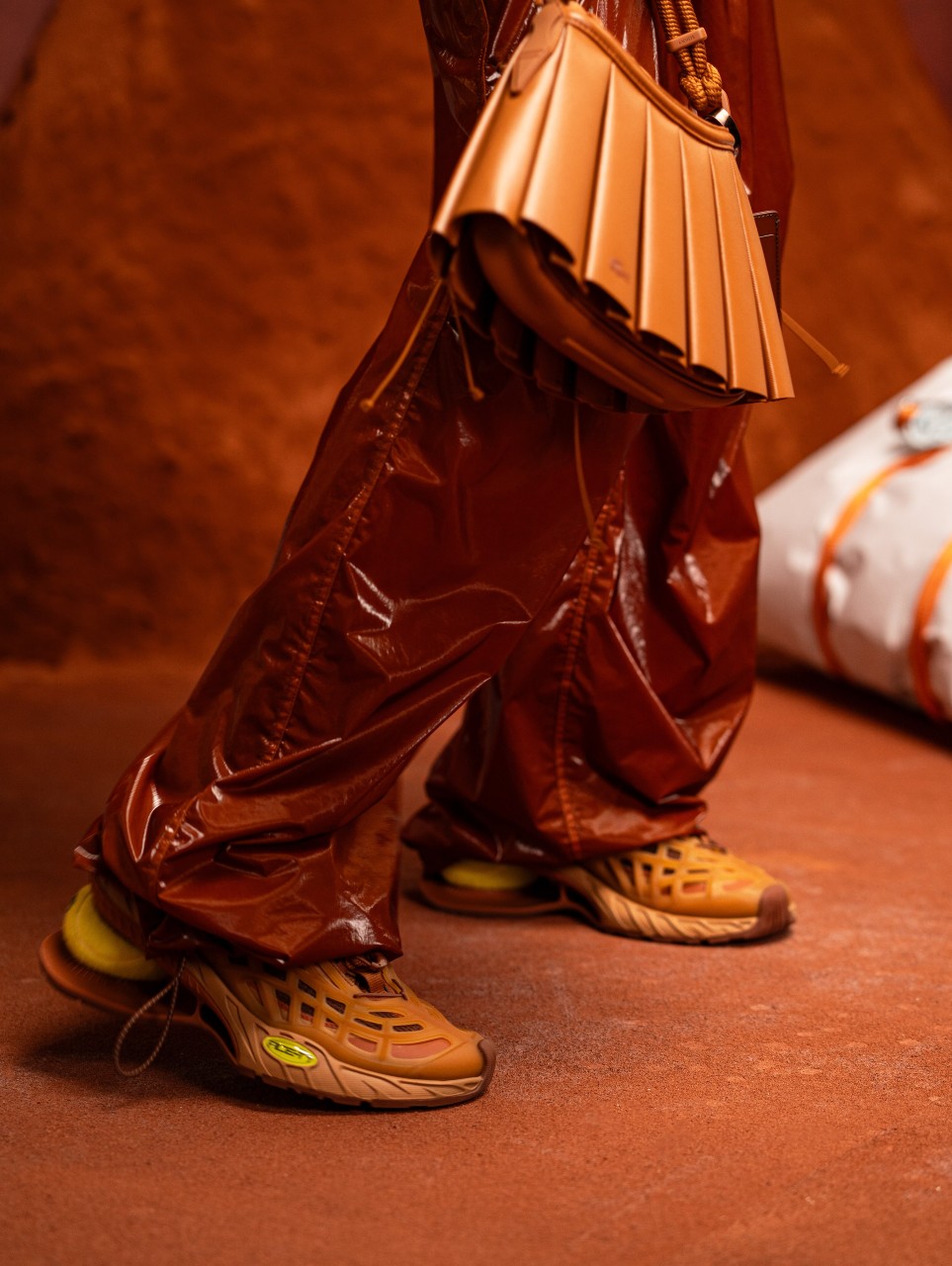
But the sneakers are not an isolated element within the collection. The tennis court practically functions as raw material for the entire show, from the chosen setting to the colors, fabrics and finishes of the garments.
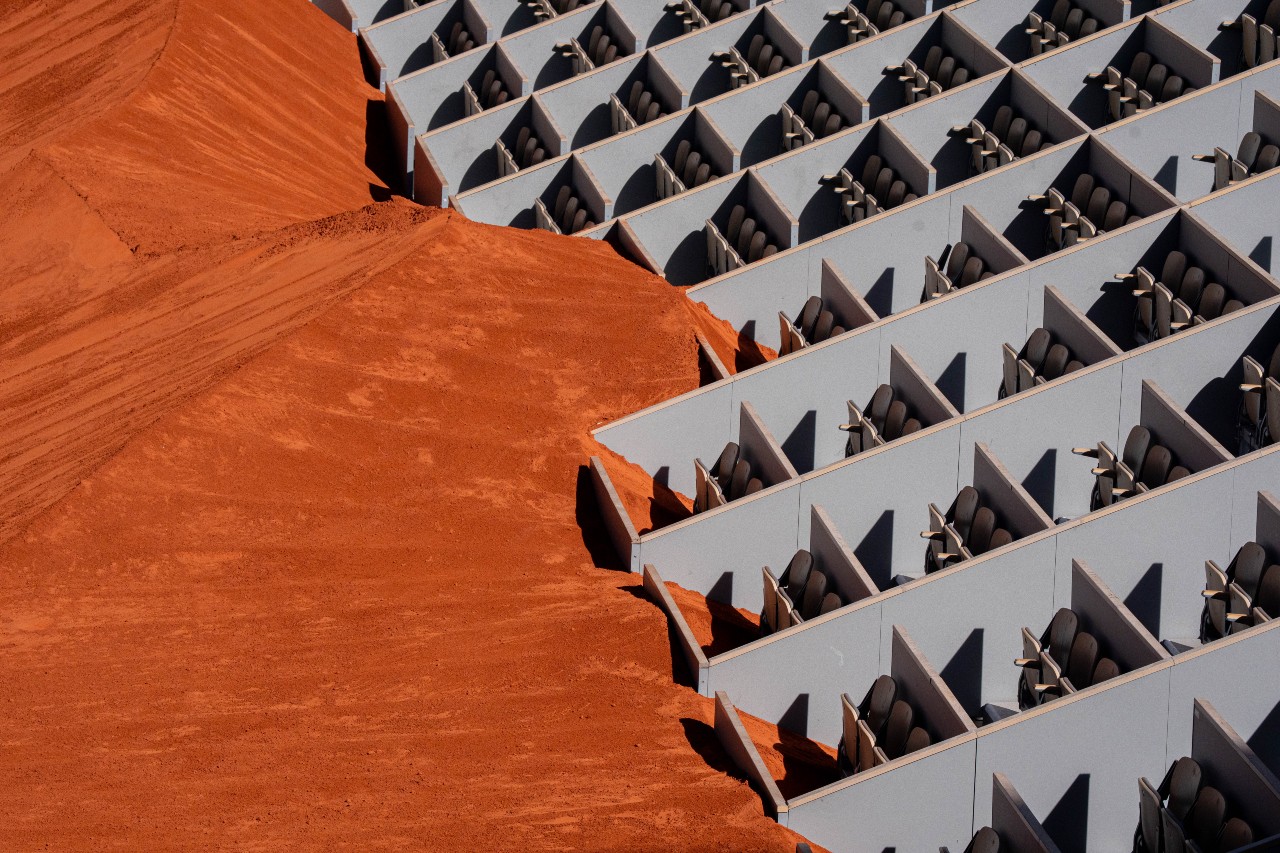
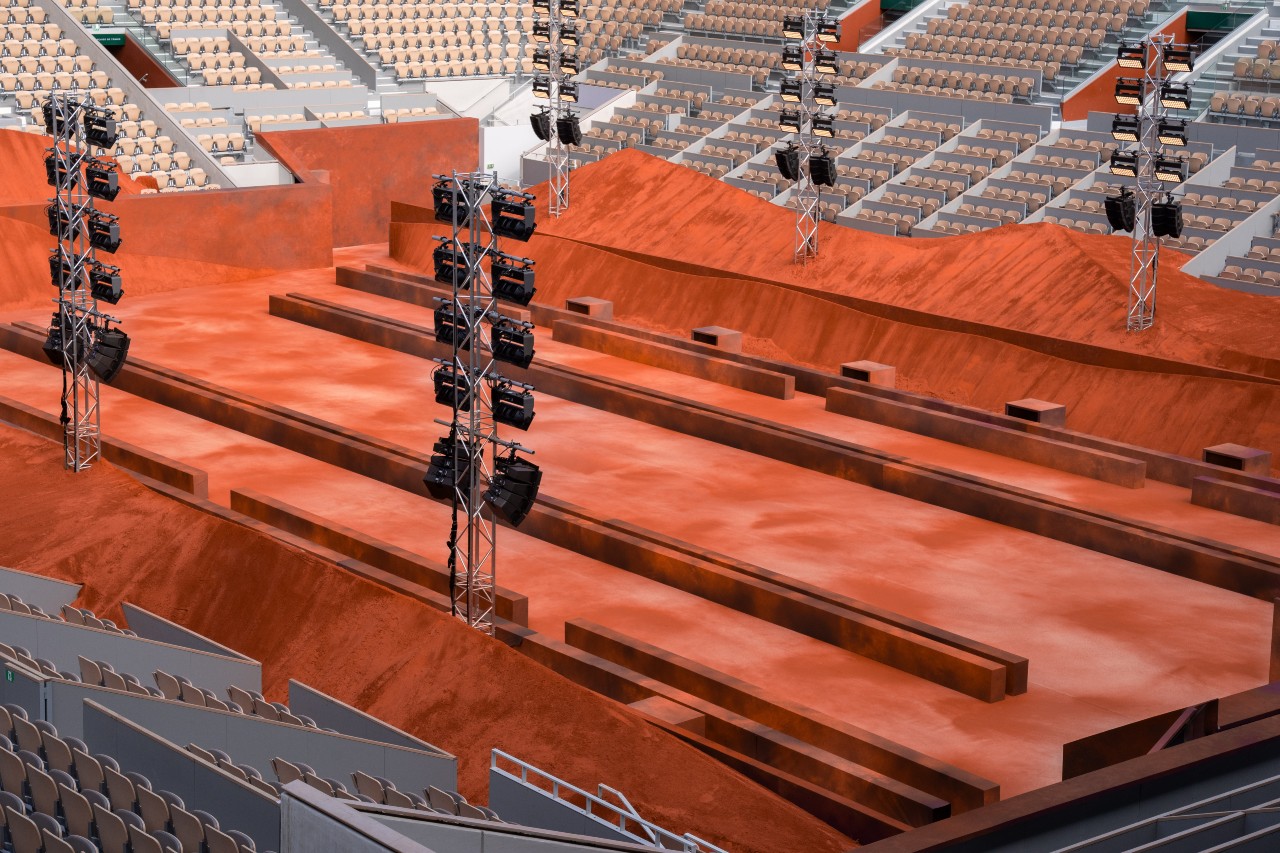
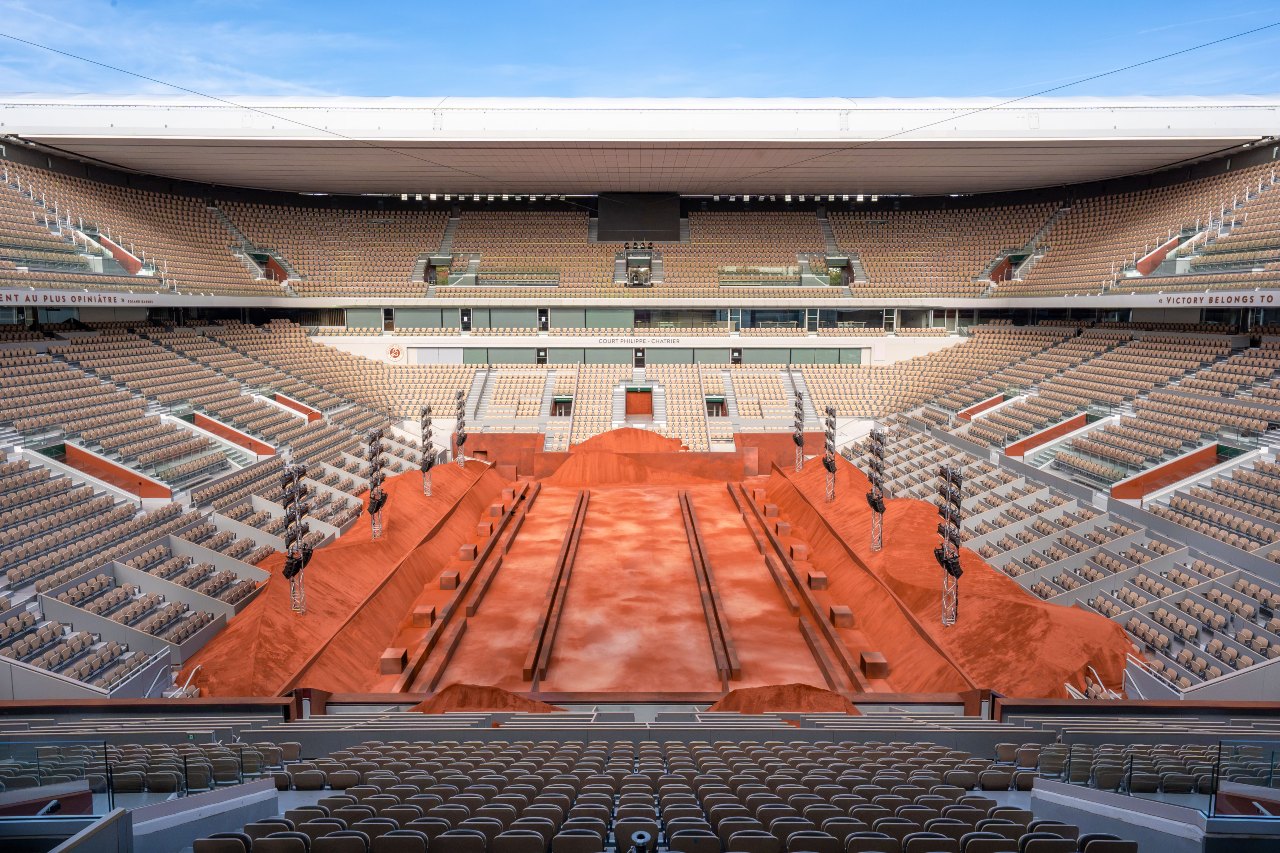
And Lacoste presented the collection on October 4 in a space closely linked to its history: the Philippe-Chatrier center court at Roland Garros. The brand modified, however, its usual appearance and large accumulations of clay invaded the premises as a reference to the place where this material is produced.
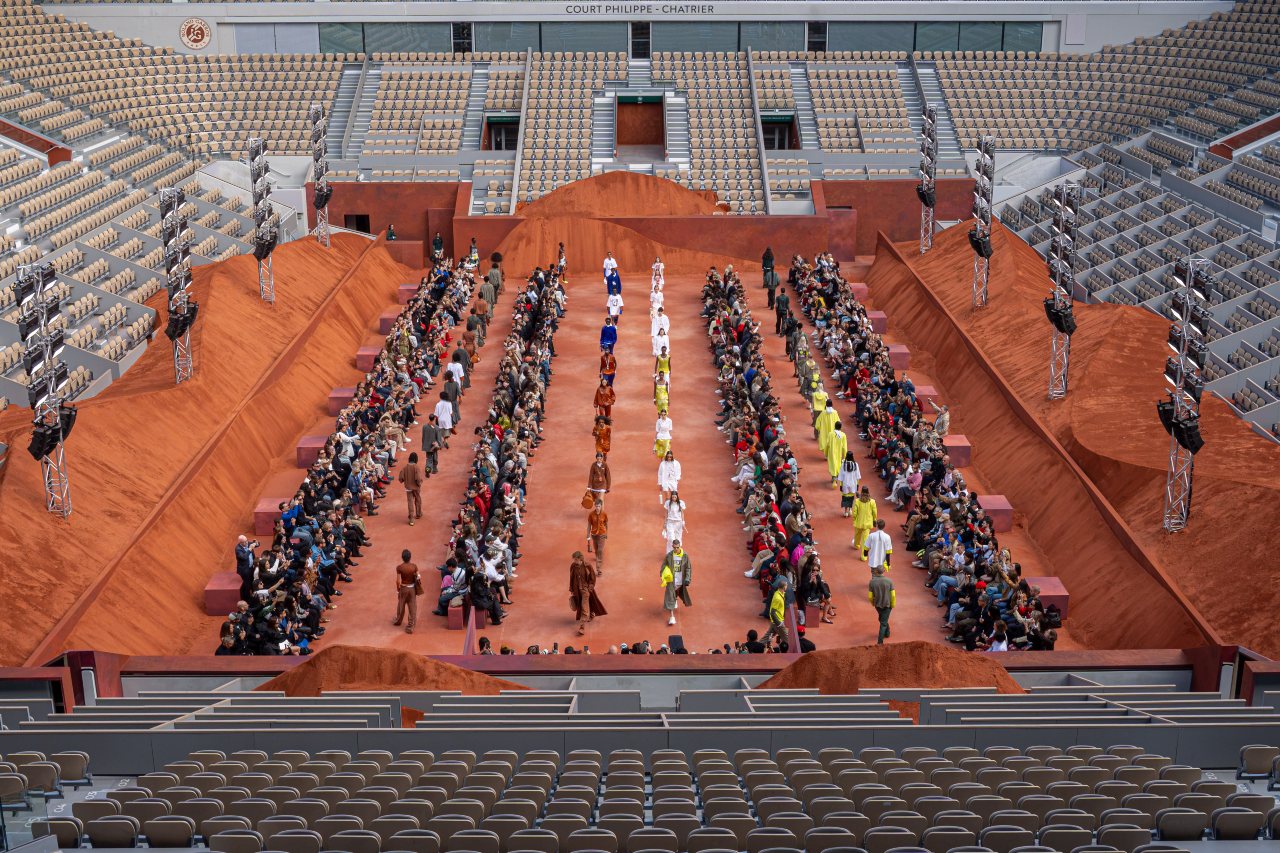
The concept chosen for the collection, “Dress Code: No White Required”starts precisely from questioning the white uniform, one of the historical codes of tennis. Lacoste places the origin of this reflection in the 1920s and in two figures who changed the way people dressed to play. Suzanne Lenglen took to the court without a corset and with a pleated midi skirt, while René Lacoste shortened the sleeves of his shirt seeking greater comfort, lightness and speed. From that functional modification, one of the company’s most recognizable products would end up being born: the polo shirt.
Kolotouros now uses that story to propose a collection in which clothing stops presenting itself as a rigid uniform and adapts to movement and individuality.
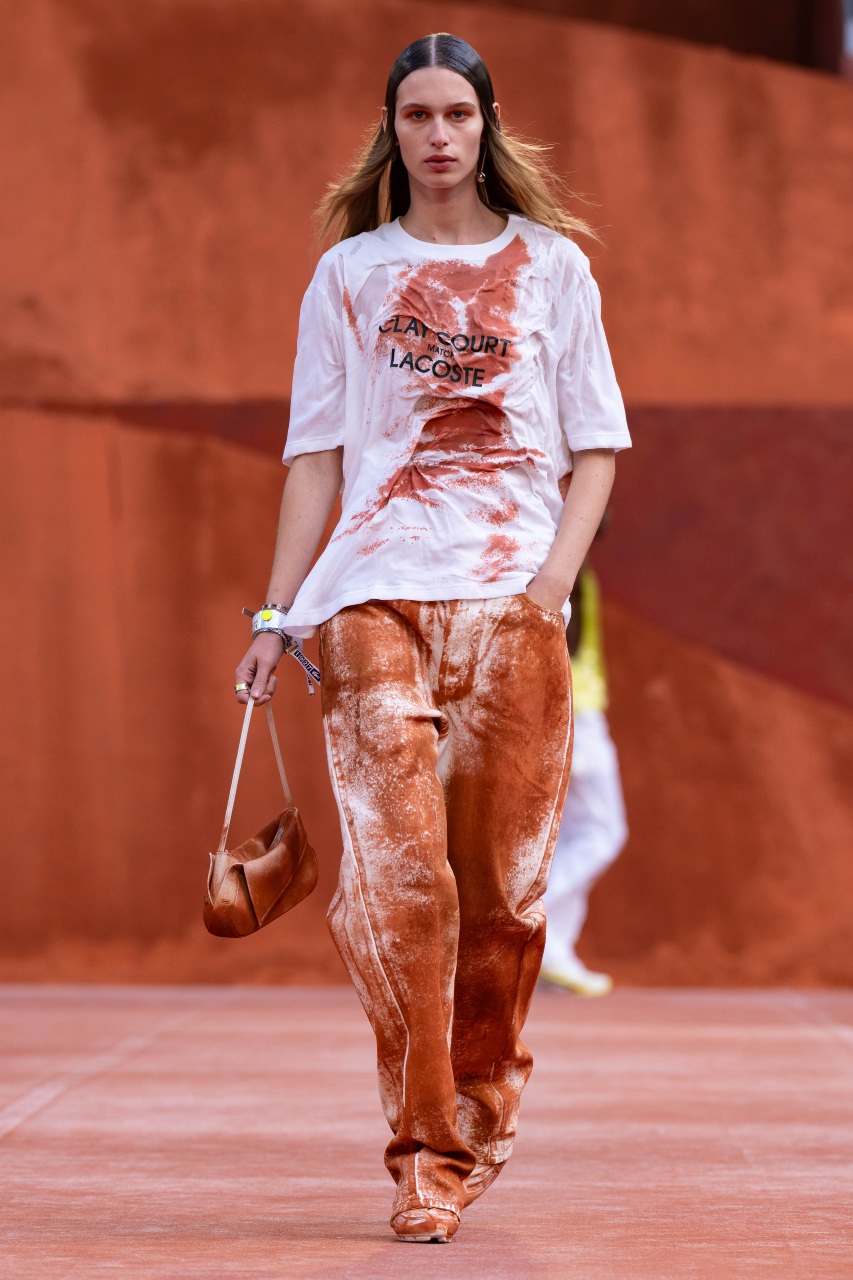
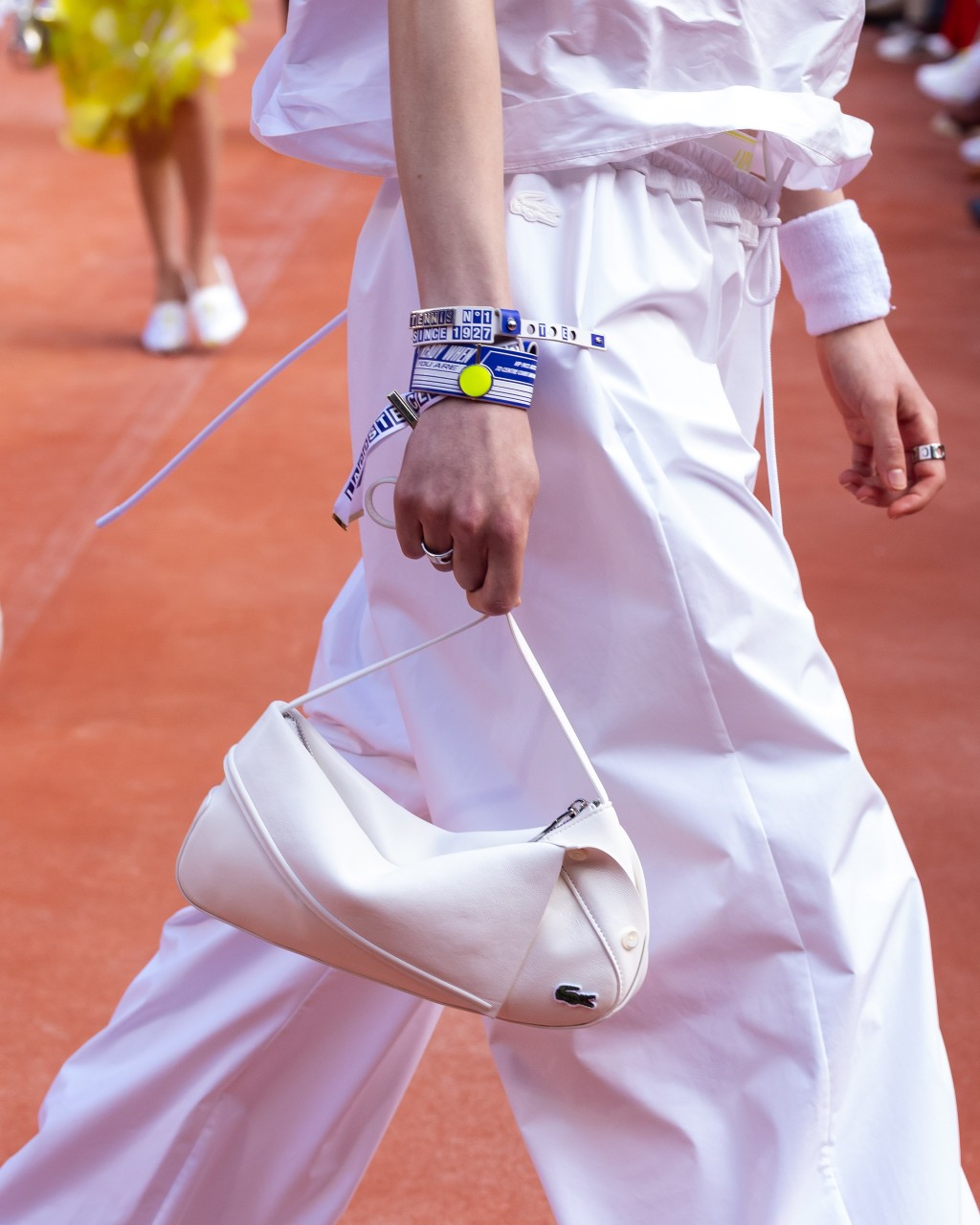
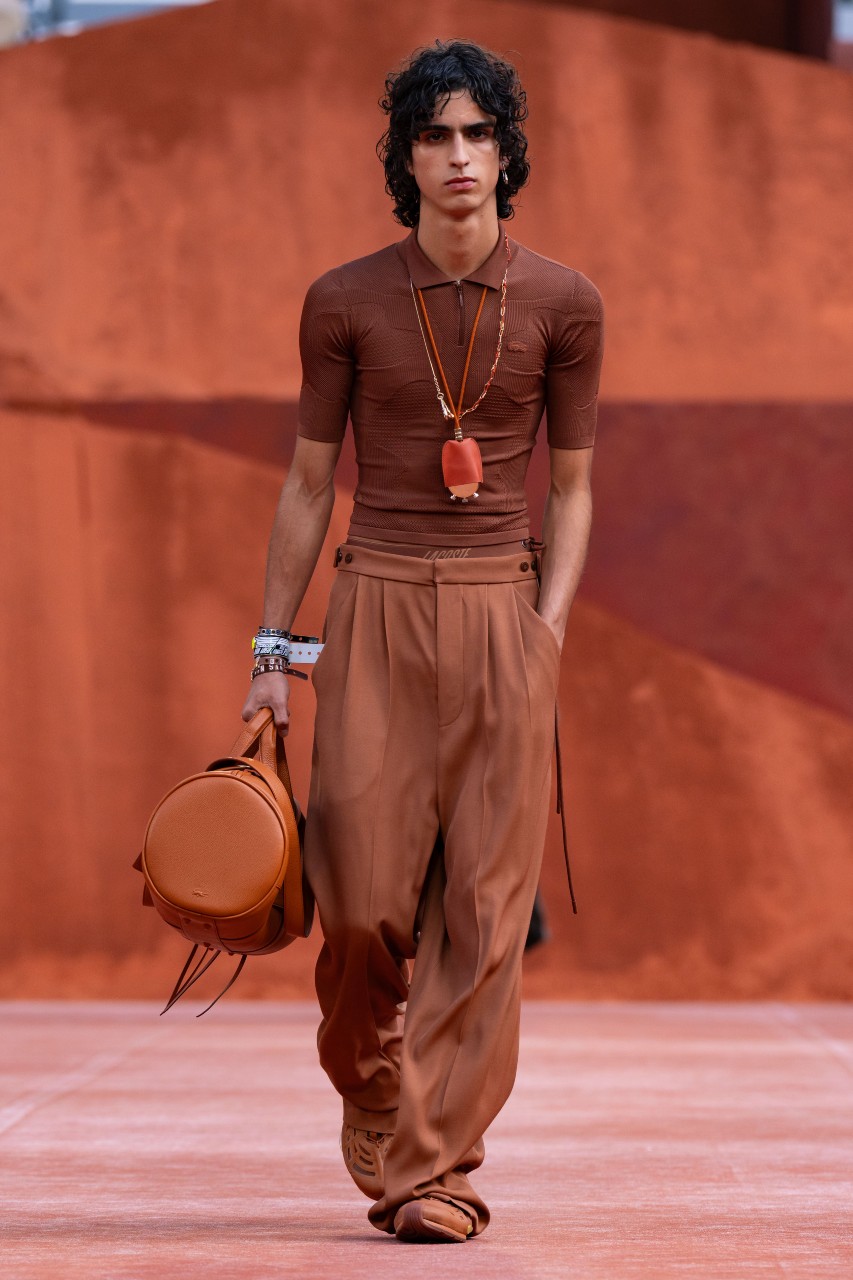
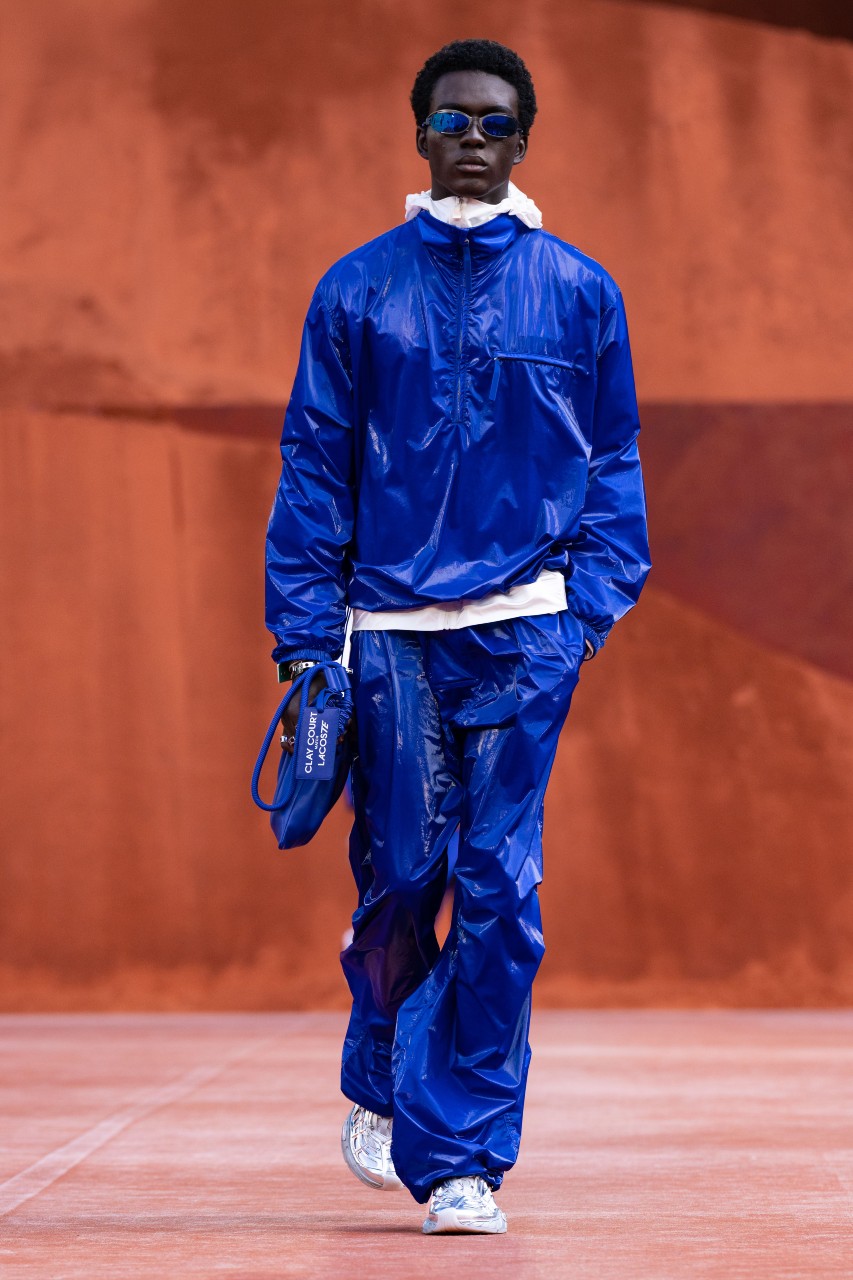
Even what could traditionally be interpreted as a sporting imperfection becomes part of the aesthetic. The clay appears on the bottoms of white coats and pants, as if the garments had just left the court after a match. The lines are blurred, the fabrics show movement and the traces of effort are incorporated into the design. The palette follows the same principle with clay and mineral tones combined with silver, acid yellow, cobalt blue and teal.
Lacoste once again puts tennis at the center of its identity
The show is part of a strategy that Lacoste is developing during 2026 to explicitly reinforce its roots in tennis and use them as a global positioning platform.
In April, the company, together with BETC Paris, revived one of its historic slogans, “Life is a Beautiful Sport,” to launch “The Run,” a global campaign that presented sport as a combination of movement, style and attitude.
The main piece transformed Paris into a large playing court. A young woman crossed gardens, streets and the Opera following a ball until she ended up on the Philippe-Chatrier court at Roland Garros, where Novak Djokovic, Lacoste ambassador, appeared.
The campaign already stated an intention that now acquires a more literal expression on the catwalk, and that is to make tennis leave the limits of the court while still being recognizable as tennis.
Eric Vallat himself, CEO of Lacoste, explained on the occasion of the relaunch of “Life is a Beautiful Sport” that the company was born from tennis and inherited from it “an attitude that transcends generations.” The intention was to use that origin to build a territory that could extend beyond sports.
The choice of Roland Garros as a venue reinforces that strategy. Lacoste has a historic relationship spanning more than five decades with the tournament and has already made the Philippe-Chatrier court the final destination of its global spring campaign. Now he uses it directly as a catwalk and takes the exercise to the products.
The phrase with which Lacoste summarizes the collection recovers, in fact, the gesture that gave rise to the brand itself. When René Lacoste decided to cut the sleeves of his shirt to play more freely, he was modifying a uniform based on a sporting need. Almost a century later, “Dress Code: No White Required” returns to that idea to propose that the heritage of tennis can continue to be rewritten through fashion.