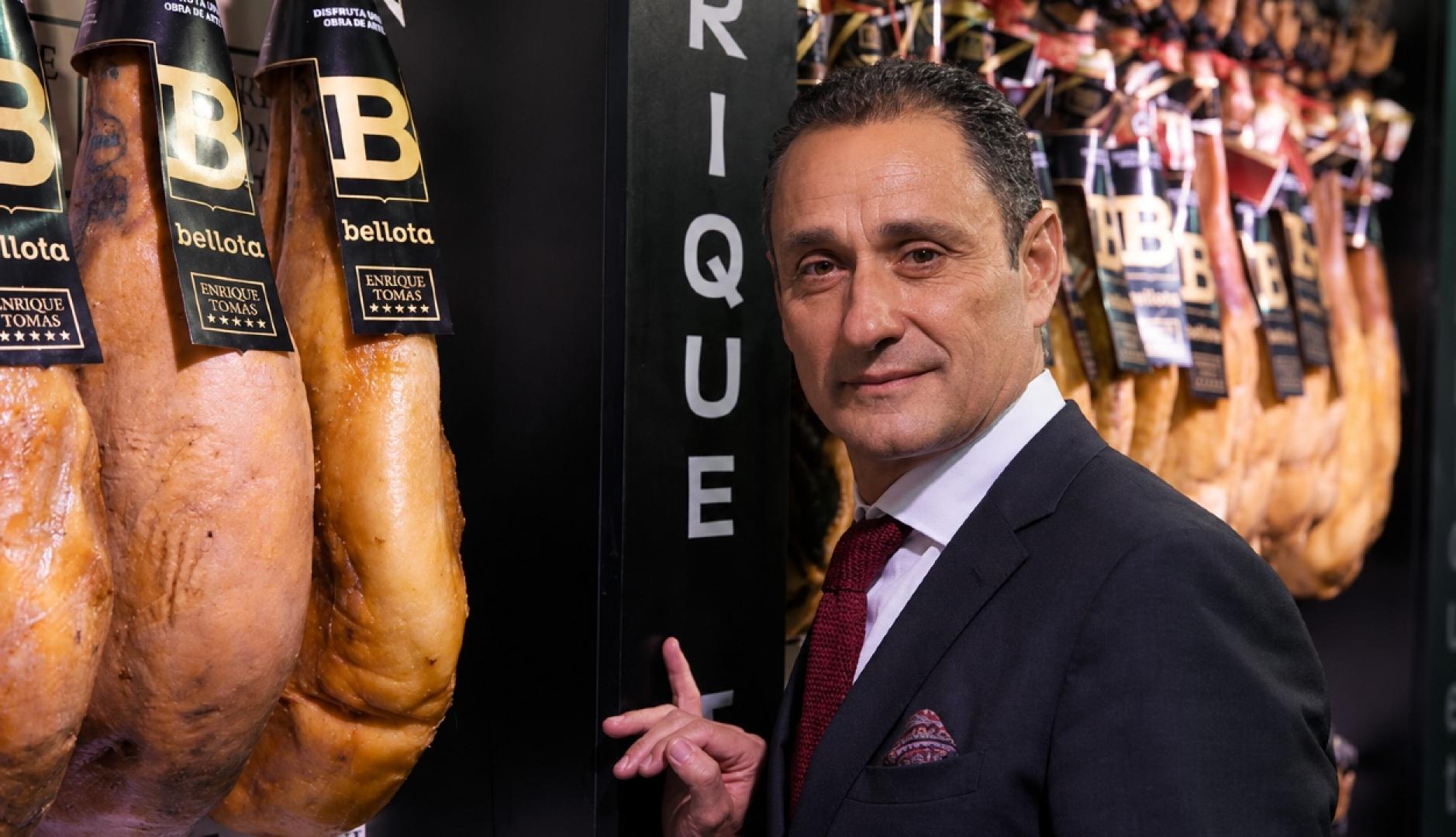
Taking a step aside from a family business is not just about deciding who will take the place of someone who has led it for decades. It requires preparing the organization for change, accepting that the successor will make different decisions and, especially, preventing the previous person in charge from continuing to exercise leadership from the background. Enrique Tomás has shared on social networks how he has precisely approached this process after 44 years at the head of his own company.
The businessman has explained the details of the transition after receiving numerous messages congratulating him on his decision to delegate leadership to his son Albert Tomás. And he has done so by introducing some nuances that transfer his personal experience to the field of family business management.
His reflection has generated a notable conversation on social networks. At the time of writing this article, it has accumulated more than 600 reactions and dozens of comments, many of them highlighting precisely the way in which the replacement has been planned and the founder’s ability to assume that the vision of the next generation does not have to coincide with his own.

Hear when it’s time to step away
Tomás explains that the decision did not come suddenly. For a time he began to pay attention to the fatigue and loss of enthusiasm regarding issues that previously motivated him. With the help of friends and professionals, he ended up interpreting it as a sign that his relationship with the company had entered a new stage.
It was in July 2025, when he was about to turn 59, when he made the decision. “After 47 years working and 44 directing and leading my own company, the time had come to delegate”he explains. And he recovers to describe it an expression of the businessman Antonio Puig: “let it be done.”
“I want to take a step to the side and see that you are prepared. I need to know if you want to and, above all, if you feel like it.”
The conversation with his son also did not start from assuming that, because he belonged to the next generation, he had to assume responsibility. Albert had then been working with him for 17 years and served as deputy director, but Enrique Tomás assures that he wanted to expressly ask him if he wanted to take on the challenge. “I want to take a step to the side and see that you are prepared. I need to know if you want to and, above all, if you feel like it. If not, we will look for other options.”he remembers telling him.
His son’s response was equally direct: “Dad, I can and I want to.”
Núria, Albert’s older sister, also supported the decision. Tomás thus introduces another dimension of family succession: the change in leadership not only affects the company’s organizational chart, but also the relationships and times of the family itself.
A year so that the successor can really decide
Father and son established a period of one year to develop the transition. And one of the examples that Enrique Tomás shares is especially significant because it shows what it really means to give up decision-making capacity. During that period, the company had to face the tender for the next ten years for one of its most important establishments: the Barcelona airport bar, in Terminal 1.

Faced with a decision that would determine a decade of business, father and son had different visions. “His vision prevailed in that decision, not mine.”explains Enrique Tomás. It is precisely one of the aspects that those who have reacted to its publication have highlighted, pointing out as especially interesting that in the face of a major decision, the vision of the successor and not that of the founder prevailed, and the businessman is congratulated for the planning of the process.
The transition has not been limited to the top executive position either. During that year, the company has relieved people in prominent positions and incorporated new profiles linked to the next leadership. “A transition is not just about changing who leads. It is about preparing the entire organization for a new way of moving forward”summarizes Tomás.
He assures that he has made it clear “with love and temperance” that the change is irreversible
The third learning that the businessman shares has to do with one of the common problems of any replacement: that there is formally a new person in charge, but that the organization continues to look to the previous one to make decisions. Tomás assures that one of his objectives has been to make clear “with love, but also with temperance” that the change is irreversible. And he resorted to a cinematographic reference to transfer it internally.
An admirer of “The Godfather,” he gathered the company’s team to watch the scene in which the character played by Marlon Brando points out Al Pacino as his successor. Thus, the lesson drawn is not simply in asking the organization to listen to the new person in charge, but also in unequivocally transferring authority to him. Tomás explains it with humor, turning to the film again: “Before five shots are fired at me and a misfortune occurs like in The Godfather, we will work as a team to complete a transition.”
And he also assumes something especially relevant in a company built for decades under his leadership: what comes will not be the same as what came before.
The reaction of other businessmen and professionals to his reflection has influenced precisely this way of approaching the replacement and some refer to him as “the Steve Jobs of Iberian ham”, trusting that his children will maintain the true essence of the business. Others highlight the process as a “great example of a family business,” given that it is not an easy decision.
The experience shared by Enrique Tomás thus leaves three ideas about succession in a family business: identifying when the time has come to delegate, preparing the replacement with enough time and allowing the new manager to truly exercise his leadership. A transition in which preserving the continuity of the company does not mean keeping intact the way it has been run until now.
As the businessman himself summarizes at the end of his reflection: “Once again, we will change from top to bottom to remain the same.”