Although healthcare professionals continue to be the main reference source when seeking and obtaining information about health and well-being, other media and formats have gained importance over the years. Artificial intelligence has recently joined a list that also includes influencers and content creators on social networks.
36% of Americans say they get health information from social media at least occasionally and 22% say the same about AI chatbots, according to a report published in July by the Pew Research Center. The data is obtained after the analysis of thousands of profiles (with more than 100,000 followers) that regularly publish on the topic on Instagram, TikTok or YouTube, and two surveys with a sample of more than 5,000 citizens each, carried out in the second half of 2025.
More specifically, nearly 6 in 10 young American women get health information from influencers. The research indicates that 57% of women between 18 and 29 years old claim to obtain information about health and well-being from influencers, a figure that is 10 percentage points higher than that of young men (47%). The figure, however, drops to 52% for women between 30 and 49 years old; while it remains at 47% for men of that age.
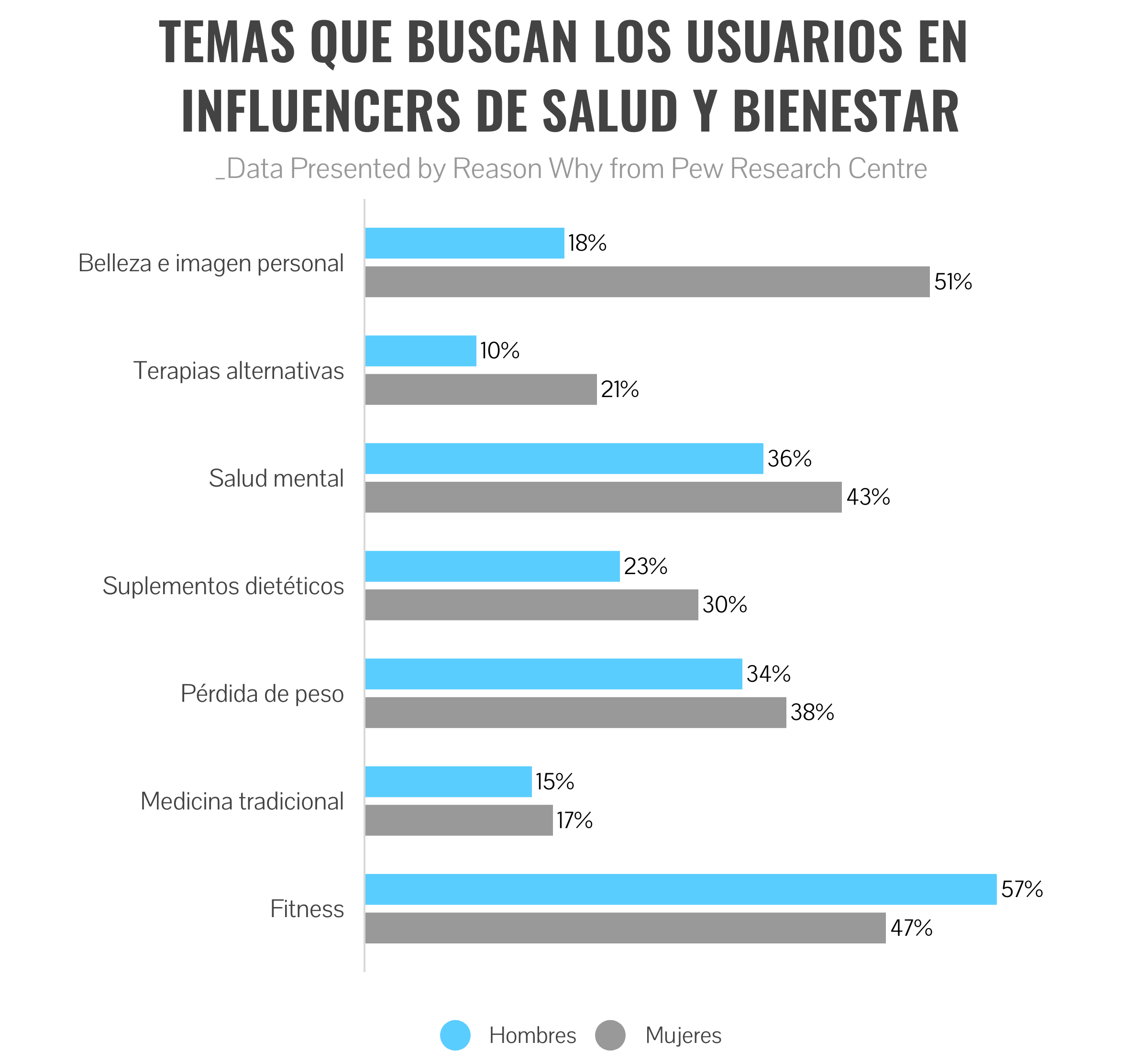
The Pew Research Center analysis has also taken into consideration the topics that young users occasionally hear from these influencers. The most prominent issues are, for women, beauty and personal image (51%); while this issue falls considerably among men (18%). The predominant topic for them is fitness (57%) which, however, also remains high among women (47%).
Among other data of interest, it is worth noting that young women (21%) are approximately twice as likely as young men (10%) to say that they frequently watch content about alternative medicine. However, similar percentages of young men and women say they frequently consume mental health, dietary supplements, and weight loss content through influencers.
In addition, Pew Research Center has also analyzed the motivations behind seeking information on this channel. More than half (51%) of young users say they are motivated by the desire for a change in health or lifestyle, a figure that drops to 27% in the case of young users.
Finding similar experiences also appears as an impulse. More women than men (23% vs. 14%) look for profiles that share their background or beliefs. They also turn to content creators to learn or learn things they don’t want to ask their doctors.
Trust, however, is a barrier. The analysis indicates that only one in ten consumers of health influencer content trusts all or almost all of the information they receive from them. More than twice as many (24%) say they trust her little or not at all. By profiles, adults over 65 years of age express greater skepticism regarding the information they receive from these influencers than younger age groups: 36% of them trust said information little or not at all.
The usefulness of the content, however, is perceived differently. 54% of those who turn to influencers say they have helped them better understand how to lead a healthy life. On the other hand, 12% say that it has generated more confusion in this regard. Along these lines, 26% of consumers report that the information obtained from influencers has generated greater concern about their health, compared to 22% who indicate that it has reduced their concerns.
Artificial intelligence and health
Artificial intelligence, for its part, is gaining weight among the sources consulted, especially among the youngest. According to Pew Research Center, two in ten Americans get health and wellness information from chatbots occasionally, with 7% doing so quite often. The penetration of these tools is greater among users between 18 and 29 years old (32%) than among those over 65 years old (10%).
And just like with influencers, trust is a challenge. only 18% consider chatbots to be very accurate in providing information about health and well-being. This data clashes with the perception that American consumers have of health professionals (65%) or major health websites (48%).
Chatbots, on the other hand, are perceived as convenient and easy to understand.