What is the first thing a human being sees when he or she enters the world? Amplitude Studios and BETC Paris have started from a question like this to present Humankind II, the second installment of the strategy video game that proposes players to build their own history of humanity.
The campaign, presented during Gamescom 2026, literally returns to the beginning to announce this new beginning. Under the premise “Humankind is about to begin again,” a 95-second film spans several millennia through nine births.
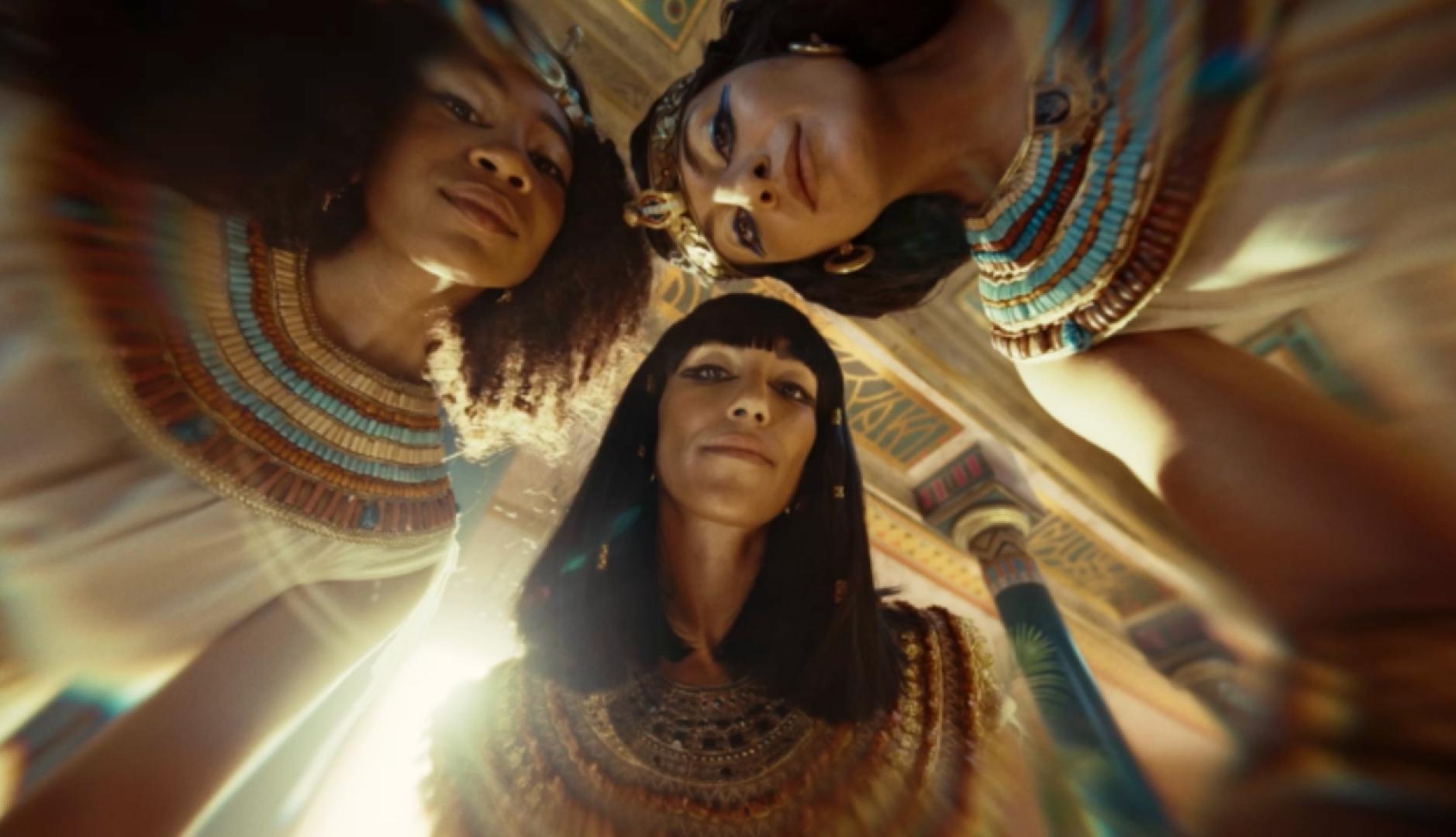
The particularity is in how they are counted. The viewer never contemplates History from the outside: the camera takes the place of the newborn. Every time he opens his eyes, a completely different civilization, historical period and circumstances appear before him.
The tour begins in Prehistory and ends outside of Earth. Between both extremes appear Ancient Egypt, the Mayan civilization, a Viking ship caught in a storm, feudal China, London devastated by the Black Death, a caravan of pioneers during the American westward expansion, and France during World War II.
Centuries, dangers, technology and civilizations change but the event that opens each chapter remains: a human being has just arrived in a world that he has not chosen.
The production is by Prose on Pixels, the production division of the Havas/BETC group, together with B2Y. While Light VFX has done the post-production and visual effects.
After a first installment released in 2021, Amplitude Studios has rethought the game with new possibilities and a more immersive experience. The campaign avoids presenting this evolution through a conventional product demonstration and translates it into a cinematic idea.
The use of the subjective camera reinforces precisely that dimension. The public does not receive an invitation to observe different civilizations from a distance, but rather is “born” within each of them and has just a few seconds to recognize where and when they are.
“The newborn’s point of view places the player where it all begins, ready to write their own story”
“A birth is the only moment that all of humanity shares: the perfect starting point. The newborn’s point of view places the player right where it all begins, ready to write their own story”explain Benjamin Le Breton and Arnaud Assouline, Creative Directors of BETC Paris and directors of the film.
The apparent simplicity of the creative resource implied a particularly complex production. For just 95 seconds of footage, it was necessary to recreate nine different periods, build as many sets and work with nearly a hundred extras.
Filming took place over three days in a studio in Sofia, Bulgaria, after seven days of preparation. And each birth required building a universe that could be identified practically immediately. Sets, costumes, props, makeup, characters and environments had to provide sufficient historical signals to situate the viewer, in addition to representing the conditions in which a birth could have occurred during each period. The baby’s own point of view added another difficulty. The film was shot with a wide-angle lens and, on numerous occasions, at a very close distance from the actors. The faces and details had to be believable despite this proximity and, at the same time, allow the context of each scene to be quickly understood.
Thus, the piece uses digital effects and CGI, but those responsible expressly highlight that no generative artificial intelligence has been used. “It was a real challenge that we were determined to really face, with real actors and real costumes. Because a film about humanity should be made by humans”point out Le Breton and Assouline.
After traveling through thousands of years, the ninth birth moves history into the future. The baby opens his eyes in a spaceship orbiting the Earth, closing the journey from the first human settlements to a hypothetical civilization capable of leaving the planet. The scene also contains a reference intended for fans of the franchise. The mother who appears aboard the ship is played by the heroine and icon of the first Humankind, connecting the end of the film with the universe of the original installment just when the story is about to begin again.