Before micron-milled ceramics, mouths were repaired with Etruscan gold, ox femur, hippopotamus tusks and, well into the 19th century, the teeth of fallen soldiers.
In this little journey of 2,700 years of oral tinkering, and there are passages where you will tighten yours.
The Etruscans were seven centuries ahead
Back to the 7th century BCE, in Tuscany. The Etruscans, this people of goldsmiths that the Romans would eventually absorb, were already making devices from thin strips of gold, riveted around healthy teeth, in which a tooth was housed. Sometimes a real human tooth recovered, sometimes a recut calf tooth.
It’s stunningly modern. This is the direct ancestor of the dental prosthesis as it is still conceived today. Archaeologists are still debating the exact function of these jewels. Many lean towards a social marker reserved for women from large families.
Then, two thousand years of sidereal void
Rome copies the Etruscans, then hardly anything is invented anymore. In the Middle Ages, dentistry was practiced by barbers, blacksmiths and fairground tooth pullers. The universal solution: pliers.
We have to wait for Pierre Fauchard for things to move again. Former surgeon of the royal navy, based in Paris, he published in 1728 The Dental Surgeon, or Treatise on Teeththe first work to describe the anatomy of the mouth, diseases, extractions and prostheses in a single volume.
Fauchard works with ivory, invents spring systems to hold appliances in place, and describes how to straighten misaligned teeth. He also imposed the term “dental surgeon” to distinguish himself from the charlatans who operated on the market places. Two and a half centuries later, it is still the name of the profession.
The worst market in history
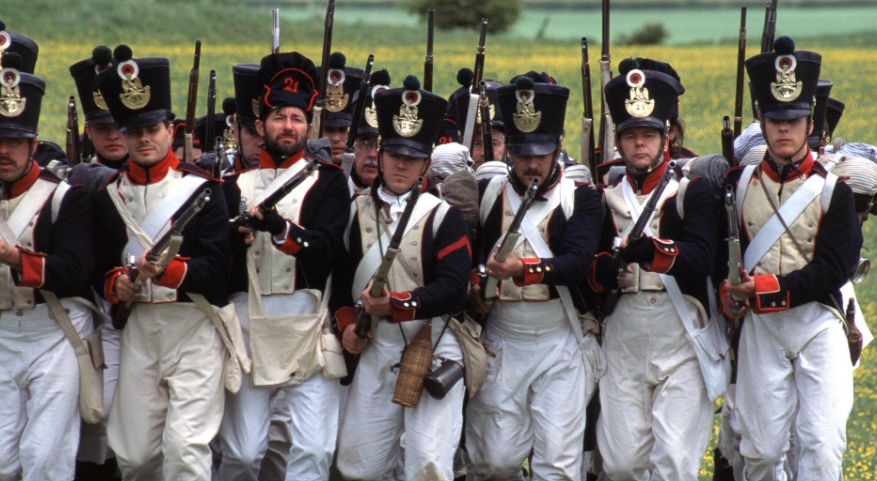
June 18, 1815, Waterloo. Nearly 50,000 men fell in one day. In the hours that followed, looters, locals and sometimes surviving soldiers roamed the battlefield with pincers. For teeth.
They are sorted, sent to England in whole barrels, boiled (that was all the sterilization), freed of their roots, then fixed on ivory plates. The molars were left there, too hard to extract and too complicated to fit. The British Dental Association Museum and British Collections hold many of these devices, some of which are on display today.
British dentists sold these prostheses under the name “Waterloo teeth”, and it was a mark of quality: guaranteed to come from healthy young men who died in the prime of life, not executed convicts or corpses dug up by grave robbers.
Then we did chemistry
Porcelain arrived at the end of the 18th century, vulcanized rubber in the 19th century. For the first time, a worker can afford dentures. However, the current protocol no longer has anything to do with it. The star material is zirconium oxide stabilized with yttrium. A zirconia crown withstands bending stresses of the order of 900 to 1,200 MPa, far beyond what a human jaw can produce. This is why it is used to coat rockets.
Real progress
From the Etruscan calf’s tooth to a ceramic that blocks its own fractures, it took 2,700 years. Still, the most important revolution is in the fact that we keep our teeth. Fluoride, daily brushing, scaling, cavity screening: our great-great-grandparents considered it normal to be toothless at fifty.
So the next time you dread the dentist’s chair, remember that two centuries ago the alternative was carrying the boiled teeth of a stranger who had fallen into Belgium into your mouth.