Hair coloring has traditionally functioned as a tool for personal expression, fashion or aesthetic transformation. Got2b now wants to add an unexpected utility: helping to reduce heat buildup on the surface of the hair during the summer months.
The Henkel brand has launched “Cool Color” in Japan, a campaign created together with I&S BBDO that proposes light tones as a possible complementary response to extreme temperatures. The proposal is based on an observation: black hair, the majority among the Japanese population, absorbs more radiation than light colors and can reach a higher surface temperature when exposed to the sun.
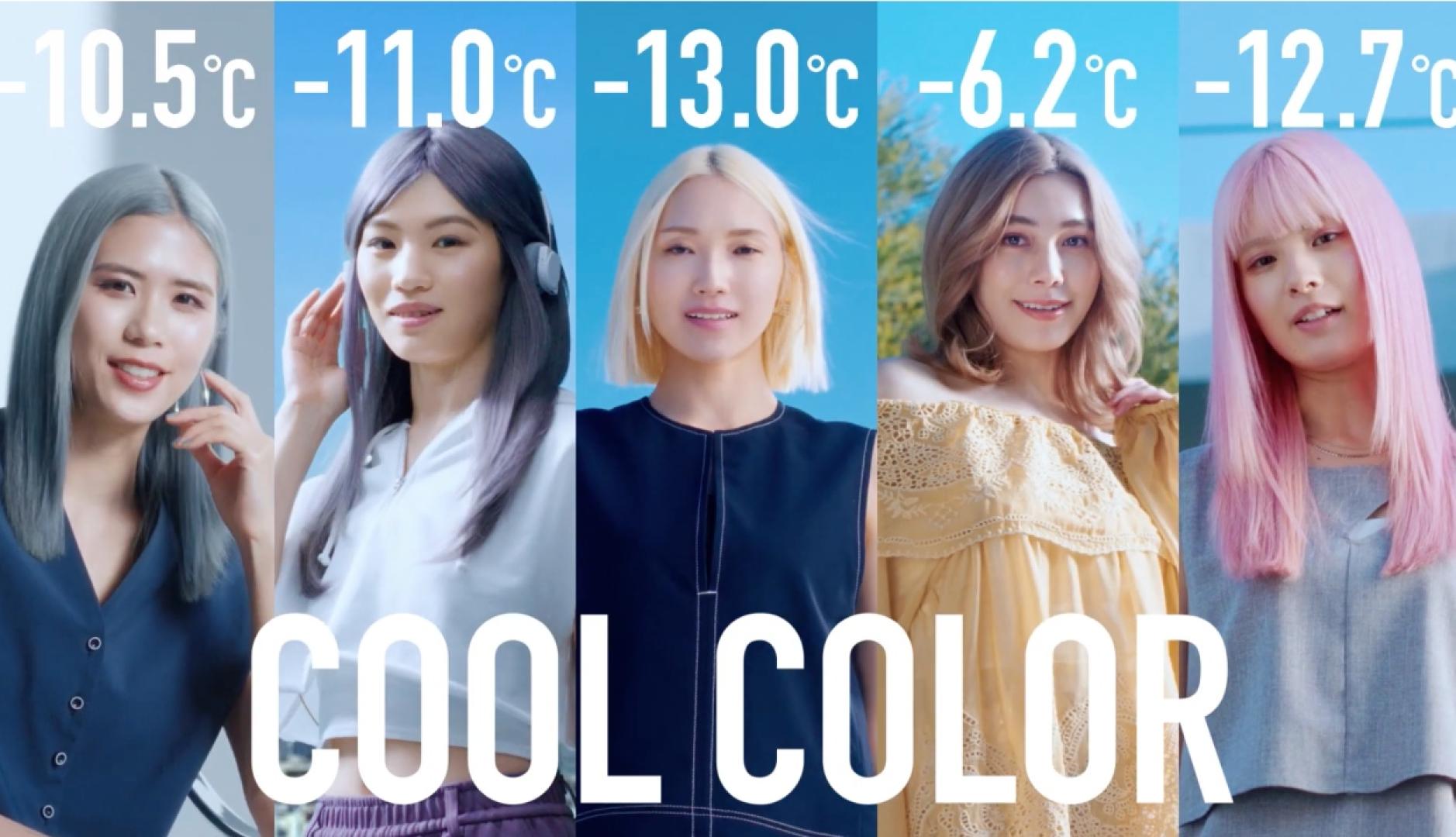
Under the message “Dye It Cool This Summer,” the campaign features five women with hair dyed silver, lavender, blonde, pink and a shade known as milk tea. Each color appears accompanied by the thermal difference that the brand claims to have registered with respect to black.
The action thus moves the conversation about the product from appearance to comfort. Got2b is not limited to showing a collection of colors for summer, but is trying to build a new functional reason for dyeing: reducing the temperature that the hair reaches under continuous exposure to the sun.
An experiment with six hair colors
To support the approach, the brand carried out a field test with wigs in six shades: black, blonde, silver, lavender, milk tea and pink.
The pieces were placed in an outdoor environment with a temperature of 36.4º and a humidity of 60%. The teams measured hair surface temperature after three, ten and twenty minutes of direct exposure to sunlight.
According to the results released by Got2b, blonde hair registered a temperature 13.05 degrees lower than black hair after twenty minutes. The rest of the light tones also showed less thermal accumulation, and the distance from black increased as the exposure was prolonged.
The audiovisual piece incorporates thermographic images that allow the temperature reached by the different colors to be visually compared. The resource provides credibility to the idea and makes it easier for technical data to be understood immediately.
Although the test allows us to visualize a known physical property of dark colors, which absorb a greater amount of radiation, it is not equivalent to a clinical study nor does it allow us to conclude that dyeing reduces body temperature or the risk associated with heat by the same proportion. The campaign talks about the surface temperature of the hair measured on wigs, not the effects that coloring would have on a person, where variables such as hair density, length, scalp, sweating, wind or exposure time intervene.
“Cool Color” comes in a context of growing concern about extreme temperatures in Japan. According to data from the Japan Meteorological Agency cited by the campaign, the country’s average temperature has increased 1.4 degrees over the last century and days with temperatures above 35º are four times more frequent than a hundred years ago.
“This campaign comes at a critical time”said Yuka Ishikawa, Director of Consumer Brand Marketing at Henkel Japan. “As heat waves intensified and consumer stress increased, we asked ourselves an overlooked question: Could something as widespread as hair color play a role in heat management?”
For Ishikawa, the initiative broadens the way of understanding innovation in beauty. “By positioning our products as climate adaptation solutions, we have taken innovation beyond formulation and into the way products are conceived and consumed”he explained.
The campaign is completed with a website and digital content that develops the experiment and explains the relationship between color and heat absorption. The communication is activated on a national scale in Japan and aims to introduce what the brand describes as a new cultural norm, according to which dyeing during the summer can respond to both a style decision and a practical consideration.
“Hair color has always been a powerful fashion statement”said Ryuma Kodaka, Creative Director at I&S BBDO Group. “What makes ‘Cool Color’ revolutionary is its ability to transform perception through a simple change of perspective.” Kodaka points out that the concept may be especially relevant for people with prolonged exposure to the outdoors, such as athletes or workers.