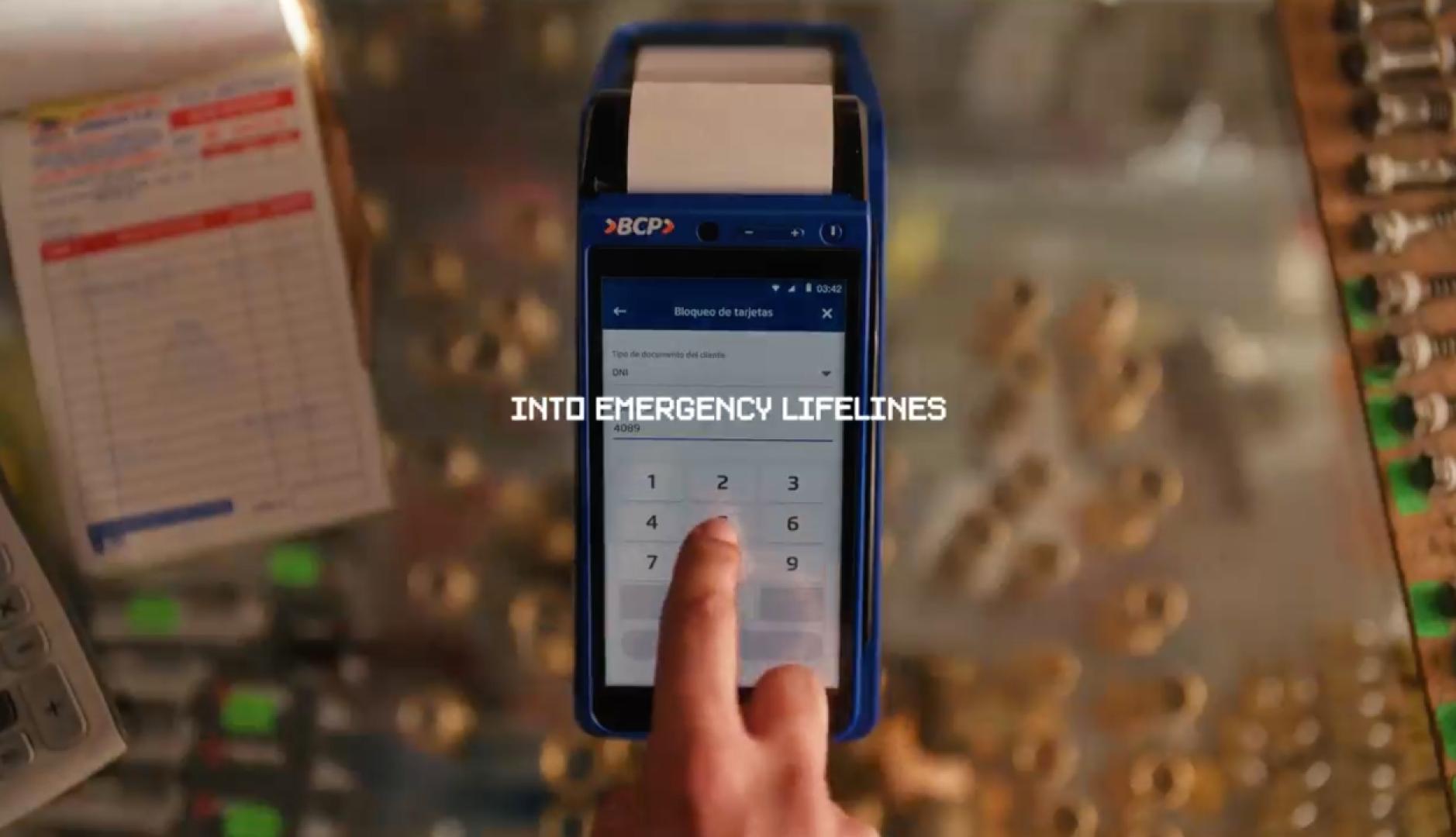
In Peru, more than 4,000 mobile phones are stolen every day. The problem does not end with the loss of the device: in many cases, criminals access victims’ banking applications in a matter of minutes and empty their accounts before they can react. Financial institutions have emergency lines to block operations, but the paradox is: how to call the bank when the first thing that has been lost is precisely the phone?
As a solution, BCP, one of the country’s main financial entities, and Circus Gray have developed SOS POS, a solution that transforms the payment terminals of small businesses into immediate help points. The initiative allows anyone to block their bank accounts quickly from a dataphone, without having to access their mobile phone, download an application or make a call.
The proposal is based on an infrastructure already present in thousands of businesses in the country. Instead of creating a new service channel, BCP has incorporated an emergency function into the payment terminals used daily by local businesses, turning them into a decentralized response network in the event of phone theft.
Thus, the system seeks to reduce the critical time that passes between the theft of the mobile phone and the blocking of the accounts. In that time, criminals can access personal information, financial applications, and credentials stored on the device. But SOS POS proposes an answer: approach a participating business and activate the blocking of the accounts from the terminal, preventing the victim from depending on the same device that they have just lost.
Dataphones, usually conceived as transactional tools, begin to function as a citizen protection infrastructure and small businesses are thus integrated into a financial security network with the capacity to act in the first minutes after the crime.