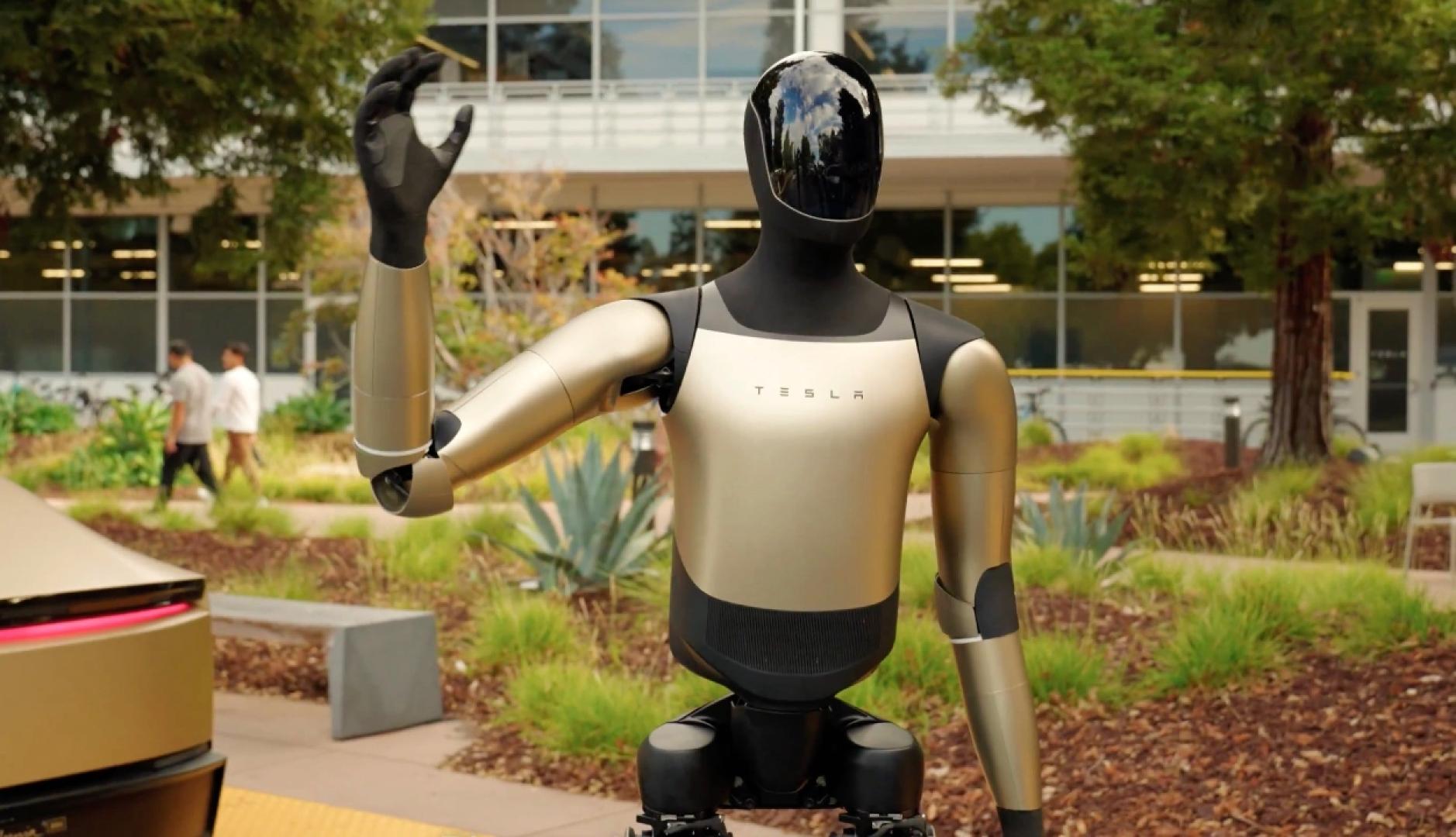
In recent years, Silicon Valley has dedicated a good part of its resources to teaching artificial intelligence to converse, write, reason, program, summarize and generate images. Now, the next step seems much more material: giving it a body. The new frontier of the technology industry is no longer limited to models capable of answering questions or producing content, but to systems capable of acting in the physical world: lifting boxes, sorting packages, manipulating objects, working in factories, assisting in homes or integrating into critical infrastructures.
Robotics has thus been placed at the center of a new technological race. Large companies, start-ups and research laboratories are accelerating their projects to develop humanoids and specialized obots capable of executing tasks in real environments. The concept that summarizes this movement is “physical AI”, an expression popularized by Jensen Huang, CEO of Nvidia, to refer to intelligent systems that physically intervene in the environment.
If the first wave of AI was deployed in conversational interfaces, the next could be in the form of humanoids
Generative artificial intelligence has transformed the relationship with knowledge and content production, but robotics points to an even broader economic territory: the automation of physical work. If the first wave of AI was deployed in conversational interfaces, co-pilots and digital tools, the next could take the form of robotic arms, industrial humanoids, home assistants and machines capable of operating in warehouses, production plants or logistics environments.
Nvidia, OpenAI and Meta move into robotics
The acceleration has become especially visible in recent days. During the Nvidia GTC Taipei event, the company announced a reference model for humanoid robots intended for academic researchers, scheduled to be available by the end of 2026. The proposal combines a Unitree robotic body, five-fingered hands, Nvidia computing and software tools, with the aim of reducing the current fragmentation in humanoid development and testing.
The company presents it as a response to the growing interest in generalist robots. Until now, much of robotics research has required teams to separately assemble hardware, sensors, software, simulation and control systems. But Nvidia aspires to offer a more integrated architecture, capable of accelerating the work of laboratories and academic centers. For Huang, humanoid robots will bring physical AI to some of the world’s largest industries and open up a multi-trillion-dollar economic opportunity.
Nvidia Unitree H2 PLUS
OpenAI is also reinforcing its commitment to robotics, which represents a turnaround compared to 2020, when it closed the project of a robotic hand capable of solving a Rubik’s cube. The company is now working on a robotic arm capable of performing household tasks as part of a broader effort to develop a humanoid. In addition, OpenAI keeps offers open for different profiles in its robotics laboratory, including machine learning engineers, data acquisition managers and 3D printing technicians.
Sam Altman, CEO of OpenAI, has indicated that robotics will be the company’s next frontier. In the short term, the company is considering robots that can support qualified workers in the construction of future infrastructures; In the long term, Altman imagines a scenario in which each person can have a personal robot capable of performing different tasks.
Meta, for its part, is also strengthening its position. The company recently acquired the startup Assured Robot Intelligence, which specializes in artificial intelligence models for humanoid robots. The team has joined Superintelligence Labs, Meta’s AI unit. The operation shows that the race for robotics is not limited to hardware: a decisive part of the value will be in models capable of interpreting the physical world, planning movements and learning from real data.
The humanoid race enters factories and warehouses
Humanoid robotics have moved from laboratory demonstrations to first commercial deployments. One of the cases that has generated the most attention is Figure AI, a start-up recently valued at $39 billion. The company achieved thousands of views in May with a demonstration in which its humanoids worked in coordination for a week on package sorting tasks. Shortly after, it signed a commercial agreement with Catalyst Brands, parent of JCPenney, Aéropostale and Brooks Brothers, to deploy humanoids in its distribution and logistics network.
Tesla is another of the big players in this field, although also one of the most difficult to evaluate. Elon Musk has repeatedly described Optimus as a centerpiece of the company’s future, but Tesla has offered few verifiable details about the humanoid’s actual progress. Musk told the World Economic Forum that the company would likely sell Optimus robots to the public before the end of 2027 and that they already perform simple tasks in Tesla factories.
Hyundai-owned Boston Dynamics also continues to move toward industrial uses. Hyundai plans to deploy tens of thousands of Atlas robots in its factories by 2028, which would mark a significant leap in scale for one of the most recognized companies in advanced robotics. Atlas has been an icon of robotics for years for its mobility, balance and coordination capabilities, but current market pressure is focused on translating those capabilities into real-world production environments.
Agility Robotics is further along in some commercial deployments. Its humanoid Digit has already worked with clients such as Amazon, GXO, Schaeffler and Mercado Libre. The case of Agility is relevant because it points to a more pragmatic model: robots designed for specific tasks in warehouses, goods handling and logistics environments, instead of humanoids conceived from the beginning as universal assistants.
Investment in robotics soars
The industry’s enthusiasm is also reflected in financing. According to PitchBook data cited by Business Insiderventure capital investment in global robotics and physical AI rose from about $4 billion in 2019 to $26 billion in 2025. So far in 2026 alone, companies in the sector have raised more than $23 billion.
The figure shows that robotics is no longer perceived as a distant promise or as a field reserved for specialized laboratories. The combination of more capable AI models, advances in sensors, simulation, computer vision, edge computing and reduced hardware costs is moving the sector closer to a more ambitious deployment phase. A scenario in which companies compete to build robots and control the key layers of the ecosystem: real-world data, behavioral models, training platforms, hardware, operating systems and industrial applications.
The economic interest is evident and the sectors that could be transformed by physical AI are some of the largest and most expensive to automate: logistics, manufacturing, distribution, construction, transportation, home care, maintenance, agriculture or personal care. Unlike software, robots operate in variable, imperfect environments with physical consequences. That difficulty explains both the size of the opportunity and the complexity of the challenge.
China already regulates robots as a new class of workers
While Silicon Valley accelerates its race to develop artificial intelligence, China is also advancing in the regulatory field. The Chinese government has launched an official system to assign digital IDs to all humanoid robots operating in its territory. The move may seem early, given that current deployments are still limited, but it reflects Beijing’s belief that humanoid robotics will expand rapidly.
The initiative, promoted by the Ministry of Industry and Information Technology together with the Hubei Humanoid Robot Innovation Center, establishes a unique code for each machine from the moment it leaves the production line until its removal. The identifier has 29 characters and collects information on nationality, manufacturer, model and serial number. According to Fast Companythe system already governs standards for more than 100 companies and has codified around 200 industrial models.
The Chinese government has launched an official system to assign digital IDs to all humanoid robots
The identification can also act as a telemetry link that allows you to consult the operational status of the robot, from the wear of its joints to its battery, its maintenance records or the cognitive capacity of its artificial intelligence, in order to guarantee safety, reliability, traceability and responsibility in the event of failure.
China faces a demographic crisis and a shrinking workforce, and the country has pushed guidelines for deploying embedded AI in environments where it may be needed. From this perspective, humanoid robots are understood as a possible synthetic workforce that must be integrated into factories, services, homes and public spaces.
The Chinese case also illustrates the pace at which local companies want to bring these systems to the market. GigaAI, a firm backed by Huawei’s investment arm and linked to state research centers, has announced what it presents as the first commercial robotic butler. The SeeLight S1 is a wheeled, two-arm machine that will start with 100 pilot units in employee homes and aims for a broader free rollout in Wuhan during the first half of 2027. The company anticipates a retail price of around $15,000.
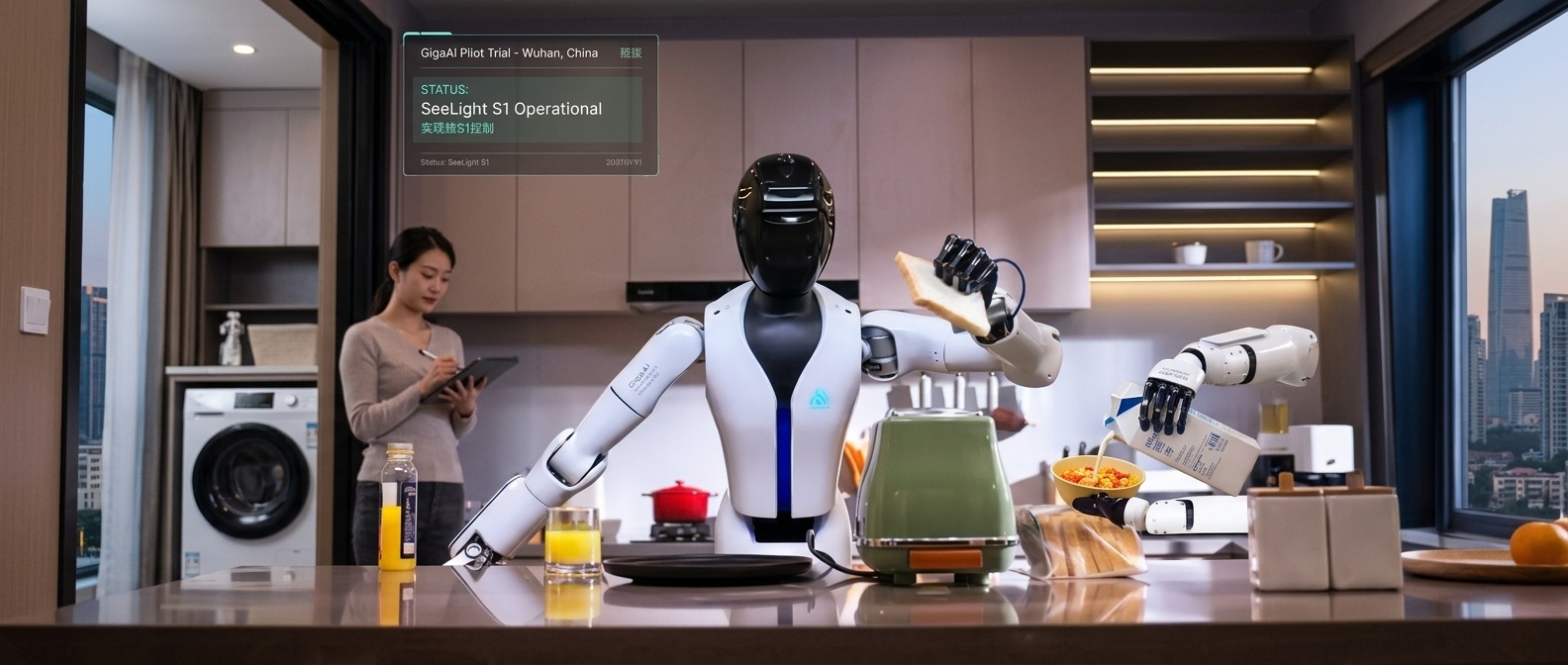
However, the deadlines arouse some skepticism among experts. The home remains one of the most difficult environments for robotics because it is not standardized. Each home is constantly changing: objects out of place, different furniture, people moving around, pets, variable lighting, uneven surfaces and poorly defined tasks.
This contrast between ambition and difficulty defines the current moment of robotics. In warehouses, factories or logistics centers, robots can operate in relatively controlled environments, with repetitive tasks and measurable processes. In homes, hospitals, streets or public spaces, uncertainty is multiplied because physical AI must recognize objects and plan movements safely and reliably, in a world that has not been designed for it.
Thus, development still faces technical, economic, regulatory and social barriers. Actual autonomy remains limited, costs are high, security is critical, and collecting data from the physical world is much more complex than training with text, images, or video. But the change of direction is already clear. Generative AI has demonstrated the ability of models to operate on the symbolic plane, so robotics will seek to transfer that capacity to the material plane.