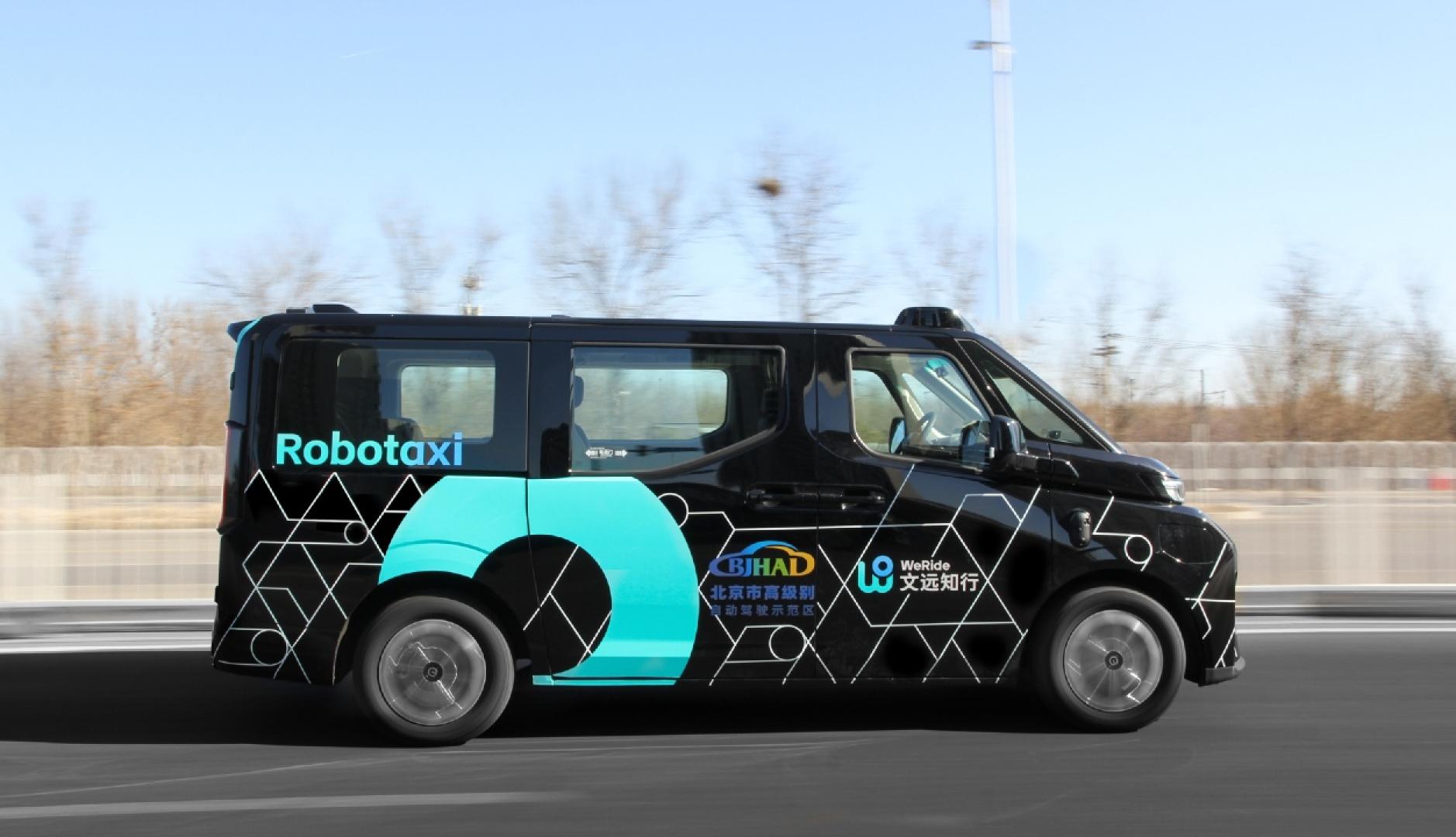
Madrid joins the European robotaxi map. WeRide and Uber have announced the launch in the Community of Madrid of what they present as the first commercial robotaxis pilot in Spain. The service, which is scheduled to launch before the end of 2026, can be booked through the Uber application and will start with safety operators at the wheel, before progressively moving towards completely autonomous journeys in urban areas.
The project represents the first joint entry of WeRide and Uber into the European market and has the Community of Madrid as an institutional partner. The initiative is part of the global expansion agreement that both companies have to deploy robotaxi services in fifteen cities before 2030. Madrid will be the fourth on that roadmap, in which there are still eleven markets to be finalized in the coming years.
The launch will not begin with driverless vehicles. In a first phase, the robotaxis will circulate with security operators on board, a common formula in initial deployments of autonomous mobility to monitor the behavior of the system, intervene if necessary and comply with regulatory requirements. The companies have indicated that the fleet will grow progressively, as performance, safety and operation milestones are met.
The project has a third key partner: AVOMO, a company integrated into Moove Cars Group, which will be in charge of operating the vehicles. Its role is especially relevant because it reflects the expansion model that WeRide is applying in different markets: an asset-light strategy, in which the technology company provides the autonomous driving system, while the ownership, daily management and operation of the fleets remain in the hands of local or specialized partners.
The project has a third key partner, AVOMO, who will be in charge of operating the vehicles
AVOMO already operates autonomous Uber fleets in Austin and Atlanta, with around 400 vehicles managed by a team of more than 200 people. This experience positions the company as an operating partner to transfer the model to Madrid, where the challenge will be technological, but also logistical, regulatory and urban. The deployment will require coordinating vehicles, maintenance, supervision, operational data, security and relations with administrations.
“After almost two years of close collaboration with Uber in the United States, we enter this next phase”said Manuel Puga, CEO of Moove Cars Group.
AVOMO’s entry also shows how the robotaxi business is shaping up. Faced with the total integration model, in which a company develops the technology, owns the fleet and operates the service, Uber and WeRide are betting on alliances where each actor occupies a specific layer: Uber provides the demand, the user interface and the mobility platform; WeRide, autonomous technology; and AVOMO, the operation of vehicles on the ground.
Madrid, new European market for the robotaxi
For WeRide, Madrid will be its fifth European market and a new piece in its internationalization strategy. The company, which presents itself as the first public company specialized in robotaxis, claims to have driverless driving permits in eight markets and to have carried out operations with its vehicles in more than 40 cities.
The company relies especially on its experience in the Middle East, where it operates commercial driverless robotaxi services in Abu Dhabi and Dubai, with Riyadh planned as the next market. This track record in regions with favorable regulation and strong technological ambition has allowed WeRide to test operating models that it now seeks to transfer to new geographies.
The choice of Madrid responds to several factors. Sarfraz Maredia, Global Head of Autonomous Mobility at Uber, has defined the city as a natural market to become a European reference in autonomous vehicles, alluding to a clear regulatory path. The Community of Madrid, for its part, appears in the announcement as an institutional partner of a project that can reinforce the image of the region as a territory of innovation in mobility.
However, actual progress will depend on authorizations, testing, security validations and meeting operational milestones. As with other robotaxis deployments in Europe, the announcement combines commercial ambition with technical caution. For now, Madrid is on the roadmap, but the first vehicles will circulate with operators in the front seats, which will allow us to observe how the vehicles behave in real traffic, collect data, adjust the operation and build confidence before any leap towards driverless journeys. The companies have not yet detailed the exact launch date, initial fleet size, or service rates.