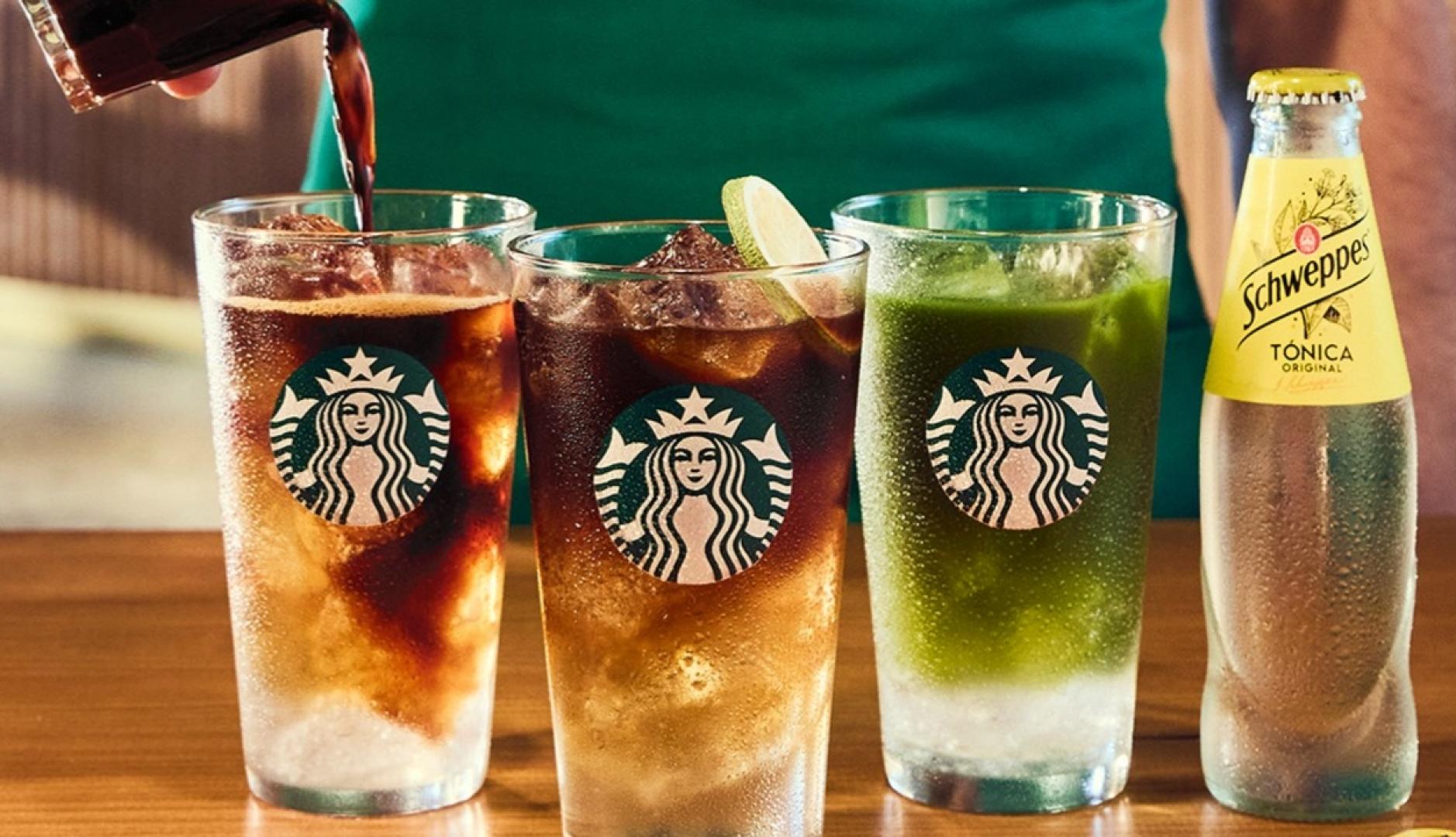
The beverage category is in full innovative expansion, with spirits, soft drinks, smoothies and coffees exploring new flavors, such as spicy; new ingredients, such as protein or probiotics; or non-alcoholic options. At the height of the trend, the Starbucks coffee chain, from the Alsea group, and Schweppes, a tonic brand from Suntory Beverage & Food Spain, have promoted a collaboration to bring the combination of their products closer to consumers in a range that they have named coffee tonic.
The proposal seeks to capitalize on a broader transformation in consumer habits, marked by more daytime, social and conscious leisure. Both companies place the initiative in the context of the so-called “Afternoon Society”, an international trend linked to the rise of the afternoon, aperitif and non-alcoholic or low-alcohol proposals. According to the Hospitality Consumption Report in Spain cited by the brands, 40% of consumers demand No & Low Alcohol alternatives.
The initiative is situated in the context of the “Afternoon Society”, a trend linked to the rise of the afternoon
Thus, this association is inspired by the concept espresso tonica drink that has gained popularity in recent years and that mixes espresso coffee and tonic water. In this case, the products born from the association of the brands are made from Schweppes references and different Starbucks coffees and teas. The result is drinks that fuse coffee with the bitterness, citrus notes and freshness of the tonic, offering a refreshing option.
Beyond the effervescence, the brands focus on the aromatic complexity of the tonic and how it provides structure and depth to the coffee. “The tonic and the coffee share a bitter profile and certain citrus notes that fit together very well. The result is not only refreshing, it also has structure and depth in the mouth,” explained Marc Álvarez, Mixing Master of Schweppes, Co-founder of Sips and considered one of the most recognized bartenders in the world.
The proposal is made up of three initial combinations, as Starbucks has shared through Instagram.
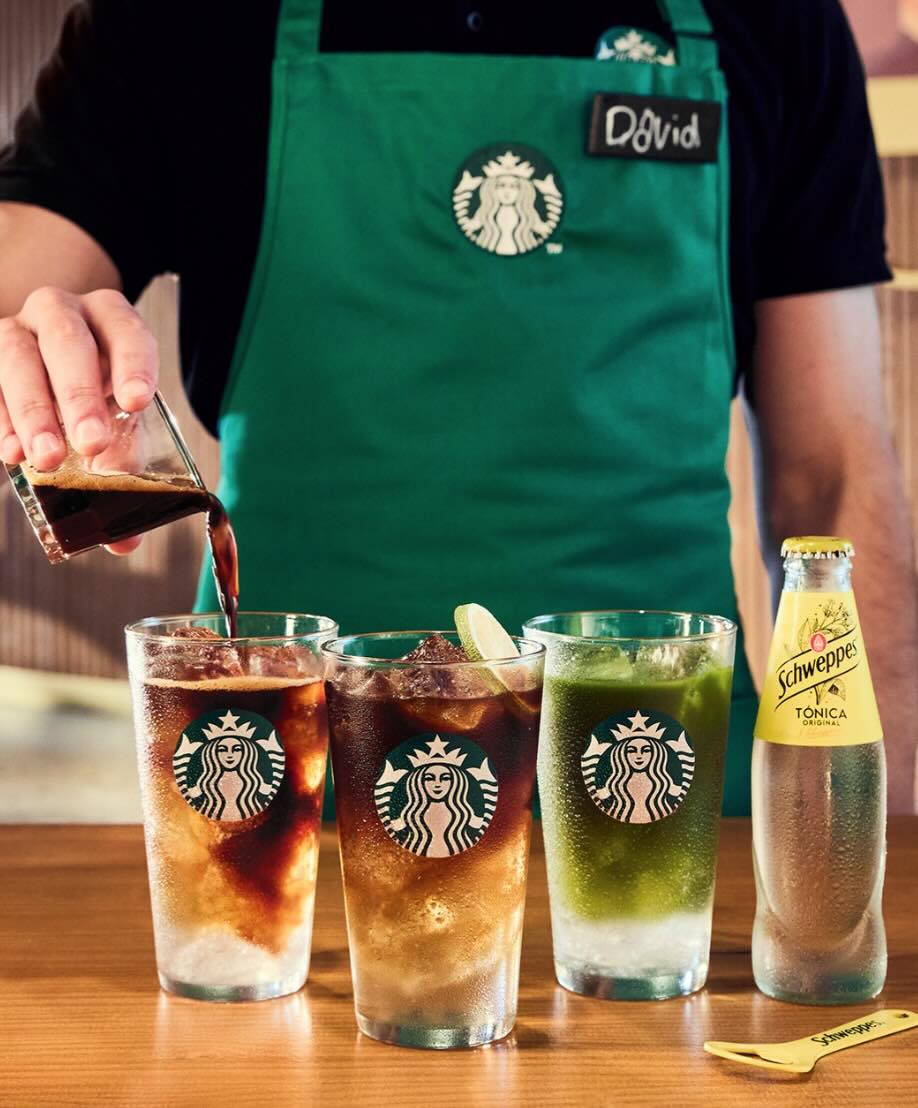
The recipes have been developed jointly by Marc Álvarez and the Starbucks Coffee and Culture team, led by Camila Fernández. The “Espresso Tonic” combines Blonde Espresso Roast coffee, Schweppes tonic and notes of vanilla; while the “Cold Brew Tonic” incorporates cold-extracted coffee and Schweppes Lemon. For its part, the “Matcha Tonic” mixes matcha tea with tonic and vanilla in a more herbal and lighter proposal.
Both Schweppes and Starbucks intend to explore new moments of consumption and new audiences through their collaboration, with a view to boosting their consumer base and penetration. The intention is to invite users to explore its products under an experiential approach, capitalize on changes in consumer habits and respond to the demand for versatile proposals and new visions beyond traditional coffee.
“This collaboration is not just a product launch, it is a response to the evolution of the consumer who seeks immediacy without sacrificing craftsmanship”; commented Fernando Albarrán, Marketing Director at Starbucks Iberia.
The line is inspired by espresso tonic, a mix that gained traction years ago from the Scandinavian countries and that has spread throughout the world, consolidating in markets such as Japan, the United States or Italy, and recently also Spain. However, “suau”, a mixture of coffee with soda and sugar, has been traditionally consumed in some regions of Catalonia and Aragon since the middle of the last century.
According to the brands, the modern origin of the espresso tonic It dates back to 2007, when a barista in Oslo mixed espresso and tonic after a party. The recipe began to spread from Scandinavian cafes to cities like New York or different Asian capitals until recently consolidating itself in Italy as one of the fashionable summer drinks.
Thus, the range of drinks now promoted by Starbucks and Schweppes responds to the expansion of the coffee and tonic mix in recent years. Social networks such as TikTok and Instagram collect hundreds of videos about recipes and best practices for making the drink, and also from consumers who request both products, especially Schweppes tonic, in establishments to try the combination.
Companies believe that the rise of cold brewhe iced coffee and other cold formats is redefining the relationship of new generations with coffee, moving it from breakfast to new moments linked to leisure, socialization and experiential consumption.
The drinks can soon be found in Starbucks cafes. Brands want to focus on quality and control in preparation, seeking to provide a barista experience that works on differentiation. At the moment, they have not shared plans to bring the combination to supermarket shelves.
The range will be available between May and August in the approximately 250 Starbucks stores in Spain and Portugal. Each drink will be prepared freshly by baristas, seeking to preserve both the quality of the coffee and the characteristic Schweppes bubble.
The new range was presented in the Starbucks cafeteria at the Santiago Bernabéu stadium, where representatives of both brands explained the details of the initiative, demonstrated the experience and offered a product tasting.