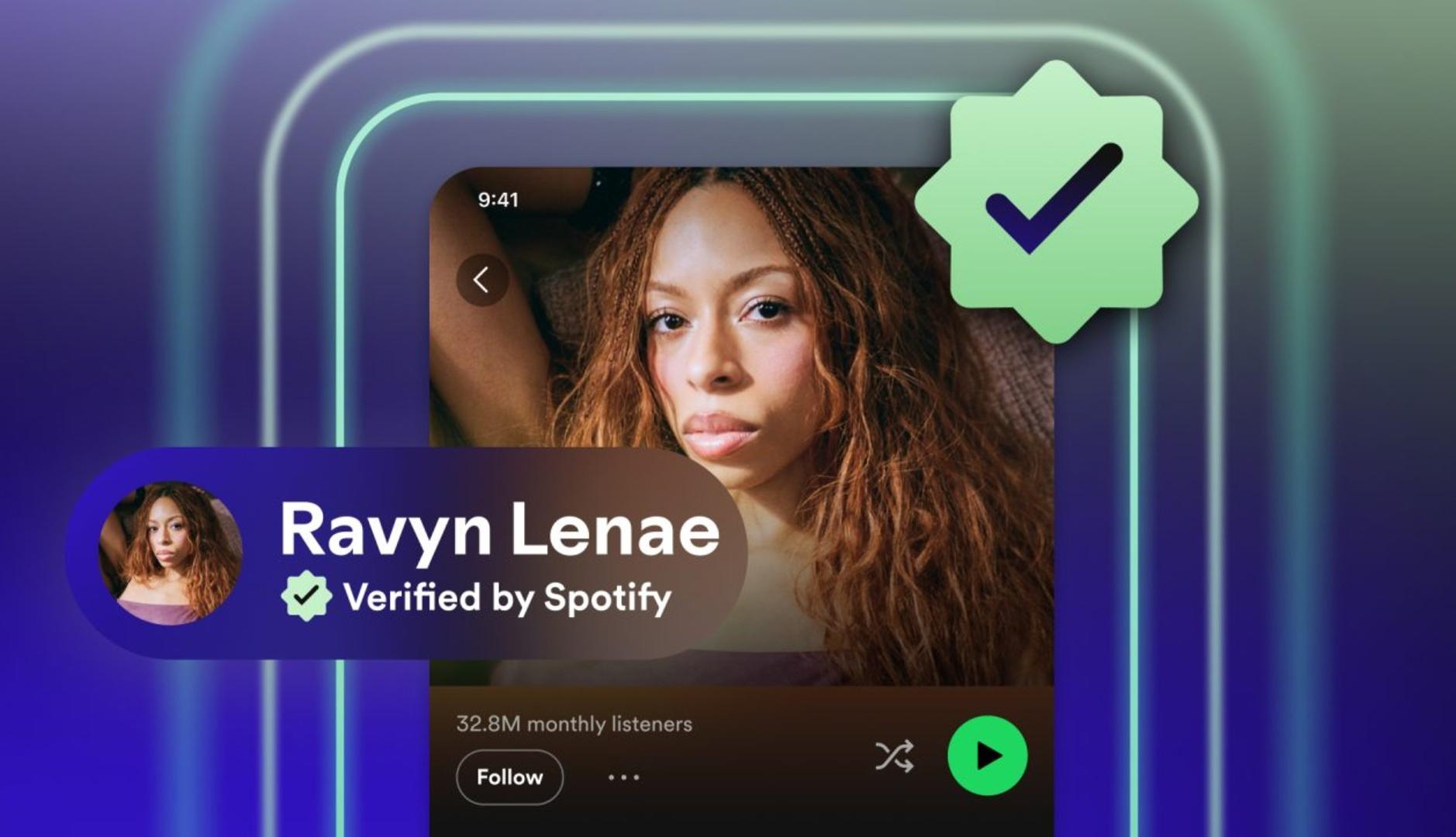
As the sophistication of artificial intelligence increases, the difficulty in differentiating content created by human talent from that generated by technology grows. Not only on the visual level, but also on the auditory level. That is why Spotify has created the “Verified by Spotify” badge to identify those profiles that meet the authenticity and trust criteria established by the company.
The company’s intention is to help users recognize content that has been generated by artificial intelligence, thereby providing more transparency. “Music is evolving, and so is the way you discover and connect with artists. In the age of AI, it’s more important than ever to trust the authenticity of the music you listen to“, Spotify said in a statement. “At Spotify our focus is to give you more context about artists and their music, so you can make more meaningful connections with them.”.
As he explains, the “Verified by Spotify” badge is displayed on artists’ profiles and next to their name in searches. It will be represented by the text “Verified by Spotify” and a light green checkmark icon, and will be visible over the next few weeks. The company notes that the verifications, still in beta, will be implemented gradually to ensure accuracy and consistency.
In order to award the badge, artists will be analyzed based on the constant activity and interaction of listeners over time; compliance with platform policies regarding dangerous or illegal content; and signs of real existence, that is, clues such as concert dates, merchandising and linked social accounts.
Spotify notes that because the platform is home to millions of uploaders, its review focuses on artist profiles that listeners actively and intentionally search for over time. Thus, he points out that if an artist’s profile does not have the badge, it does not mean that it will not have it in the future, because it is possible that the artist has not yet reached the threshold of listener activity to undergo the review process.
Spotify will review artists who have made important contributions to culture
Likewise, it explains that it will review artists who have made important contributions to music culture and history, as well as those who generate cultural momentum and relevance, even if they have not yet reached established listener thresholds. “We will combine these standards with human review and judgment to identify true artists acting in good faith, rather than simply weeding out bad actors, providing a more reliable signal of the artistic authenticity behind the music.”, they explain from the company.
Ahead of the launch, the company notes that it has ensured that more than 99% of the artists that Spotify listeners actively search for are verified, representing hundreds of thousands of artists from various genres, career stages and geographic backgrounds. “This means prioritizing artists with active fan interest or who have made significant contributions to music culture and history, rather than functional music creators and content farms whose content is primarily designed for passive or background listening.”, they explain.
The implementation of the badge responds to the movements carried out by rival platforms, such as Deezer, which in April of last year already began to introduce tools to identify music and content generated by artificial intelligence. Over the past few months, Spotify has been the subject of criticism from users and artists for not promoting measures aimed at transparency and authenticity.
Spotify ensures that “Verified by Spotify” expands the range of solutions implemented to provide more context and support the work of artists. Last March it introduced SongDNA, which allows you to explore the authors, producers and collaborators in a song; It has also expanded the Song Credits section to include all the collaborators of a song; and has released About the song, which offers additional information about the creative process of the songs.
The launch of “Verified by Spotify” comes amid growing concern in the music industry about the saturation of streaming services with content generated by artificial intelligence. According to recent data from Deezer, synthetic content now represents 44% of all new music uploaded to its service each day. The big record studios are also making moves. Sony Music, for example, has announced that it has requested the removal of more than 135,000 songs produced by AI that imitated its artists on streaming platforms.