
In the business field, the first impression is usually defining, whether to address a selection process, establish a new connection or explore business opportunities. So, working on self-knowledge, communication and personal branding is key to managing that initial feeling and laying the foundations for a reputation that can be fundamental in the success of a professional career.
All of them were topics that were addressed at PonteCara, the networking event promoted by Carlos García Trillo, current Marketing Director at Gaes, and Andrea Franco, Professional Development Coach, who has returned after five years with a new claim for the value of shared time, quality conversation and contact as the basis of professional relationships.
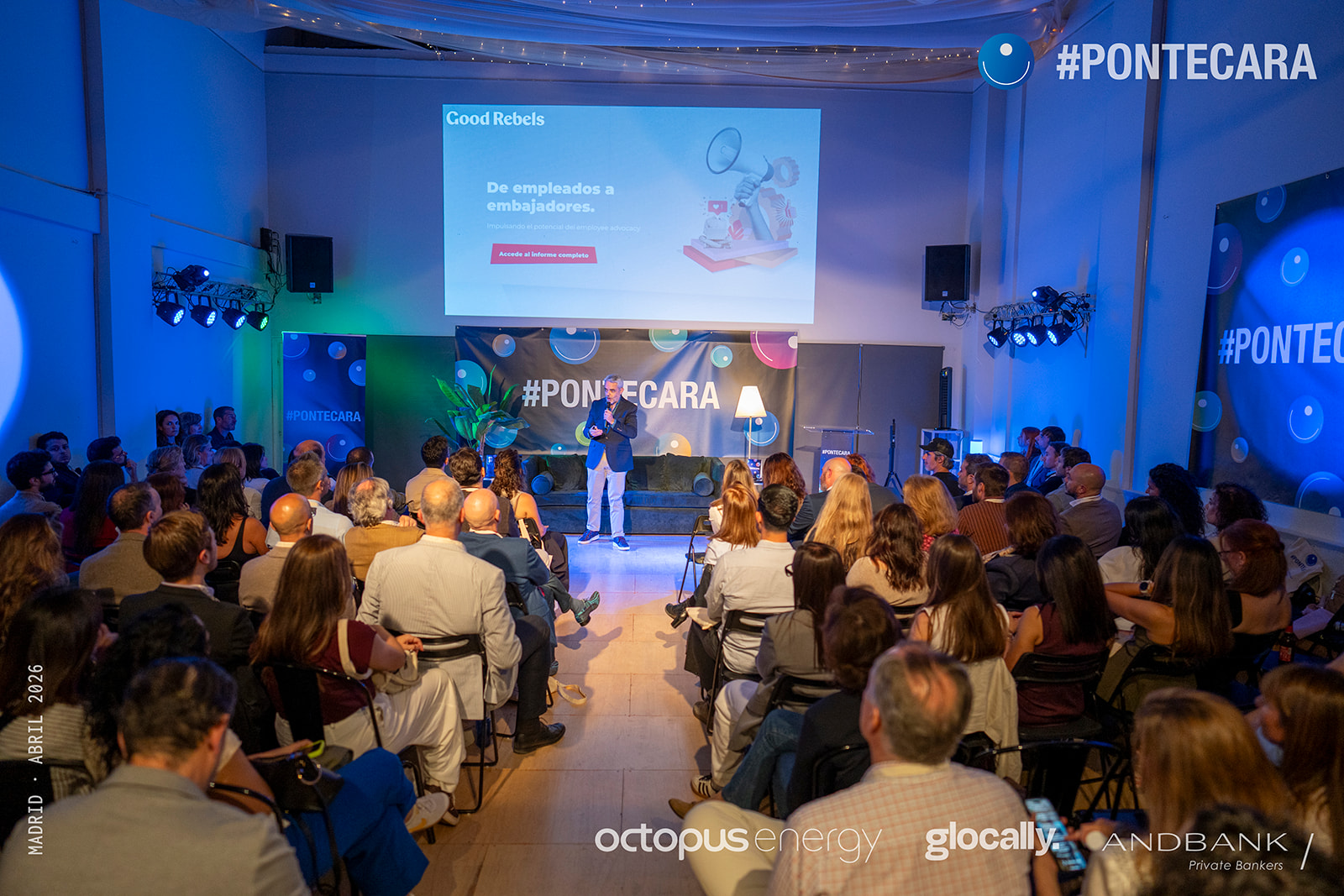
The sixth edition of the meeting took place on April 23 at the Espacio Iroko in Madrid, sponsored by Glocally, Andbank and Octopus, and brought together more than 130 professionals, demonstrating that PonteCara has already established itself as an active community. Those who attended – people who had already attended the event on other occasions, and also new attendees – understand that networking must go beyond an exchange of corporate cards or accumulating contacts on Linkedivn to be translated into tangible relationships, projects and opportunities.
The value of communication
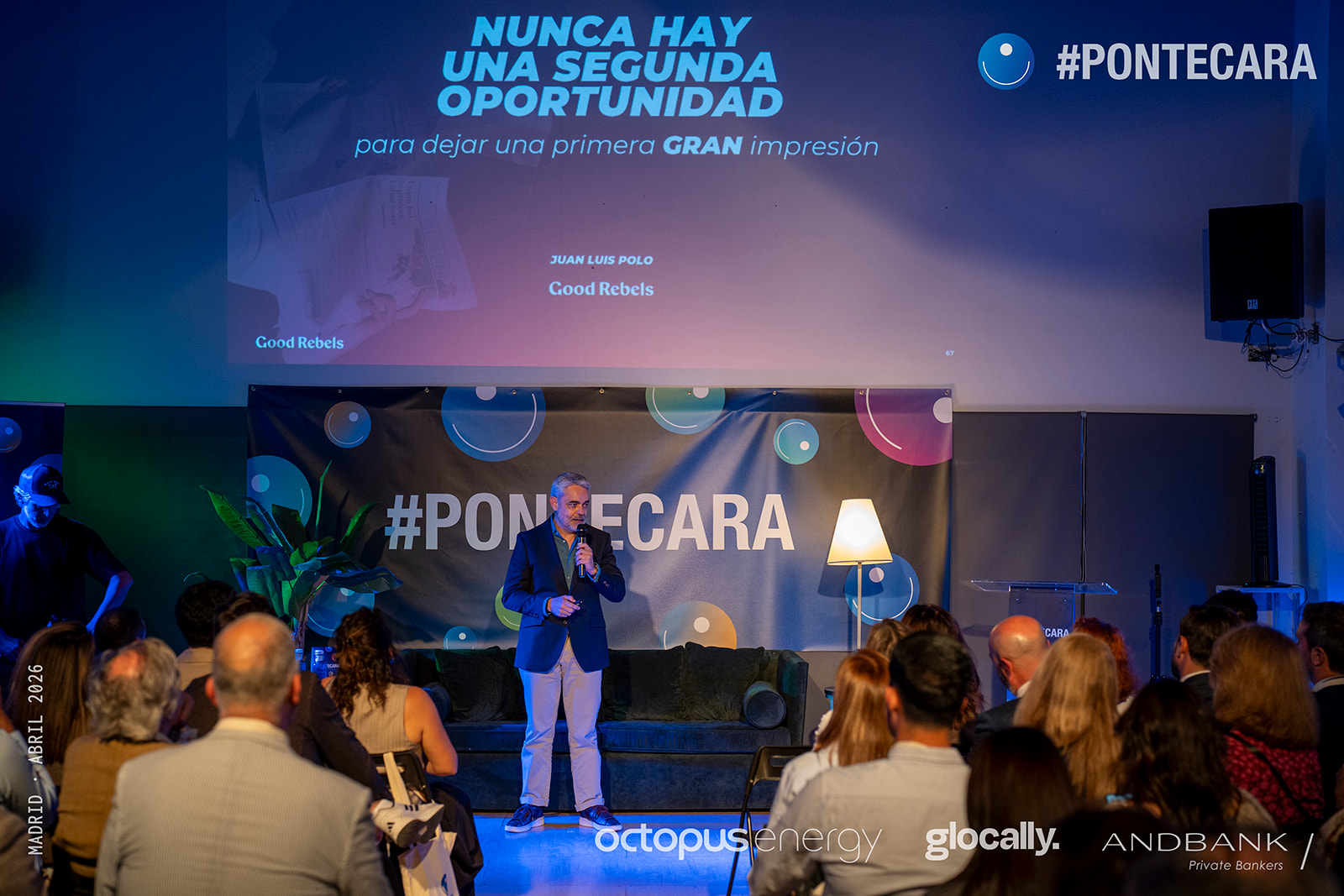
Being closely related to networking, Juan Luis Polo, Founding Partner and President of the Good Rebels agency, was in charge of putting the focus on communication during his speech at the event. An activity that stood out as an essential ingredient of professional development and, as he shared, also critical for the survival of businesses.
He pointed to it as indispensable for the personal brand and reputation, which he defined before the attendees. Of the first, he said that it is the narrative that a person sets in motion, through content and activities, regarding who they are, what they do and what they want to do or be; while the second commented that it represents a “shield” to stay safe from the value judgments that society and the environment constantly issue.
“The personal brand is what we write or say about ourselves. Reputation is everything that others give to us. And we must be aware that everything we say and do affects both.“Polo pointed out.”But there is a third element, communication or dissemination, which is the way we make what we say reach the right people.”.
In this sense, he referred to thought leadership, or thought leadership, as a tool to work on both personal brand and reputation. It is a strategy through which individuals or companies position themselves as trusted authorities on a subject by sharing specialized knowledge and innovative ideas or perspectives with the intention of generating influence in the social conversation.
“We all have the same objective, which is to be perceived as capable, attractive, intelligent, with experience, knowledge and values to contribute to others.“, explained the manager to the audience. “We can take that as a lighthouse that shows us where we want to go, in what areas we want to be recognized and how we want to be perceived by others.”.
This thought leadership can be deployed in two different ways, according to the President of Good Rebels. On the one hand, the synchronous format, which refers to communication in real time and in which the participants coincide simultaneously, allowing direct and immediate interaction. It is a two-way communication, like the one that occurs at networking events like PonteCara, and which involves non-verbal and paraverbal language, making it more emotional and experiential.
On the other hand, the asynchronous format, which refers to the exchange of information without the need for temporal coincidence between sender and receiver and, therefore, allows deferred responses. It is the one that has become most normalized in the era of digital communication and facilitates greater reach because it can occur from one to many, and not just from one to one. Furthermore, regarding personal branding and thought leadershipoffers greater possibilities of working on the content with precision.
“Giving visibility to talent completely changed our corporate culture”
Polo also raised the question of whether this communication is better carried out individually and accompanied, at which point he shared his experience and that of his company. He explained that, after the 2008 financial crisis, Good Rebels was in a contradictory moment: it had projects to undertake, but not the necessary talent to carry them out.
The formula that the agency worked on to become a place capable of attracting talent was to give visibility, prominence and relevance to the professionals who joined the company. “That communication, that visibility, is what made the magic. And, in fact, it completely changed our corporate culture“, commented the manager. “Additionally, brand ambassador programs started knocking on our door. What we did we turned into a methodology, and we started working with Telefónica, Lidl, Eroski or Repsol. That visibility of people pushed the company”.
Although he made a plea about the power of communication, Juan Luis Polo also warned those present about the risks of the current context, in which it is easy to get carried away by the noise, the abundance of content or the pressure to participate and publish. And he took the opportunity to share two pieces of advice. “If you want a good reputation, strive to be what you say you appear to be, because if what we say and what we do do not coincide, the seams will show.”he explained. And he added: “You may be able to do more business by being interested in others than by trying to get everyone interested in you. If you use empathy, if you give first, if you are attentive to what others may need, it will be returned to you.”.
Self-knowledge, self-control and empathy: ingredients of success
Empathy was one of the central themes of the sixth edition of PonteCara. What’s more, its promoter Carlos García Trillo assured, in his welcome at the event, that networking “It’s more about giving than receiving“, and the idea was present transversally in the different presentations of the afternoon. Also in that of Marta Fontcuberta, Former Marketing Director in brands such as Coca-Cola or Caja Madrid and now Executive Coach, who reflected in her speech on the idea of success and how it has changed from a strict concept to one that already combines the personal and professional facets of life.
He encouraged the audience to periodically question themselves if they consider themselves successful and, more specifically, if they believe they are achieving success in the goal they had initially set for themselves. Regardless of the answer, according to Fontcuberta, one must be aware that achieving what each person considers success will depend on three key ingredients: self-knowledge, self-control, and empathy and the ability to adapt.


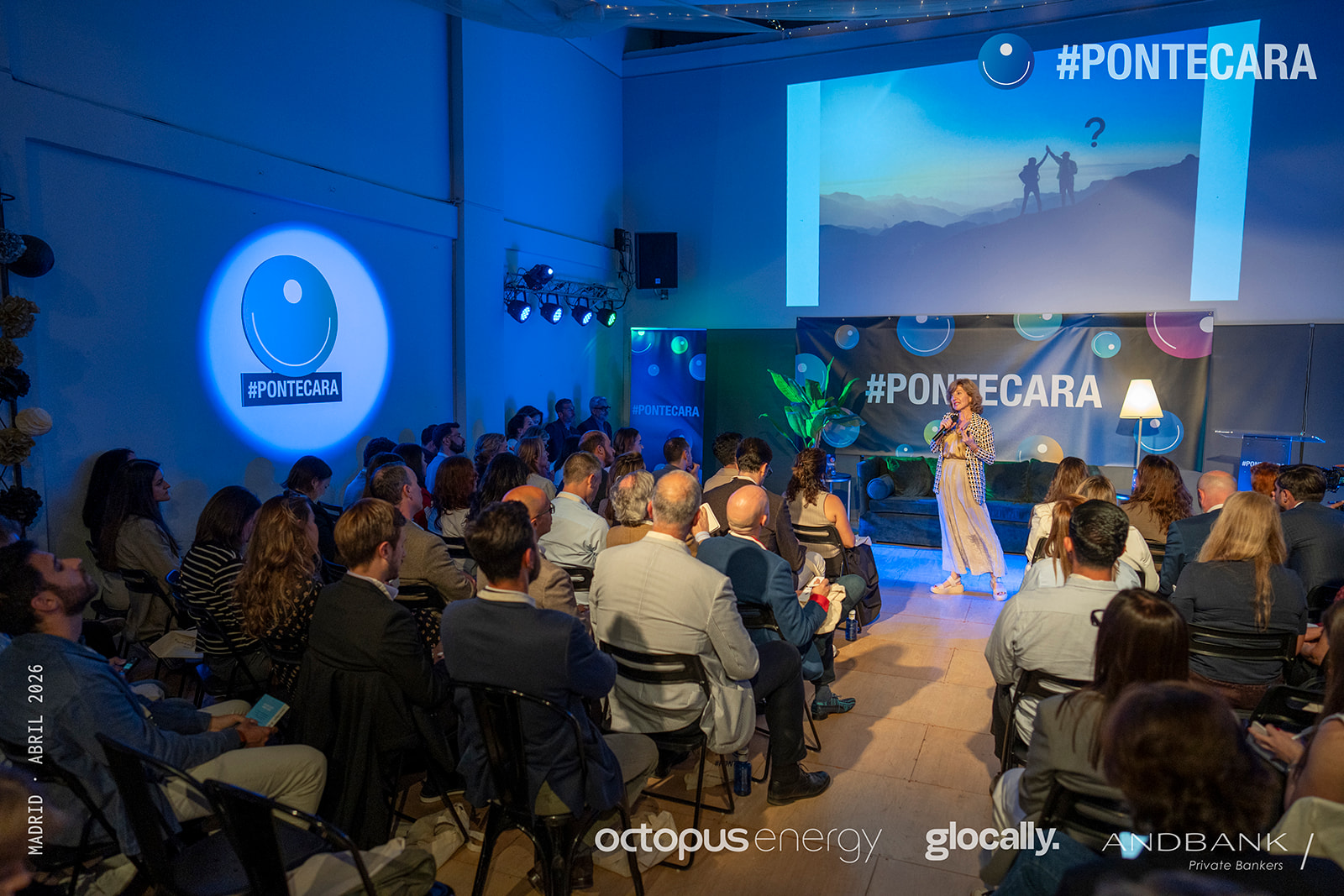
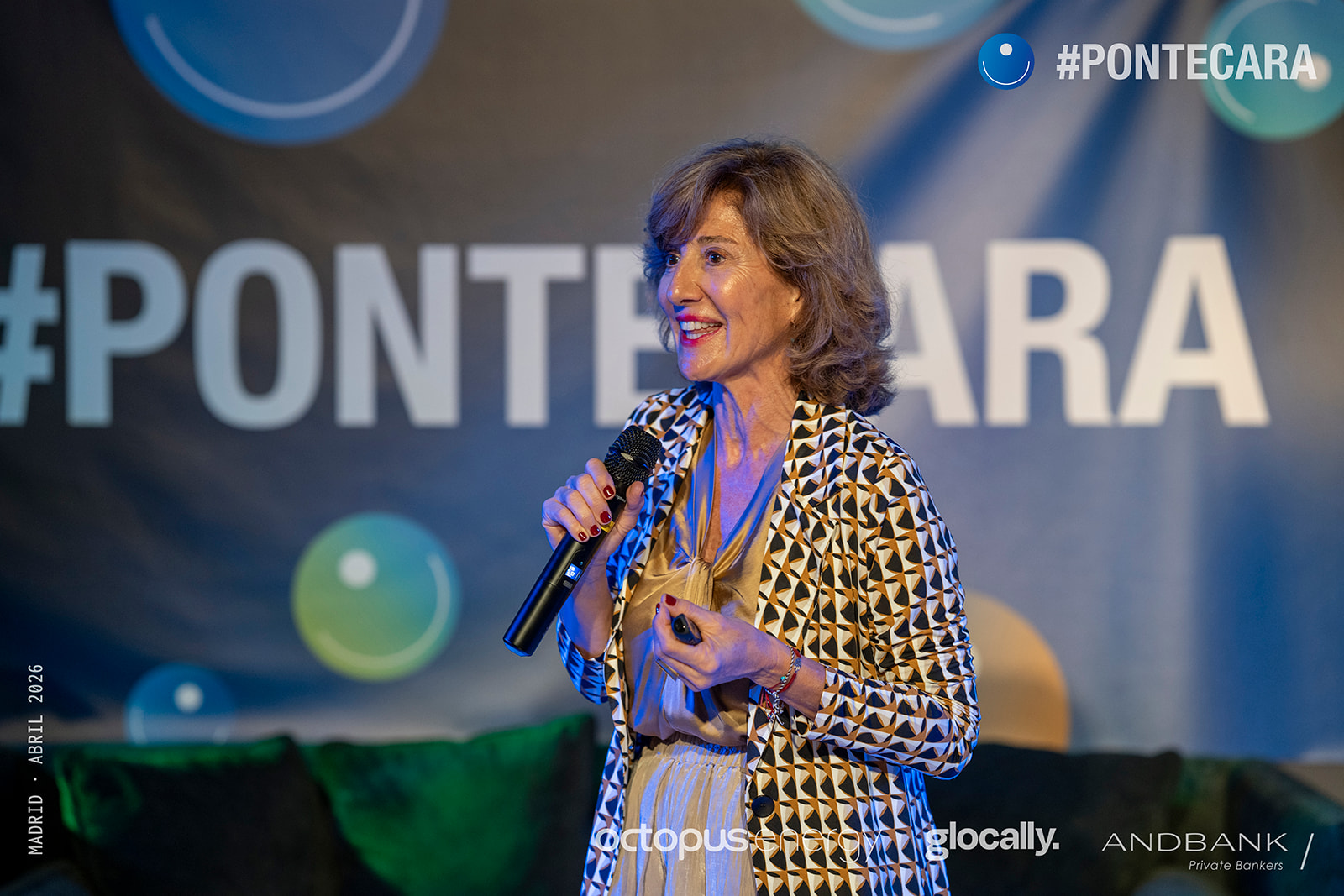
As he explained, self-knowledge is a reflective and continuous process to identify and know one’s own emotions, strengths, weaknesses, values and motivations, and is essential to address both great challenges and day-to-day challenges. Although he also remembered the importance of asking others and collecting feedback from those around us, to have perspective and know ourselves better.
She shared a series of points to analyze, some questions that she herself uses in her coaching sessions, to encourage professionals to carry out this introspection.
They are the following:
- What would be important or urgent for you to achieve in this process?
- What would you say are your three main strengths?
- What do you think are your three main skills to develop today?
- What do you need to be the best version of yourself?
- In what context are you not the best version of yourself?
- Imagine that the process is finished. You would say that it has been a success because you have managed…
The questions, as he pointed out, are also useful to assess belonging to an organization, both at work and emotionally, and he put on the table, in line with what Juan Luis Polo commented, the importance of recognizing talent for their abilities. “Where you work, can you be who you really are, can you be authentic?” Fontcuberta said. “In my case I am grateful to Coca-Cola, because they let me be who I am, they let me develop creativity with the team and I understood that my mission was to help others do, to make others shine.”
As a second area to work on to achieve success in its broadest sense, Fontcuberta pointed to self-control, defined in this case as the ability to control emotions, reactions and behaviors to build a good relationship with others. He alluded to Karpman’s Drama Triangle, a psychological model that includes three major roles that people can assume when managing interpersonal relationships.
These roles are divided between the Pursuer, who always looks for failure, has a critical attitude towards others and tries to control the situation; the Savior, who worries excessively about the feelings and needs of others, tending to forget himself; and the Victim, who does not trust his or her abilities and depends on others, resorting to manipulation to receive care. Fontcuberta illustrated it with a video that went viral on social networks:
“The ideal would be for us to be in the center, in the position of responsible people”commented Fontcuberta. “But it is important to know them all and identify which one we fit into at each moment. If, for example, we identify with the Savior, we will have to delegate, let others do it. The important thing is to ensure that each situation teaches us to open the correct door for our actions.”
Finally, he highlighted empathy as a third ingredient in managing success. And he assured that it is essential to understand the professionals and people around us, as well as know their objectives, to identify the way in which we can be useful and contribute to the construction of a favorable environment for everyone. As Marta Fontcuberta pointed out at the end of her presentation, the ability to adapt to the different circumstances that appear along the way is essential to achieve success, both professionally and personally.