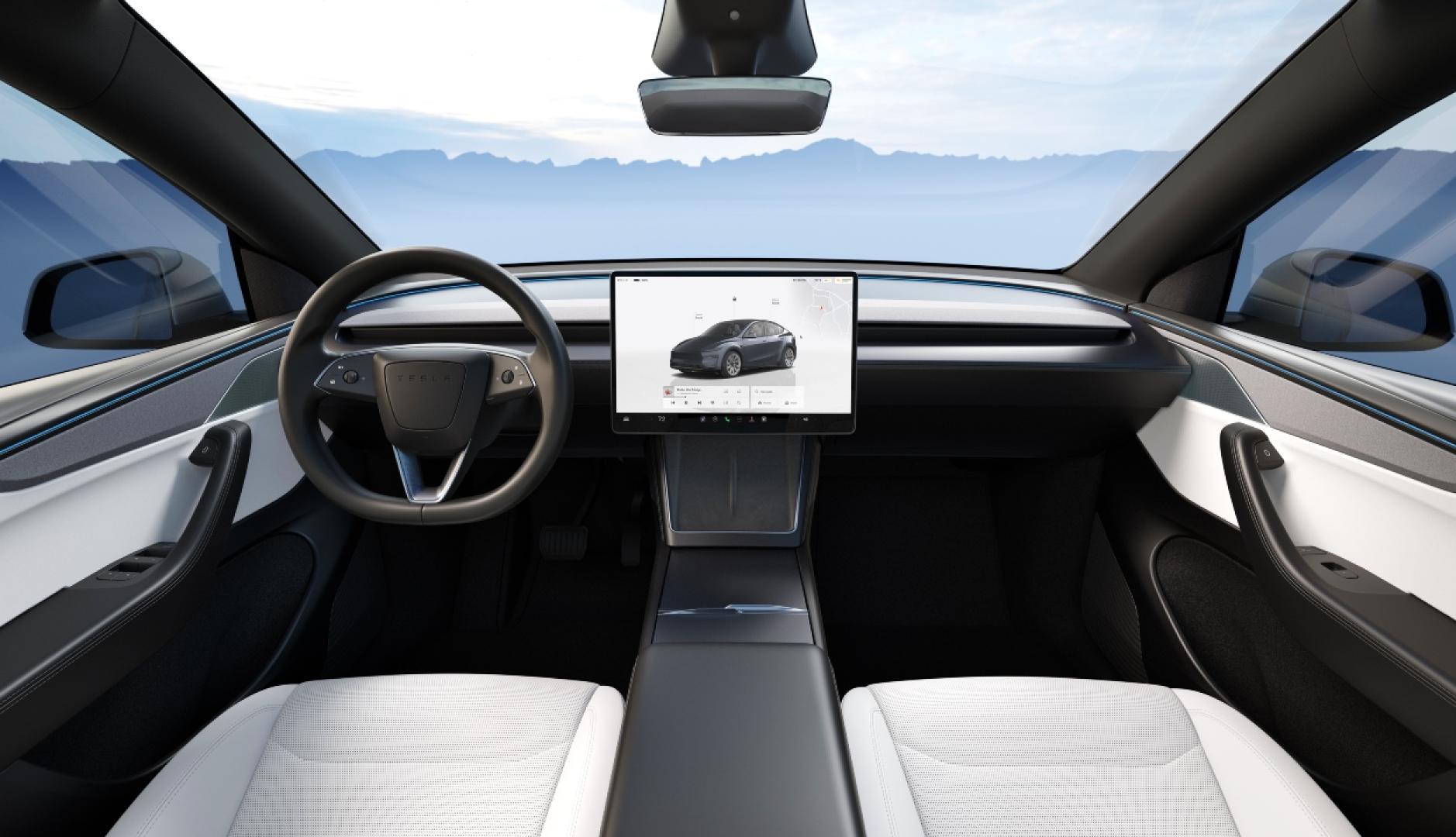
The Netherlands has become the first European country to authorize the use of Tesla’s supervised Full Self-Driving (FSD) system, following the approval granted on April 10 by the Dutch vehicle authority RDW. The decision is framed in the UN Regulation 171 regulation, which regulates level 2 driving assistance systems in the European Union, and represents the first precedent for the application of this regulation on a large scale on the continent.
The authorization allows drivers of compatible vehicles to take their hands off the wheel under certain conditions, although they remain legally responsible at all times. The system incorporates monitoring mechanisms such as eye tracking and visual, audible and haptic alerts that force the driver to maintain attention. Otherwise, the system is progressively deactivated until the vehicle comes to a controlled stop. The regulator insists that this is not autonomous driving, but rather an assistance technology that requires constant supervision.
This is not autonomous driving, but an assistive technology that requires constant supervision
An unprecedented technical and regulatory process in Europe
The approval comes after a particularly demanding validation process. Over 18 months, Tesla has provided 1.6 million kilometers of driving data on European roads, conducted 4,500 closed-circuit tests and more than 13,000 real-world evaluations, meeting more than 400 regulatory requirements. The authorization has an initial validity of at least 36 months and lays the foundations for other European countries to recognize it individually.
Although the approval is not automatically extendable to the rest of the European Union, it establishes a compliance framework that facilitates its adoption in markets such as Germany, France or Italy in the coming weeks. Complete approval at the community level will require a vote by the European Commission, expected to be achieved during the summer of 2026.
The regulatory development comes at a key time for Tesla in Europe, where its business has experienced increasing competitive pressure, especially from manufacturers such as BYD. The 278% drop in its European sales in 2025 and the increase in stock have highlighted the need to strengthen its value proposition. In this context, the supervised FSD represents one of the company’s strategic pillars: the idea that the vehicle improves its capabilities over time through software.
Until now, this proposal was limited in Europe due to the lack of regulatory approval. With the approval of the Netherlands, Tesla can begin to market and communicate this functionality in one of its main markets, with a monthly subscription model that starts at 99 euros. The company aspires to turn this advantage into a differentiating element compared to its competitors.
The approved version (2026.3.6) is not the most advanced in development. Elon Musk has already anticipated a future version that, according to his statements, could exceed human safety levels even in complex environments, although these statements follow the usual line of expectations generated in previous releases.
The movement also occurs in a context of global acceleration in autonomous mobility, with initiatives from actors such as Uber, Wayve or Nissan in different markets. The Dutch approval places Tesla as the first manufacturer to operate a hands-free driving assistance system on European public roads under the common framework, a position that must now be consolidated with its actual deployment and its ability to scale in the rest of the continent.