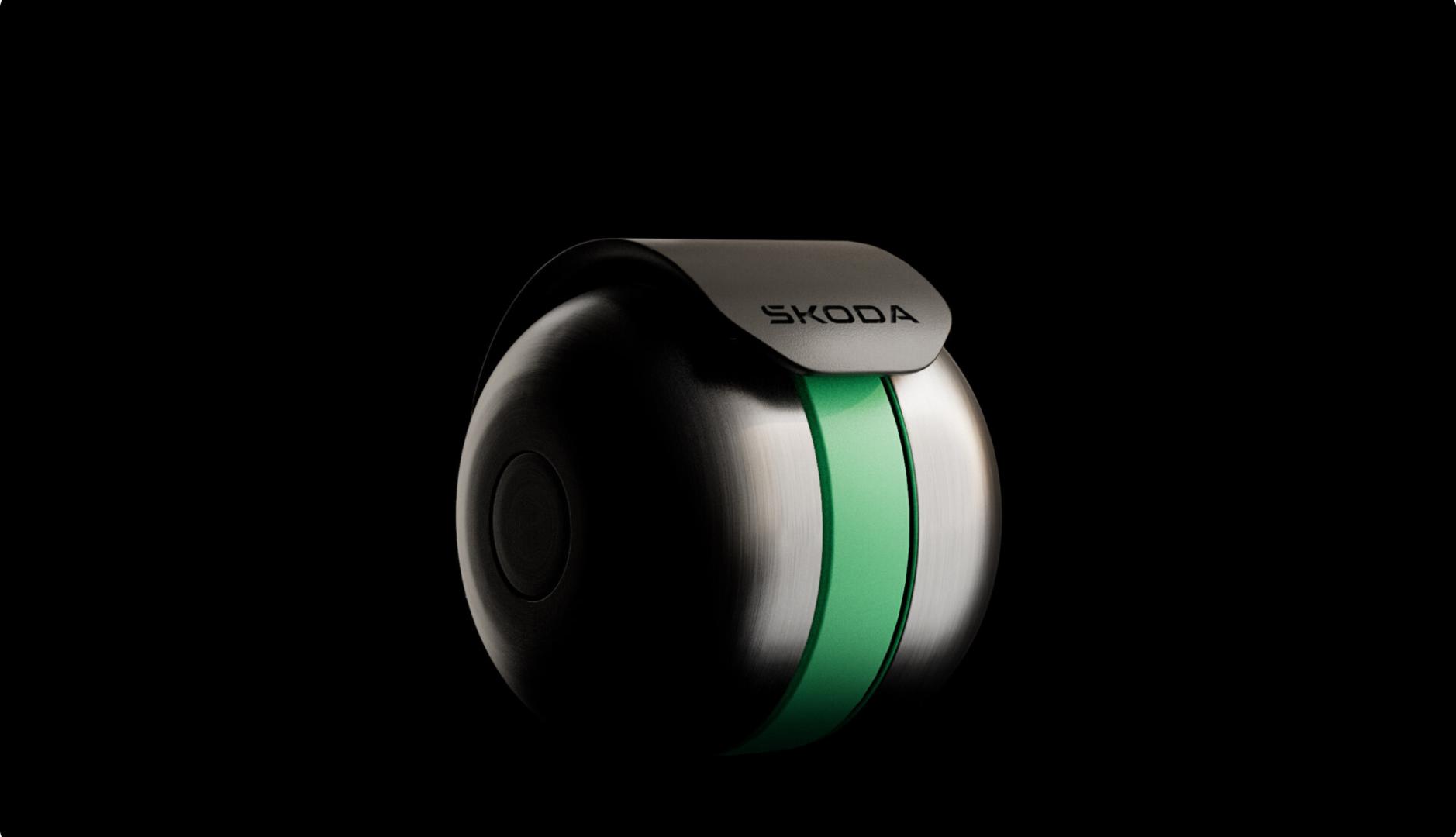
The proliferation of headphones with active noise cancellation is altering sound perception in cities and, with it, road safety dynamics. In this context, Škoda has presented DuoBell, a bicycle bell specifically designed to be audible even when pedestrians use ANC (Active Noise Cancellation) technology. The initiative, developed together with the University of Salford and the AMV BBDO agency, is based on the premise that devices that eliminate noise are also eliminating warning signals.
Accidents between bicycles and pedestrians have grown by 24% in London
The project, in which the agency PHD Media and the production company UNIT9 have also been involved, responds to an urban trend that Škoda has argued with some data: in cities like London, where the number of cyclists could exceed the number of drivers this year, accidents between bicycles and pedestrians have grown by 24%, according to data from Transport for London. And part of the problem lies in the fact that traditional doorbells are neutralized by noise cancellation systems, thus reducing the reaction capacity of those walking through the city.
To address this situation, the brand’s research team detected a “safety gap” in the sound spectrum: a frequency between 750Hz and 780Hz that manages to pass through the filters of ANC systems. Based on this discovery, DuoBell combines two resonators and an irregular impact mechanism that generates sound waves capable of “deceiving” these mechanisms. The result is a doorbell that can be perceived up to five seconds earlier and at a distance of up to 22 meters further than a conventional one under controlled conditions.

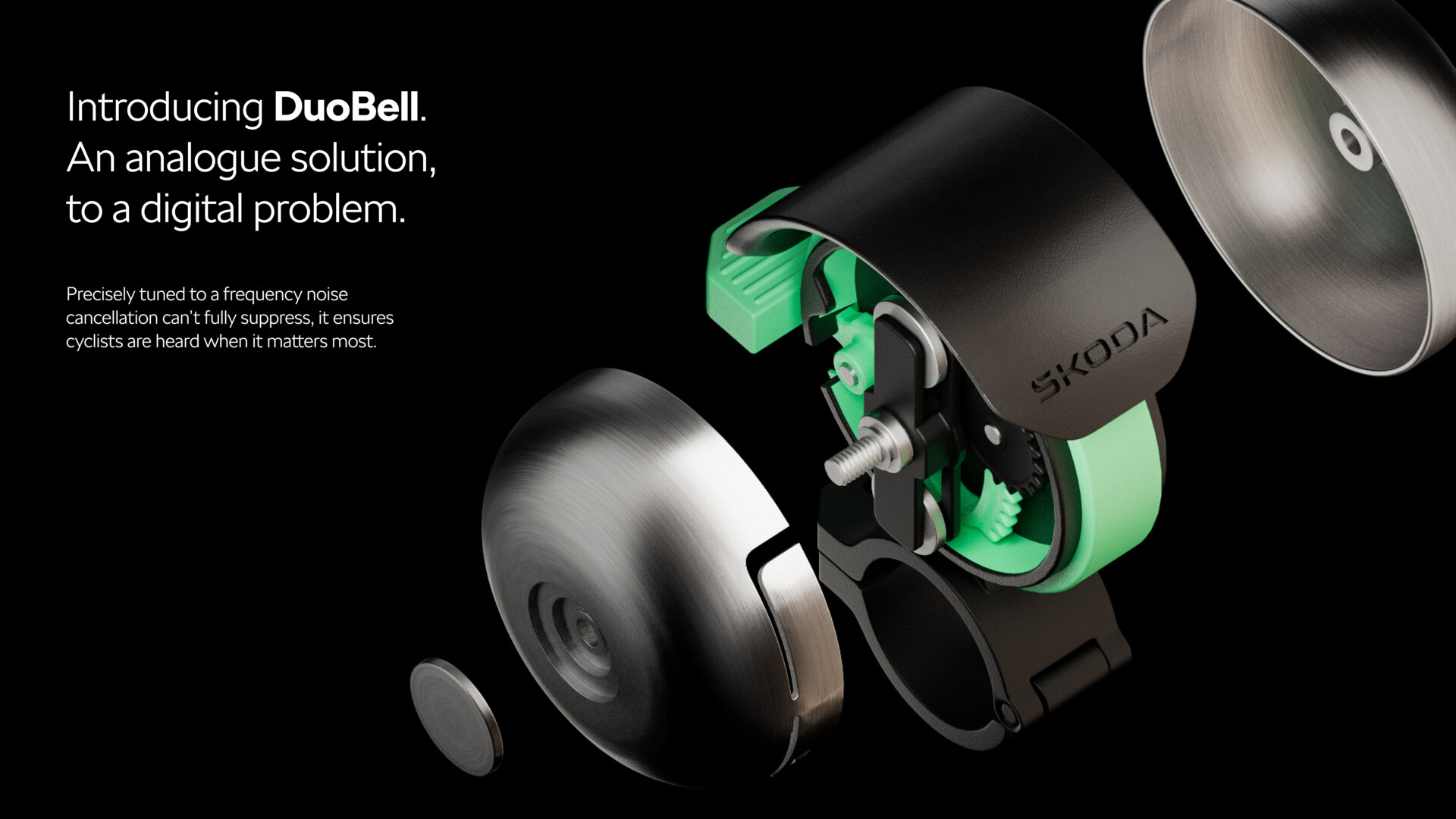

Beyond technical innovation, the proposal stands out for its approach: an improvement on an object practically unchanged for more than a century, now adapted to a new technological context. The solution has also been tested in real conditions with Deliveroo delivery drivers in London, incorporating their feedback into the final development of the product.
Škoda has accompanied the launch with the publication of a whitepaper openly, positioning the initiative as a contribution to the debate on urban security. The action is amplified with a campaign on social networks with profiles such as the disseminator Hannah Fry, reinforcing the educational component of the project.
The initiative also connects with the brand’s legacy, whose origins date back to the manufacture of bicycles in 1895. In this sense, DuoBell responds to a contemporary problem, reinforcing Škoda’s historical link with cycling mobility and its positioning around functional and accessible solutions.
More info: Škoda DuoBell