The so-called “Situation Room” is a room located in the underground complex of the White House where conflicts, military operations and critical decisions for the United States are monitored in real time. A reserved space, hyperconnected and symbolically associated with power, surveillance and global crisis management.
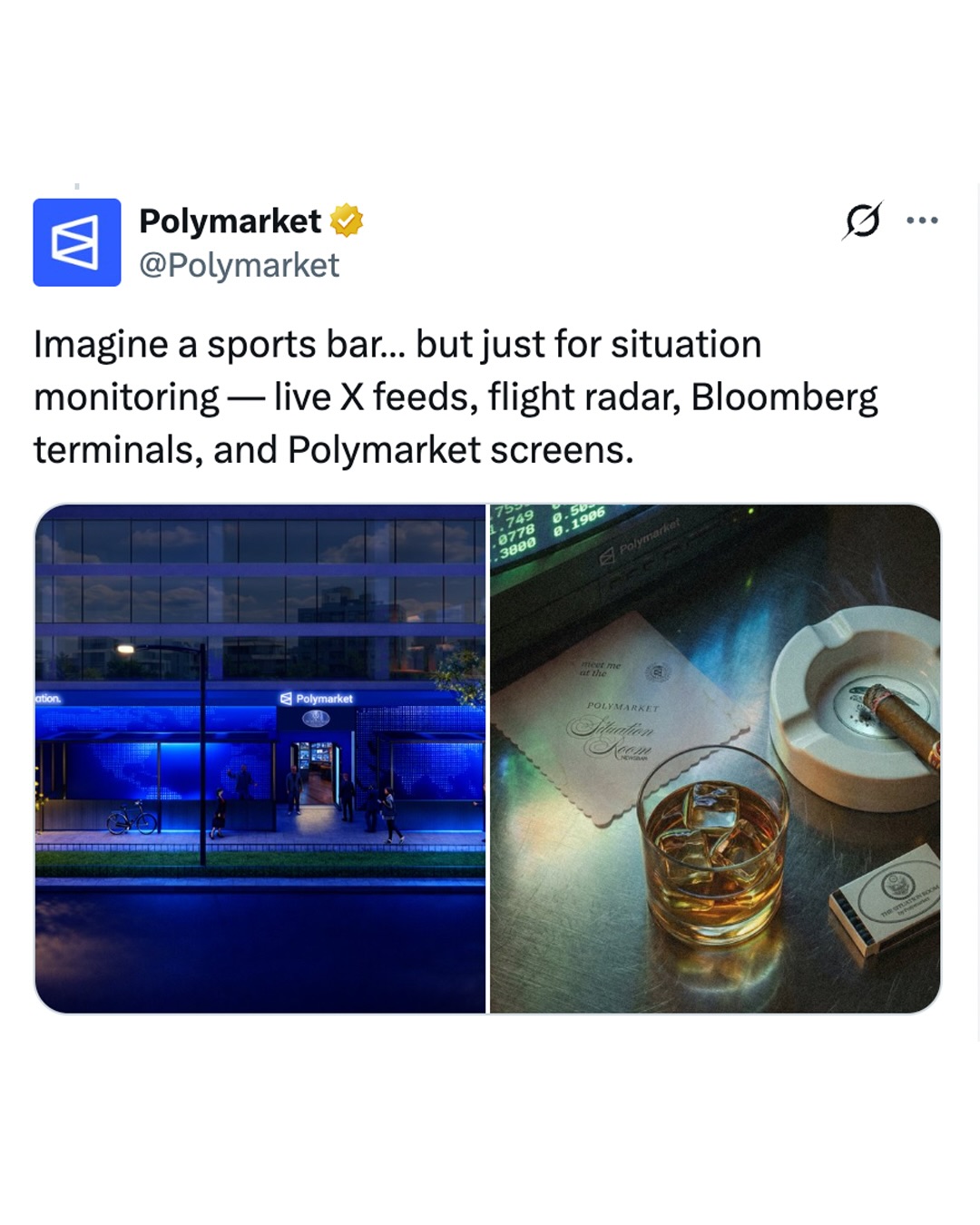
Polymarket has decided to appropriate this imaginary to carry out its latest marketing activation. The prediction markets platform has opened an ephemeral bar in Washington DC under the name “The Situation Room”, reinterpreting that intelligence environment in the key of contemporary entertainment.
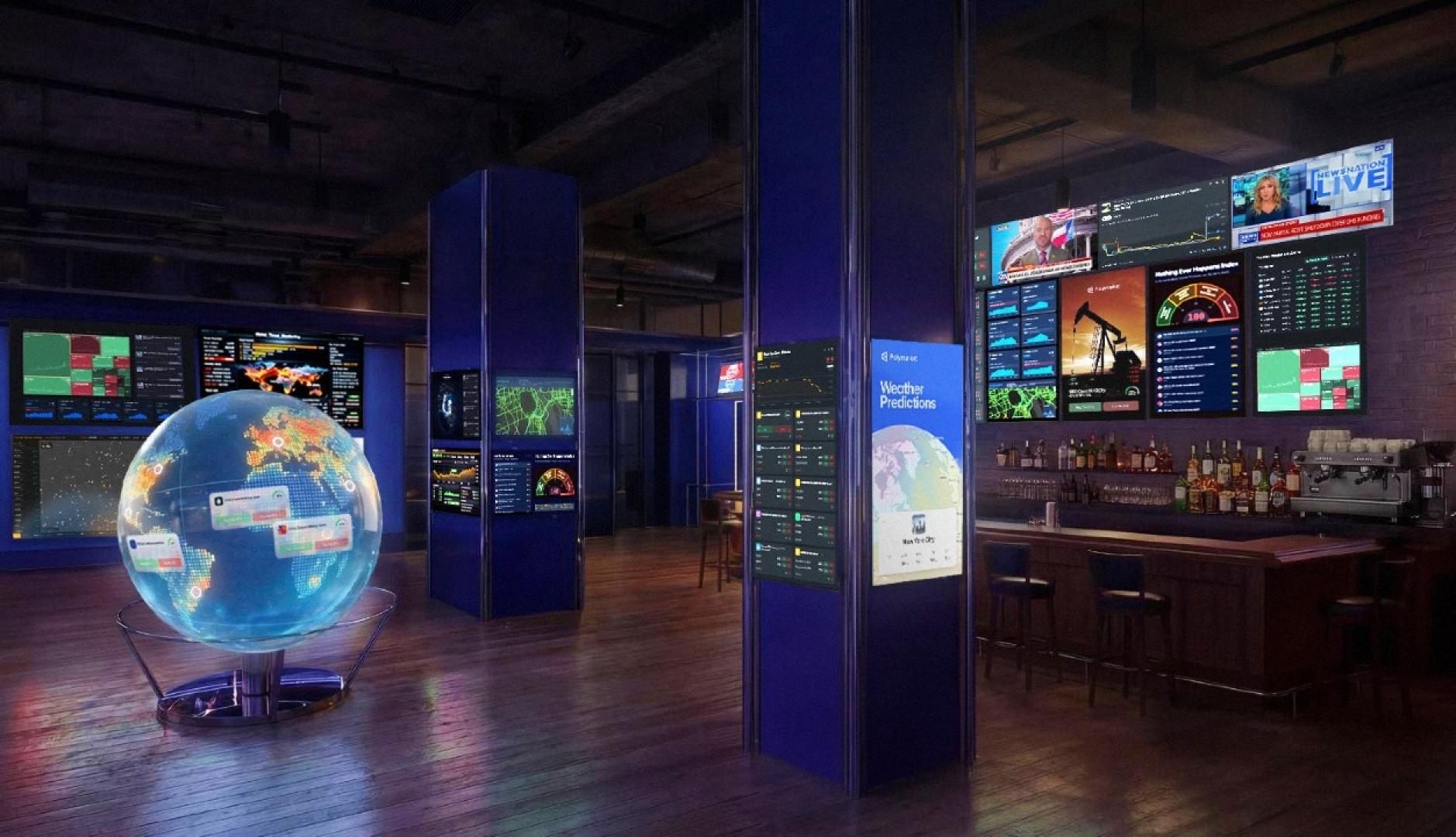
During a weekend, the company has taken control of a premises located a few meters from the White House and the headquarters of the Commodity Futures Trading Commission (CFTC), the regulator that supervises this type of markets in the United States. The space was transformed into a kind of monitoring room with screens that broadcast live news, financial terminals, flight radar and market probabilities on politics, sports or international conflicts.
The company’s proposal has been to turn monitoring current events into a collective experience
The company’s proposal has been to convert current events monitoring into a collective experience based on data, where each event in the world is translated into a negotiable probability. Like a sports bar but without sports, replaced by the logic of the market.
From digital interface to physical space
Polymarket is not a traditional betting house. It is a platform where users buy and sell positions on the probability of an event occurring: from elections to political decisions or geopolitical events. Its defenders present it as an information aggregation tool; his critics, as a sophisticated form of speculation.
In any case, with “The Situation Room” the company has sought something more than notoriety. It tries to materialize its proposal in a physical and social environment, transferring the experience from the screen to the shared space.
Thus, the bar was completely intervened with the brand’s visual identity, including a large globe covered with screens with real-time data. The aesthetics refer more to a control center than to a leisure venue, aligned with the idea of constant surveillance that defines both markets and current information culture.
Neil Kumar, General Counsel of Polymarket, summarized the approach during the presentation event: “We want to be part of the conversation in DC, and what better place to have a conversation than in a bar.” The phrase defines a positioning strategy in the political, media and regulatory epicenter of the United States.
The staging of “The Situation Room” aspired to consolidate Polymarket as a relevant actor in the political conversation in Washington, but its inauguration was marked by technical problems that conditioned the experience, as stated Wired. The event started late and, for a good part of the first night, the screens – a central element of the proposal – did not work, forcing us to rethink the dynamics of the space. Even the next day, although some monitors were activated, many of the announced tools, such as the terminals of Bloomberg or real-time feeds, were not available, which partially diluted the initial promise.
Beyond the execution, the behavior of the attendees evidenced another reality: the majority did not come as active users of prediction markets, but rather attracted by the experiential and almost ironic nature of the activation. Far from becoming a space for analysis or decision-making, the bar functioned more as a social and observation environment, where the real bets took a backseat to the consumption of the event as content.
In any case, it is not the first time that the company has opted for this type of action. Weeks before, it launched an ephemeral grocery store with free products in Manhattan, in a campaign aimed at generating visibility and circulation on networks. The strategy is, therefore, to carry out brief, highly visual activations designed to amplify the conversation.
These activations come at a particularly delicate time for the sector. Prediction markets are under increasing scrutiny from US lawmakers and regulators, concerned about their potential vulnerability to manipulation and insider trading. Congress has, in fact, promoted several initiatives to limit these practices, especially when they are linked to sensitive events such as war or political crises, and the CFTC itself has maintained a restrictive stance regarding the inclusion of contracts related to wars.
In this context, Polymarket’s proposal takes on an additional dimension, because it physically stages a controversial idea: the possibility of converting global uncertainty into a form of shared leisure.
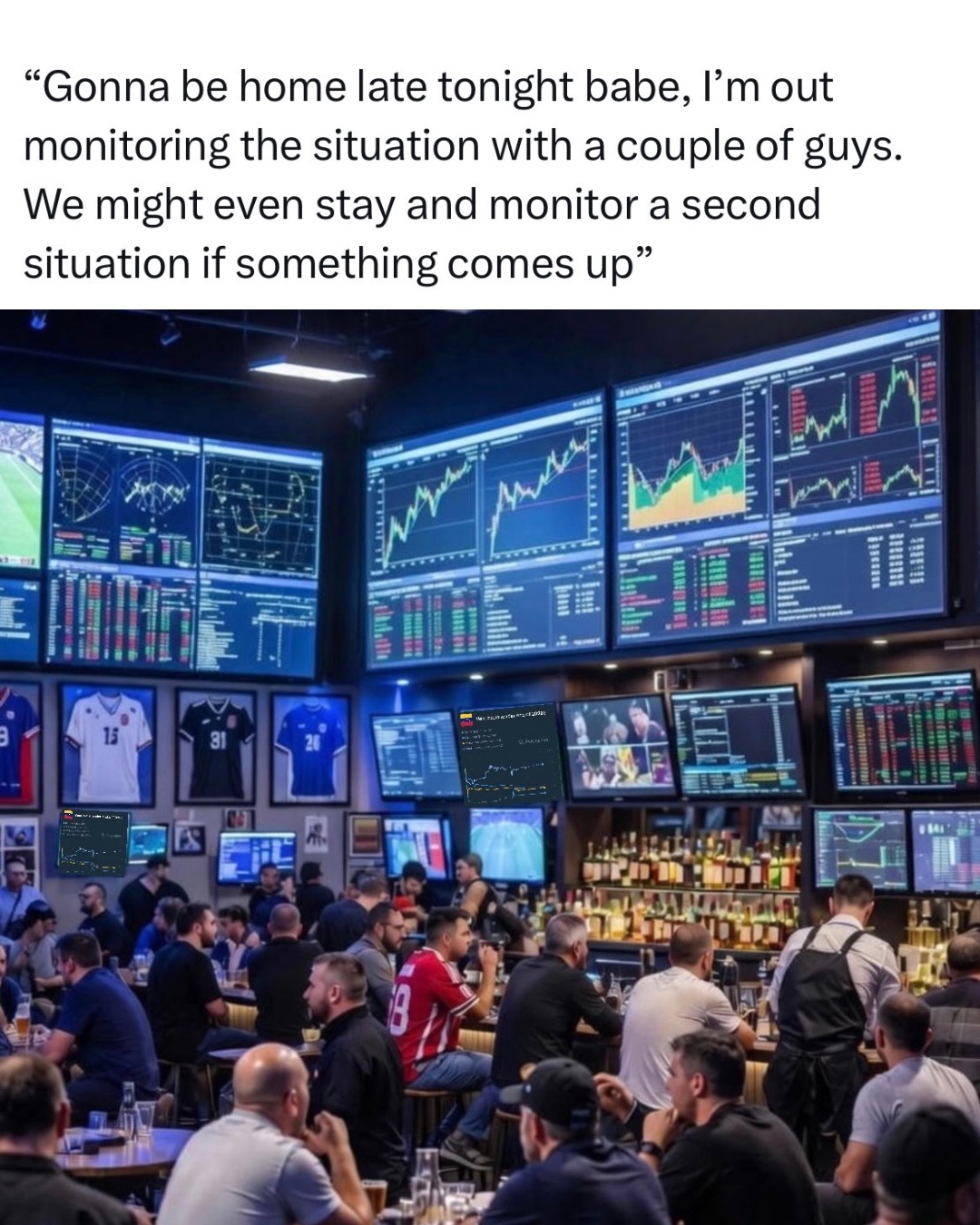

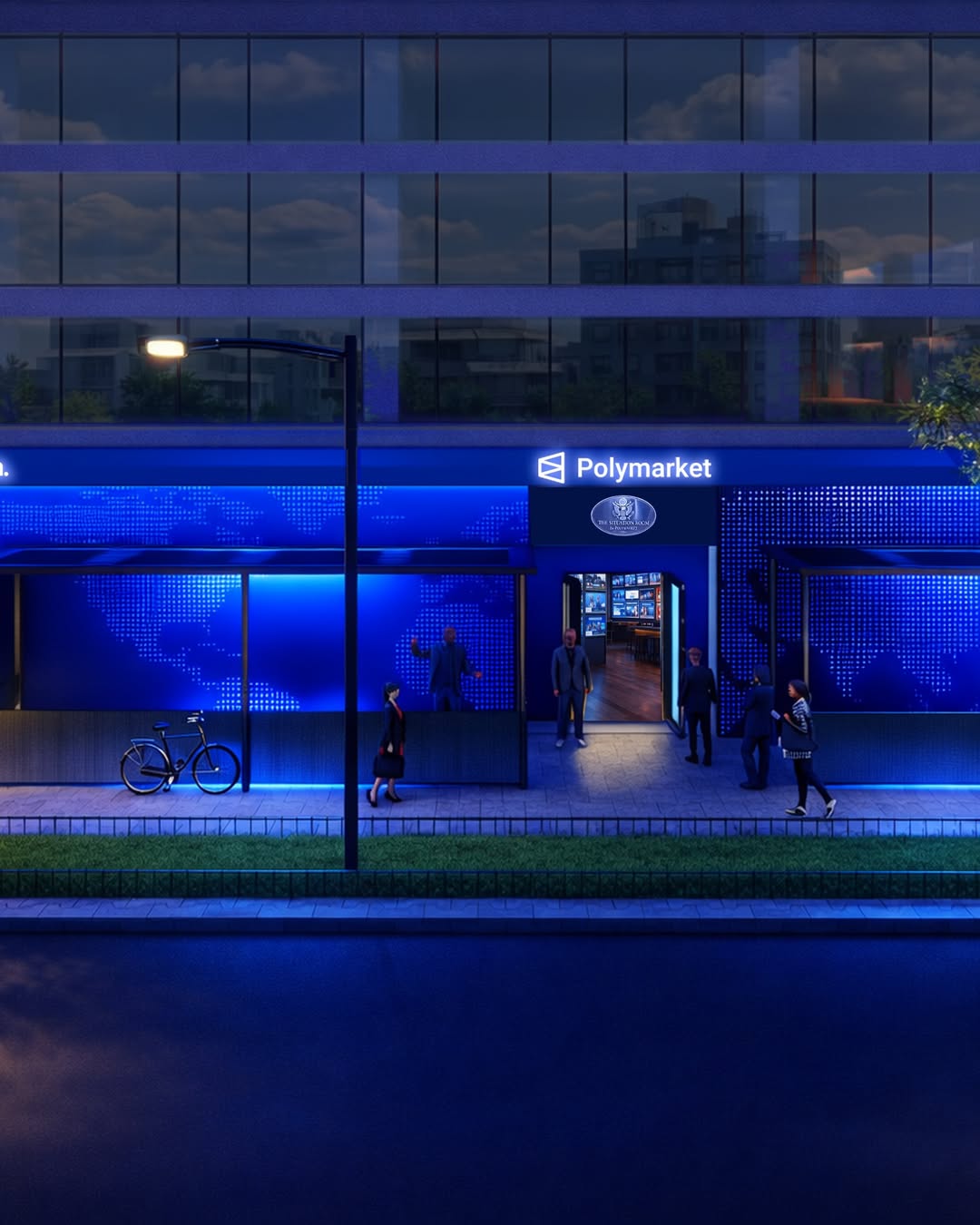
“The Situation Room” has been described as an immersive experience that reproduces current information saturation, while critical voices interpret it as a normalization of speculation about human crises.
The company itself does not avoid this ambiguity. Its model moves in a hybrid zone between analysis, market and game, and this lack of definition is part of both its appeal and its questioning.