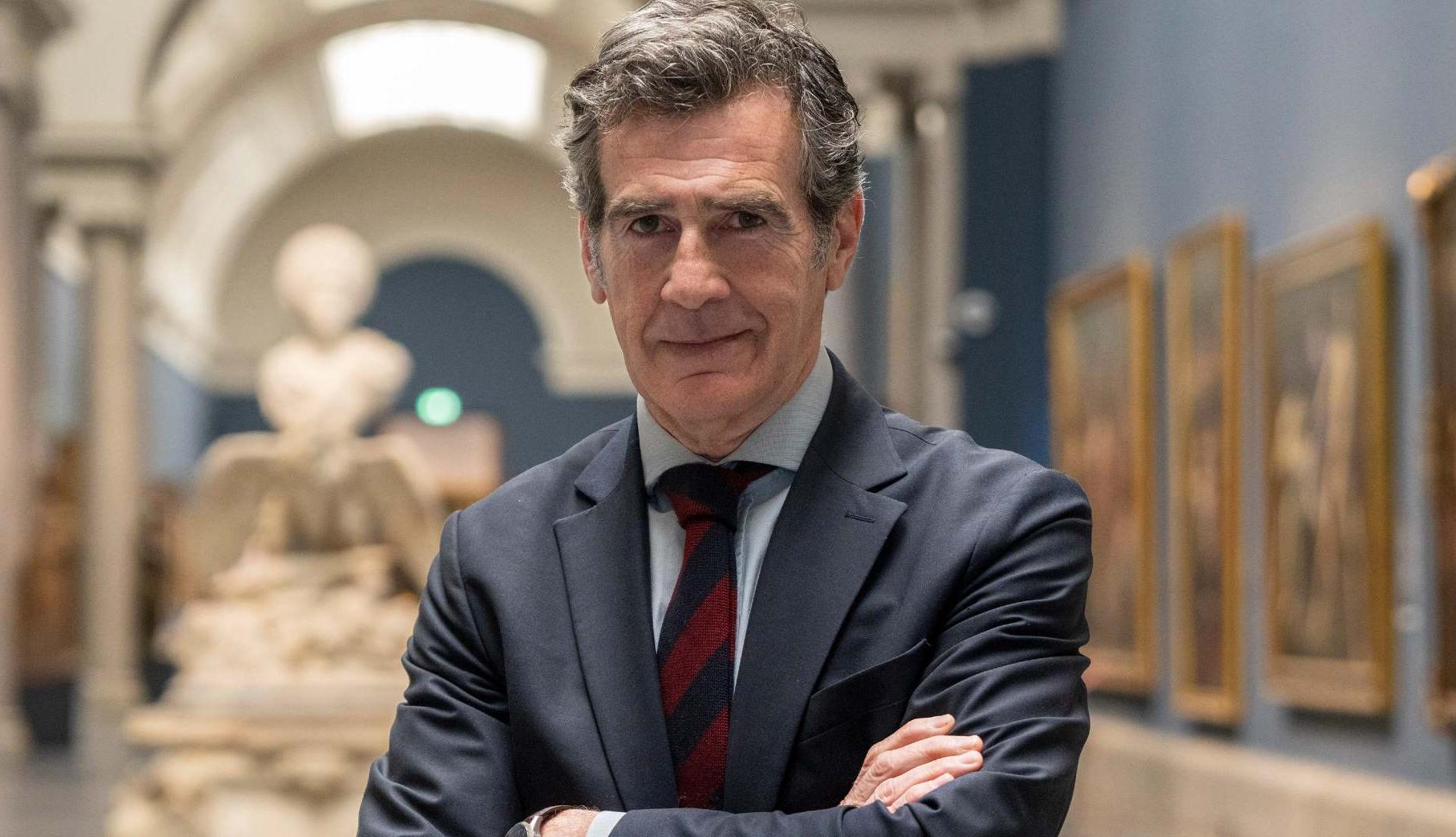
Although the Prado Museum is dedicated to art, its Director of Communication, Carlos Chaguaceda, uses mathematics to explain the key to the institution’s communication success. Specifically, it refers to Albert Einstein’s formula, E=mc², but replaces its elements. “Our success is equal to the raw materials we work with, which is wonderful, multiplied by communication squared. We do communication, and we do communication of communication”, he explains to us.
This formula is, in part, what has led the museum to amass a community of more than five million followers on social networks and to be recognized, among others, by the International Academy of Digital Arts & Sciences. In August 2017, he began to broadcast live on Instagram in which he showed the works from his collection before the opening of the museum at 10 a.m., and now it is already a communication reference both for its category and for other industries.
“We build a story in everything we do and connect it with reality”
“We do not limit ourselves to putting the camera in front of the painting, but we build a story in everything we do and connect it with reality, with current events, with what is happening, to transcend and go a little further.“, comments Chaguaceda in statements to reason.Why. “The Prado Museum wants to participate in the conversation and be present”.
He tells us about it in the talk we had with him after learning that in April he will participate in the C Days of the Creativity Club with a session titled “How to create quality content with a classic brand”, and in which, as he tells us, he will try to infect the attendees with his enthusiasm for communication. “It is a satisfying, interesting, challenging, fun, competitive activity; It’s a fight that can be won.”, he assures.
Finding the stories that art holds
It refers to the fight for attention in a society saturated with stimuli and alternatives, and in which everything is ephemeral. His key for that society to look and think about the Prado Museum, he says, is the will and hunger to tell stories; some that he finds both in what his works hide, and in everyday life. He points out that the media is where the team finds reasons to create stories and connect with the audience.
“There are two ways to approach communication as a strategy. One is to introduce the topics you want in the conversation, another is to go where the conversation is.“, explains Chaguaceda. “We always try to get closer to citizens, to know what worries them, what is happening in society.“.
This is how, for example, the museum captured part of the social conversation in the context of the 2024 Champions League final. It did so with a video that recalled its night opening on the first Saturday of each month, which coincided with the match and which, in addition, positioned the museum as a destination for everyone.
In his formula, Chaguaceda considers it essential to find the general interest to connect, to appeal to curiosity which, as he explains, is what feeds people’s thinking. “We resort to voracity, to the emotional and physical reward that one feels when discovering something“, he tells us. “The Prado is dedicated to transferring experiences and sharing emotions. We have a lot of accumulated knowledge and we try to turn it into pills that generate that curiosity, that produce satisfaction in those who listen to us.”.
These pills range from daily live streams on Instagram to high-production pieces. Among these he cites, for example, the performance of the song “Spain shirt white”, by the singer Ana Belén in the Central Gallery of the museum; or the video created in 2024 with the song “The power of art”, by Robe Iniesta, and which the institution recovered last year after the death of the rocker.
The director considers both videos as an example of the museum’s hunger for stories, and a daring to see the beauty that underlies things. This is a way of communicating that they are not in the manual, but it is not free of red lines. “We have two limits. One is that everything we do has to have meaning. We are not interested in fireworks, because we do not need them“, Carlos Chaguaceda explains to us. “The other is that everything has to live up to what citizens expect and think of the Prado Museum.“.
It also presents these videos as an example of the way in which different aesthetics and formats coexist in the museum’s communication channels, which it considers a parallelism of the rich diversity of artistic works that El Prado houses, as well as the protagonists of its contents. They include restorers, conservators, researchers and other members of the museum team; to world-known figures, such as the actors Javier Bardem or Bill Murray, the singer Dua Lipa, or King Felipe VI, who celebrated the institution’s 1,000 Instagram live streams in June 2025.
The sum of all these faces is also part of the communication formula that Chaguaceda talks about, and is aligned with the mission and purpose of the Prado Museum to bring art and culture closer to people. The entire team of the institution is at the service of communication. “The more people we are able to add, the better. We don’t want to be a showcase for anything or anyone, but it helps convey the idea that culture is valuable, it is interesting and that art is something that inspires you and makes you enjoy life more.”Chaguadeda explains to us.
In this regard, we also asked about the importance and value of the alliances that the Prado Museum has established, in terms of communication, with other brands and institutions, among which are the Goya Awards, the BBVA, La Caixa or Iberdrola foundations, or Samsung or El Corte Inglés. With the latter, in 2018 during the celebration of its Bicentennial, the museum decorated the works that were being undertaken in the Villanueva building with images of the clothing of some paintings.
“Some of the best projects we have done would have been impossible without the collaboration of the brands. We are a public institution that needs private allies, who are more flexible and more dynamic“, comments the manager. “Sponsors are little recognized and I think that is a pending social task. We are very grateful for your support, your complicity and your resilience.”.
Instrumental technology, strategic narrative
In our conversation with Chaguaceda we took a few moments to reflect on artificial intelligence, which the Prado Museum has already applied at a creative level in several initiatives. Among them “El Prado en feminine”, with which, thanks to technology, she has brought to life some of the women who have promoted the world of art; or “The art that connects”, which celebrated the centenary of Telefónica by establishing connections between the works and some Spanish cities.
In this area, again, Chaguaceda invokes his formula; specifically, to the raw material, and ensures that the museum approaches emerging technologies with curiosity, but also with caution. “We have a logical brake which is that we do not manipulate works of art. We have a reverential respect for what was created in its time“, says the manager in conversation with reason.Why. He points out that they would never use AI to transform a painting. “What we want is to draw attention to the painting, the artist, the style, the story, but not to the technology. This has to be at the service of what we want to tell”.
He considers that technology is instrumental and that narrative is strategic, and points out that, once the surprise factor has been attenuated, the tools are redirecting communication to what is essential, which is the message. And this is one of the lessons that Chaguaceda highlights when we ask him to take stock of the museum’s strategy over recent years. He adds, among other things, the importance of avoiding individualistic prominence and the value of having the support of senior management.
The Prado Museum closed 2025, exceeding 3.5 million visits for the first time
The Prado Museum formula has been successful both in terms of audience acceptance and participation, and industry recognition, as well as in business results and brand building. Communication is one of the various factors that have helped the institution achieve three years of record visits. It closed 2025 exceeding 3.5 million visitors for the first time, with a young profile (almost 50% are between 14 and 34 years old) and female (53%).
However, as Carlos Chaguaceda tells us, the main impact of the strategy has been the creation of “a new museum” and the “emotional visits“He explains that when someone watches an Instagram live stream or comes across one of his videos, a connection is generated with art, culture and heritage that, for those who want and can, will materialize in a physical visit, and for those who cannot, communication builds a parallel world that conveys beauty, feeling and purpose.
And that, he assures, is the mission of the Prado Museum and its strategy. “Communication is credibility, brand and reputation building. It is a path without end, because when you communicate to be known there will come a day when you will no longer be able to gain notoriety, but when you communicate to be loved, you never finish doing your job.”, he concludes.