Collective mockery, curious crowds or even police intervention. These are some of the consequences that the supposed meetings of “therians” organized for last Saturday, February 21 in different Spanish cities have had. The trend around this community has been fueled in recent days on social networks by users, media and brands, and has once again put the debate on the table about the impetus of brands to join all digital conversations.
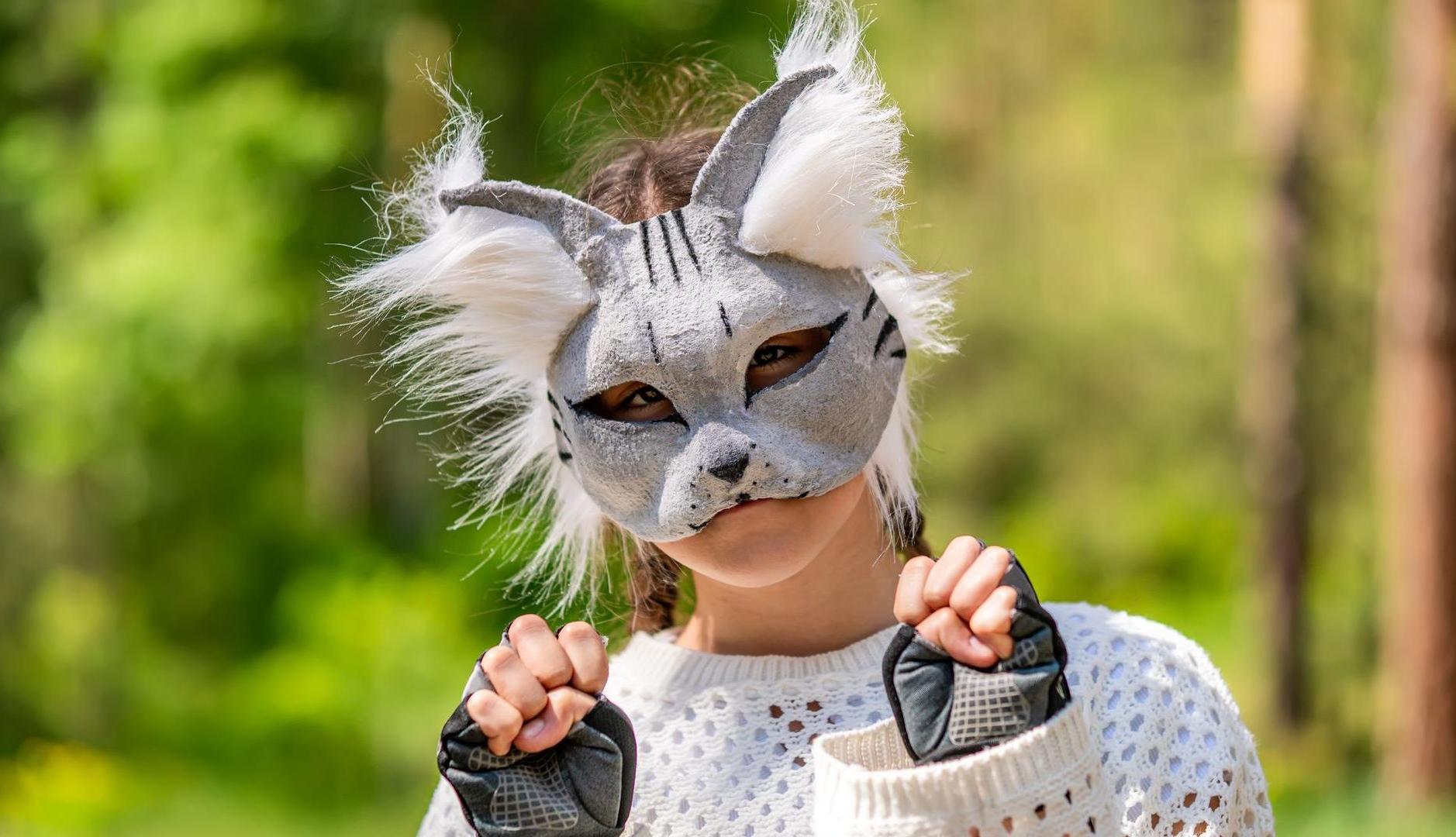
The “therians” identify on an emotional and spiritual level with animals and materialize this in their aesthetics.
The “therian” phenomenon is not new; Its practice has been extended for years in different groups. The term finds its origin in the mythological concept of “therianthropy”, which refers to the transformation of a human being into another animal, either completely or partially; and that today translates into the spiritual or emotional identification of a human being with animals, especially dogs, cats or horses.
The movement has been part of different subcultures for a long time, but on social networks it has found the formula to gain traction, attention and occupy mainstream spaces. What’s more, precisely these platforms are the ones that have served to amplify the message around the meetups that have taken place in Madrid, Barcelona or Malaga.
These, as social networks have witnessed, have been marked by the absence of “therians” and by the spontaneous gathering of the public attracted by the singularity of the practice and the viral phenomenon. In most meetings, the “therians” have not made an appearance and, in the presence of people dressed as such, the authenticity of their connection with the movement has been questioned.
The meetings could be understood as the culmination of several days of online conversation in which intrigue, prejudice and mockery have defined the tone. Given the attention raised by the phenomenon, many brands have chosen to join the dialogue, as is often the case with similar trends, seeking to associate themselves with the cultural moment, offer content and generate interaction.
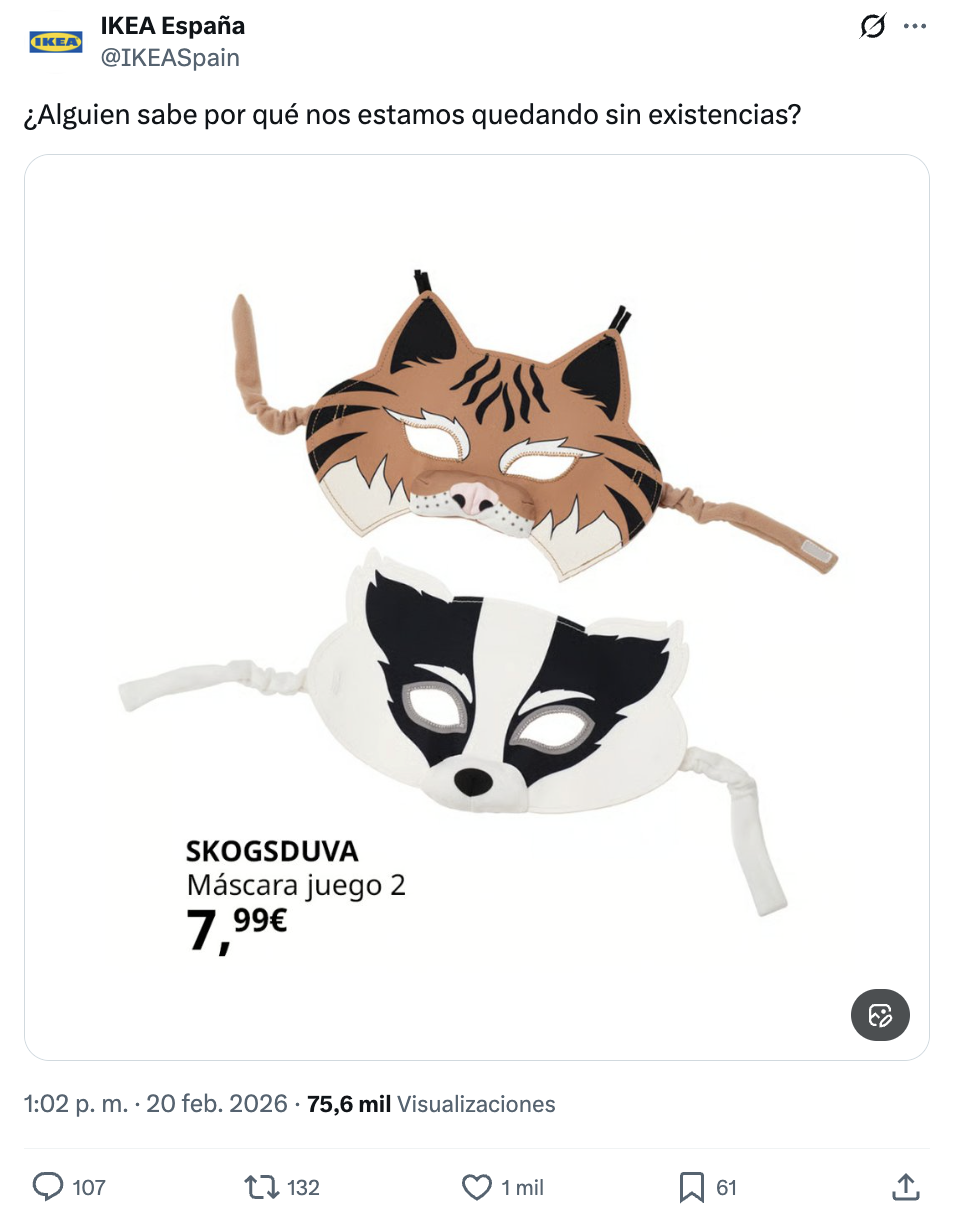
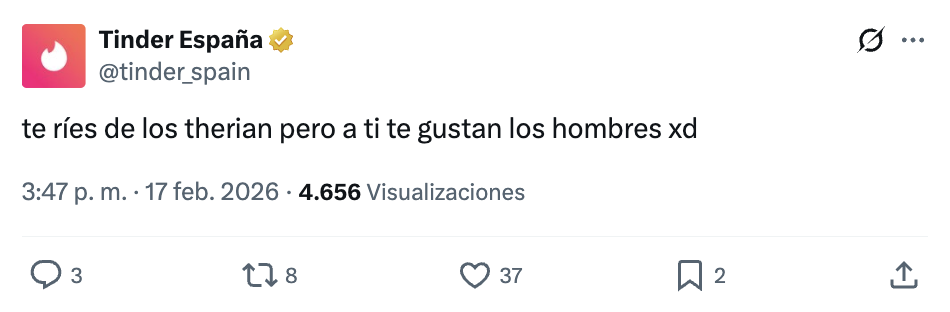
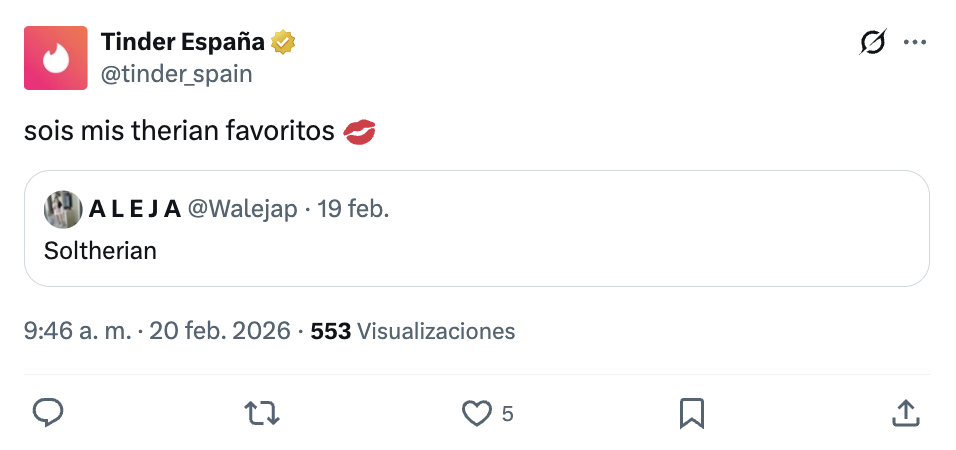
Many have done it from humor. In Spain, Netflix has linked it to its series “Sweet Tooth”; while Ikea has highlighted some of its accessories. KFC, in line with its usual communication strategy on social networks, has generated memes, as has Fini. Tinder, for its part, has published the message “You laugh at therians but you like men.”
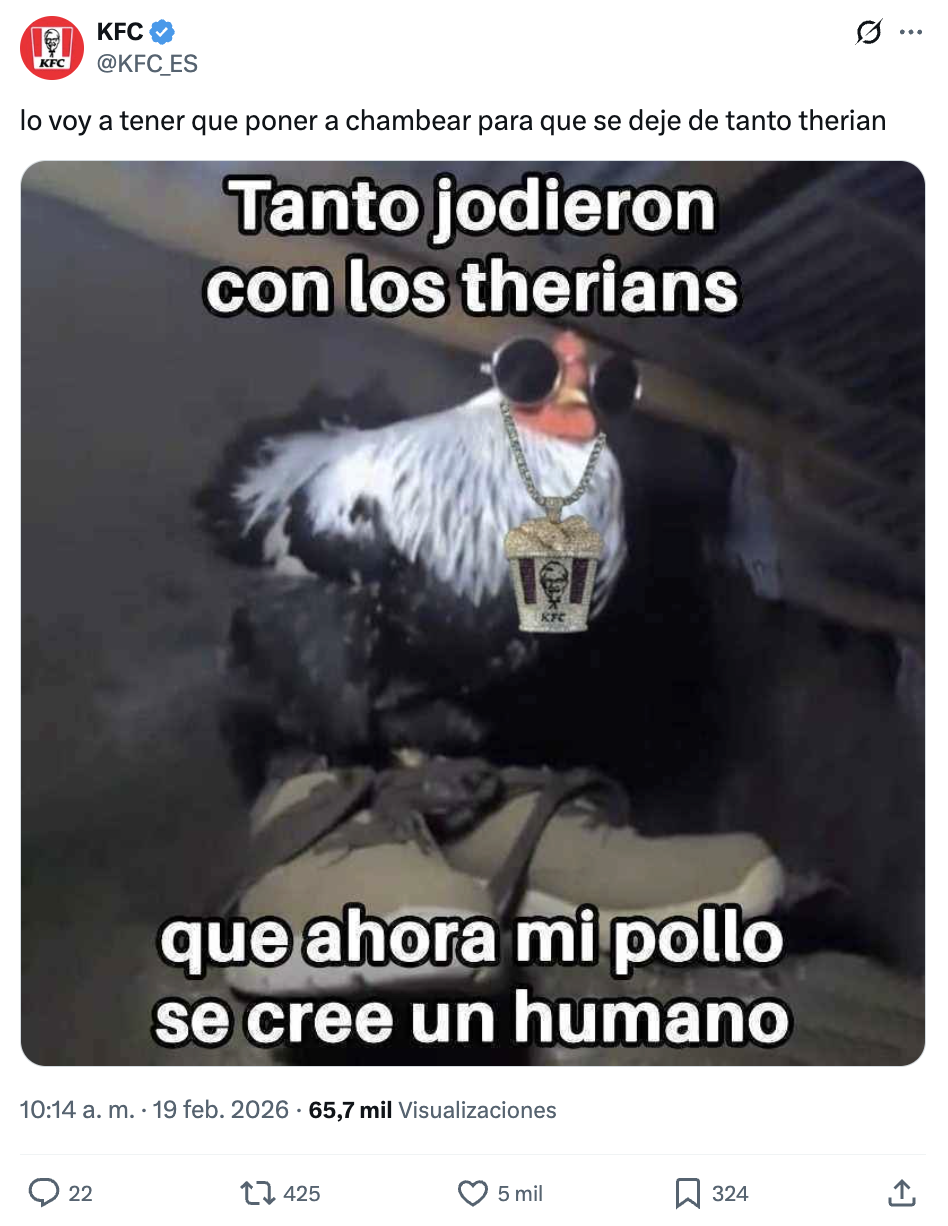
For the most part, publications have sought to align themselves with the widespread sense of extravagance generated by the behavior of a niche that many do not understand, rather than trying to generate an authentic connection with the group itself. The presence of brands, as is usually observed with other viral trends, walks a delicate balance between opportunity and opportunism.
In this case, the phenomenon of “therians” is more than a simple matter of aesthetics: it implies identity and community and, therefore, has deeper consequences and reflections that can lead brands to easy risk-taking. Reducing the practice to caricature, identifying it with a fetish or generating controversy due to lack of real understanding are some of them, and they find their possible causes in the ephemerality and immediacy of the context.
The absence of legitimacy and coherence and consistency is also another. Brands can see their reputation or perception compromised by trying to join the conversation without having a real anchor point or by becoming alien in an area they have not been part of before. In a communicative context in which we compete for attention, but also for cultural relevance, correctly understanding the codes of each territory is critical to working and building the brand.
Few, or almost no brands, have chosen to praise and accompany the phenomenon, despite the fact that many make a reading of the “therians” linked to the exploration of freedom and self-expression that is understood almost as revolutionary in a world that tends towards homogenization and corseting.
It remains to be seen if, after a few days of the viral boom, there is a brand that continues to communicate around “therians”, a phenomenon that will be quickly replaced by a new trend that, fleetingly, once again monopolizes a conversation and an effervescent cultural moment.