As the race to lead the artificial intelligence category has heated up, companies have boosted their communication efforts. The Super Bowl, where there is an increasing presence of technology companies, is an example of this. But social networks and influencer marketing are also witnessing the commitment to content and advertising to increase the user base of their tools.
The investment in digital platforms is part of a general increase in advertising investment by AI companies over the last year. According to CNBC Referring to data from Sensor Tower, generative AI platforms will allocate more than $1 billion to digital advertising in the United States in 2025, which represents an increase of 126% compared to the previous year.
Microsoft, Google and Anthropic have strengthened partnerships with influencers in the last year
And as happens in any other category on the market, influencer marketing has become a battleground between brands. For months, the big players in the sector, such as Microsoft, Google, Meta or Anthropic, have been promoting collaborations with content creators and influencers to promote their products and services. This has caused users’ feeds in spaces such as Instagram, TikTok or LinkedIn to be flooded with sponsored posts.
From a post on LinkedIn with tips on how to improve code creation with Claude, from Anthropic; to Instagram videos in which Microsoft’s Copilot is asked for advice on tourist plans. The activations already go beyond the field of technological expertise, and companies are turning to all types of profiles, especially in order to demonstrate the capabilities of their tools to be useful and relevant in any type of everyday situation. The intention, ultimately, is to humanize their brands and work on a perception of artificial intelligence as empowering.
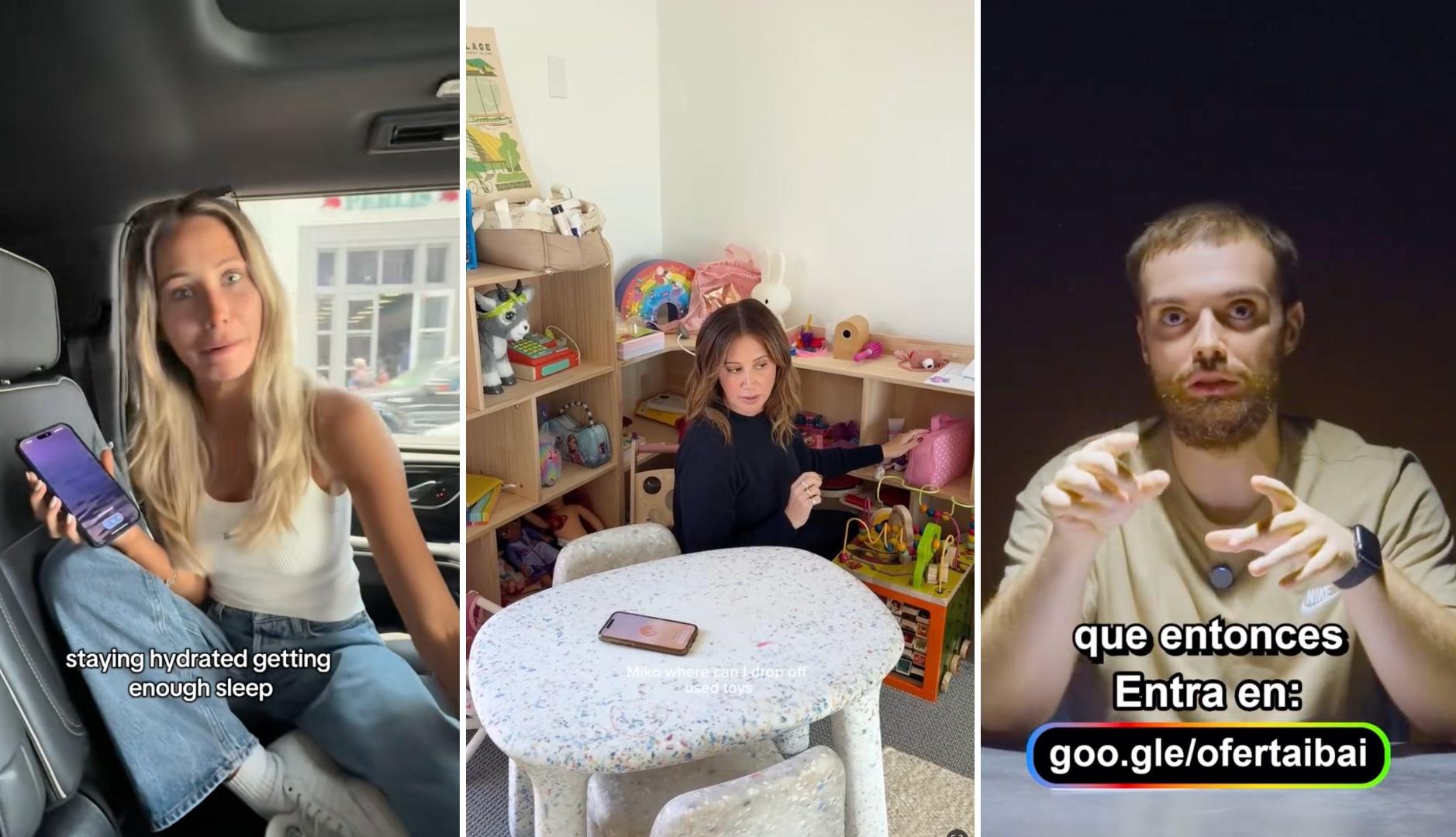
Actress Ashley Tisdale, whose popularity was catapulted with the “High School Musical” saga and who has 16 million followers on Instagram alone, has recently been in charge of conveying the advantages of Copilot. He has done it with a video in which he shows how he uses the Microsoft assistant at different times of the day to simplify his tasks. The publication, like many others on social networks, was carried out with the hashtag #CopilotPartner.
Microsoft is focusing especially on celebrities and influencers linked to the lifestyle field. Already in May of last year, she partnered with creator Alix Earle, who published a video asking Copilot about how to look younger after, as she explained, users had pointed out that she looked 40 years old. This video currently exceeds 15 million views.
Anthropic’s approach with Claude, on the other hand, focuses on the creative and professional field, as seen by checking the #ClaudePartner hashtag on TikTok. As can be seen, many of the contents published under that label are made by professionals from the audiovisual industry, design or computing; and they show how the tool helps them in their daily work. They offer advice on how to speed up editing processes, how to learn to code quickly, or even how to manage burn out thanks to the advantages of the chatbot.
Last October, content creator Kyle Nutt, with six million followers on TikTok, published a video in which he reflected how Claude applies in his work process, from script to editing. The video has already accumulated more than 4 million views.
In addition to videos, artificial intelligence companies are also investing and partnering with content creators through other formulas, such as invitations to events or early access to new features. They would be trying to build more significant relationships with influencers in order to include them in their strategies more as ambassadors than as specific activations.
Analyzing the publications and profiles, Anthropic seems to be betting more on macro and micro influencers linked in one way or another to creativity; while Microsoft, presumably with greater budgetary and resource capacity, collaborates more with mega-influencers associated with broader thematic territories.
Although companies are focusing on the United States, their original markets, the integration of influencers and creators in their strategies is also developing in other markets. In Spain, for example, Google partnered with numerous profiles, including Ibai Llanos, to promote Gemini among university students.
Artificial intelligence is taking off as one of the sectors that are investing the most in advertising. Brands such as OpenAI, Anthropic or Google were announced in this year’s edition of the Super Bowl, where the price for 30-second spots reached 10 million. Furthermore, according to CNBCMicrosoft and Google have paid creators and influencers between $400,000 and $600,000 for multi-month partnerships to promote their products.
Despite this, there are many creators who still keep their distance from these types of advertisers. The ethical, environmental and creative challenges of the tools still represent a barrier when establishing a relationship with artificial intelligence companies. The opinion and position of their followers regarding technology can imply reputational risks that many creators are not willing to assume.
The growing advertising presence of artificial intelligence brands reflects a consolidation and maturation of the category, with advertisers being pushed to sophisticate their messages in order to work on differentiation and their value propositions to stand out in an increasingly competitive field.