Many users feel saturated with the digital environment. With algorithms creating vicious loops of instant gratification and artificial intelligence generating junk content, using social media and digital platforms has become a frustrating and unpleasant experience. That is why more and more people, especially young people, are looking for physical experiences that provide them with greater authenticity and emotional connection, which is leading to the recovery of some traditional means and communication channels, such as postal mail.
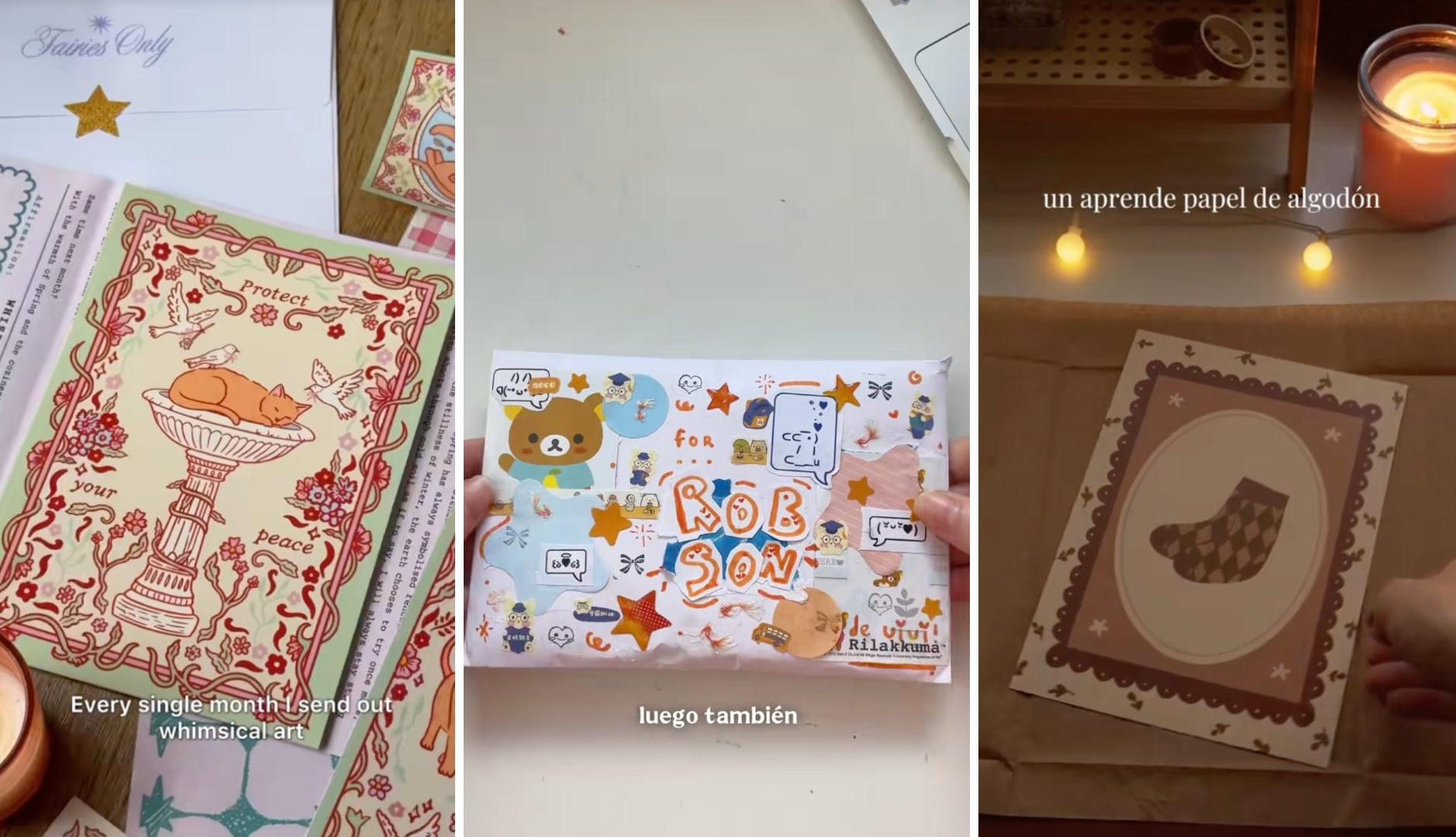
The revitalization of postal mail by Generation Z is taking the form of the so-called “mail clubs”, which use the traditional formula of letters to connect users and artists. They offer their art, whether in the form of stickers, illustrations, poems, photos or recipes, on a monthly basis and users, thanks to a monthly subscription, receive the material in a personalized way directly to their homes.
Mail clubs, which have become popular globally in recent months, offer benefits for both parties. The artist finds a way to monetize his work and creates a community with which he relates almost directly; while users can access a tangible artistic experience, develop group membership and financially support independent artists.
Those who are part of one of these mail clubs, whether artists or users, are usually young women with artistic inclinations. They share that their interest in this type of initiatives gives them a hobby away from electronic screens, the possibility of meeting and connecting with people, and an opportunity for introspection, mental rest and emotional development.
Furthermore, subscribing to these clubs capitalizes on the surprise factor, since users are unaware of the content of each delivery. The model emulates the phenomenon of “mystery bags” or “blindboxes”, which for years has played with the factor of surprise and intrigue, and is based on the acquisition of packages containing unknown products.
And the mechanisms that articulate mail clubs are not new, since epistolary relations have a centuries-old history. The monetization system is not innovative either, since the subscription model currently articulates thousands of businesses, including those of large technology companies such as Netflix or Spotify. In the same way, neither is financial support for individuals, since systems such as Substack or Patreon have been facilitating it in the digital environment for years.
The novelty, in this case, is found rather in who is fueling the trend and why. They are young users who, tired of digital interactions, rely on traditional media to find more meaningful experiences and connections. These clubs offer something that feels intentional and human in a world that increasingly tends toward the ephemeral and disposable.
The themes of the mail clubs are broad and diverse: from authors who share stories inspired by the Middle Ages, or who reinterpret movie scenes using the watercolor technique, to illustrated recipes. Some, like the one organized by user maurapaintsfood around culinary illustrations, have accumulated more than 4,000 subscribers.
Mail clubs are a business in themselves. Although some might argue that they are a get-rich-quick strategy, the truth is that these types of initiatives involve the creation and shipping of hundreds of small packages and, therefore, are an exercise in effective production and management. The user drawnbyshona shared in one of her recent videos that she had spent $3,500 on stamps alone to send her letters to all her subscribers, many of them international.
And as would happen in any category, competition is increasing and a debate is already being forged around artists who charge less than they should, and therefore, unbalance the market and devalue the efforts of others, who struggle to match the price and volume of production. In some of the videos that can be found on social networks, you can see how the subscription prices are wide: 7, 9 or 11 euros are some of those that we have been able to see at the time of writing this article.
Whether with the intention of creating a business, or simply as a way to simply support their artistic proposal, the motivation of most creators is found in building a community around a shared passion. What’s more, many of them transcend the epistolary relationship and promote face-to-face meetings occasionally or periodically to hold workshops, craft sessions and, ultimately, strengthen connections.
These snail mail clubs are a new example of how users are seeking in-person, emotionally relevant experiences and authentic connections with other individuals to distance themselves from a digital ecosystem that, for many, has failed in its promise of bringing people together.