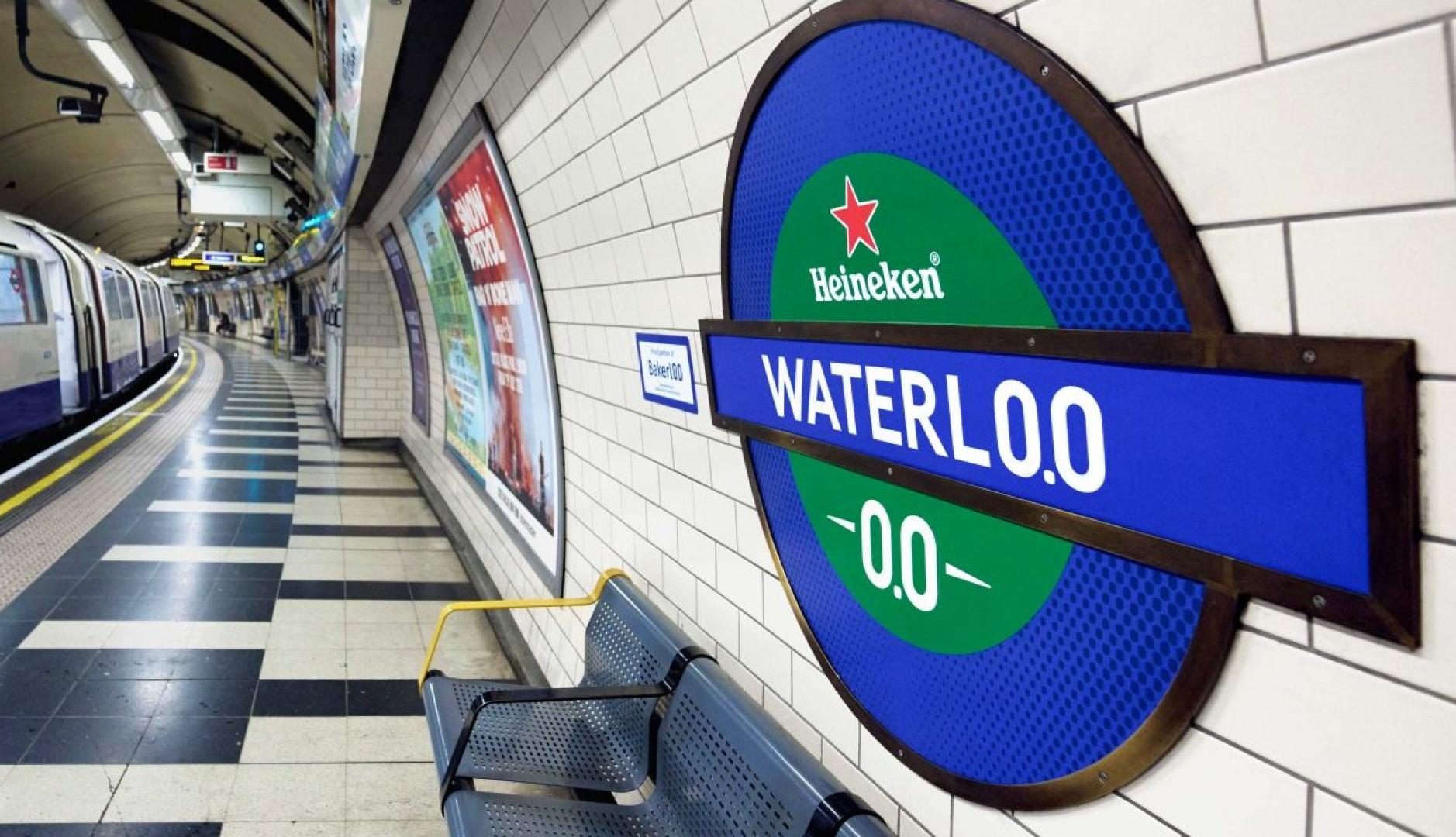
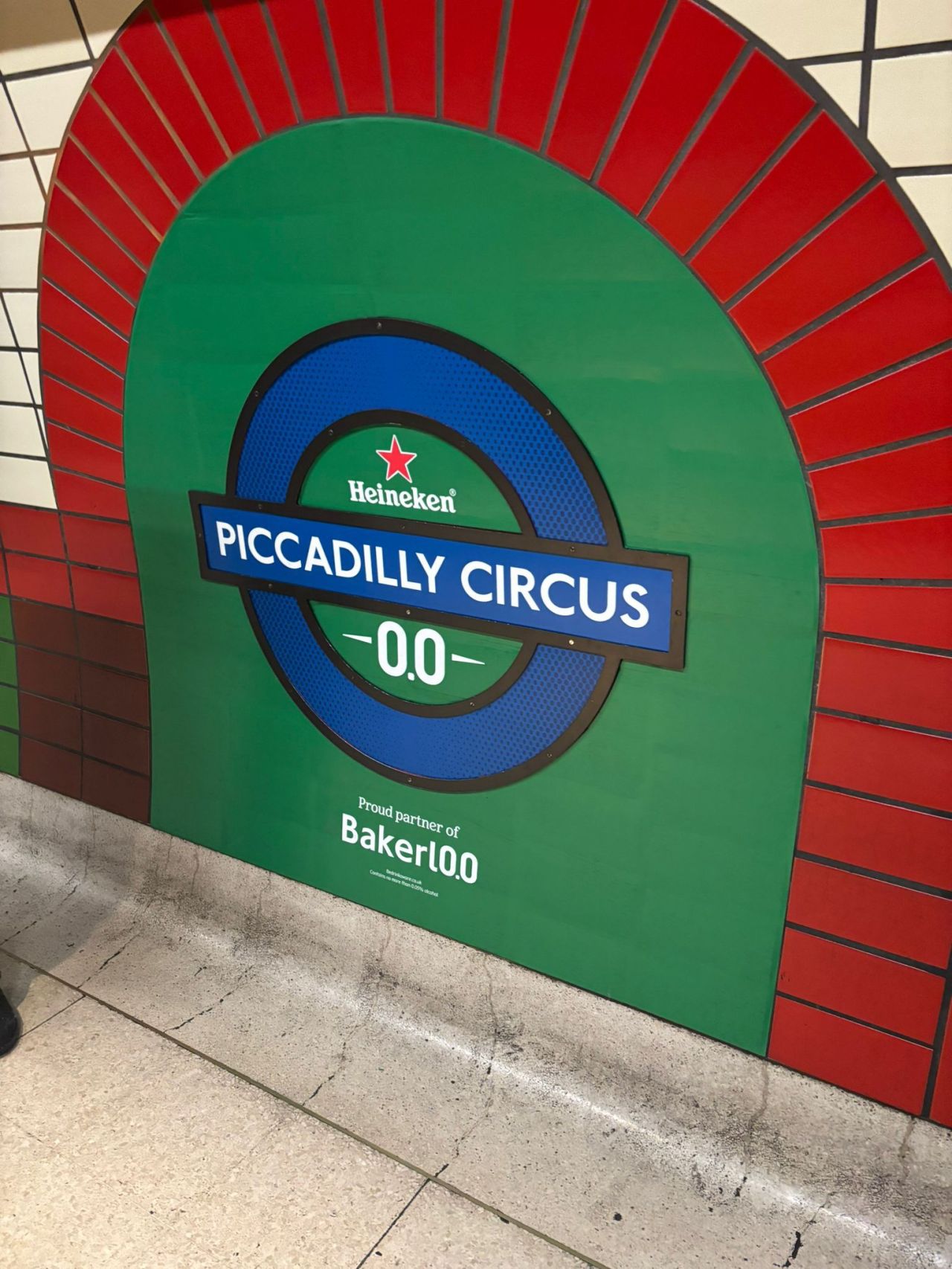
This January, Heineken has taken advantage of the social trend of “Dry January” to promote its alcohol-free range on the London Underground. The brewery, together with Transport for London, has launched an action that temporarily renames the Bakerloo Line as “Bakerl0.0 Line”, in direct reference to the 0.0% alcohol in its product.
The activation, underway for two weeks, introduces visible changes in subway signage and supports, with stations such as “Waterl0.0” or “Oxf0.0rd Circus”, and allows something that was previously prohibited: drinking beer in the subway, as long as it is non-alcoholic. In parallel, the brand will install a Heineken 0.0 refrigerator at Waterloo Station on January 15 and 16, offering free cans and accessories such as Oyster Card cases, with an objective that goes beyond awareness.
The campaign is based on social insight: although 63% of passengers avoid talking to strangers on the subway, almost half say that a casual conversation improves their mood. Under that premise, Heineken seeks to transform the daily commute – especially in January, a month perceived as socially “dry” – into a moment of connection, using non-alcoholic beer as a symbolic catalyst.
It is also a milestone for TfL. It is the first time they are allowed roundels and line names clearly marked by a trademark. Thus, the transportation authority emphasizes that the action has passed an impact evaluation and that the income generated by this type of agreement is reinvested in the transportation network.
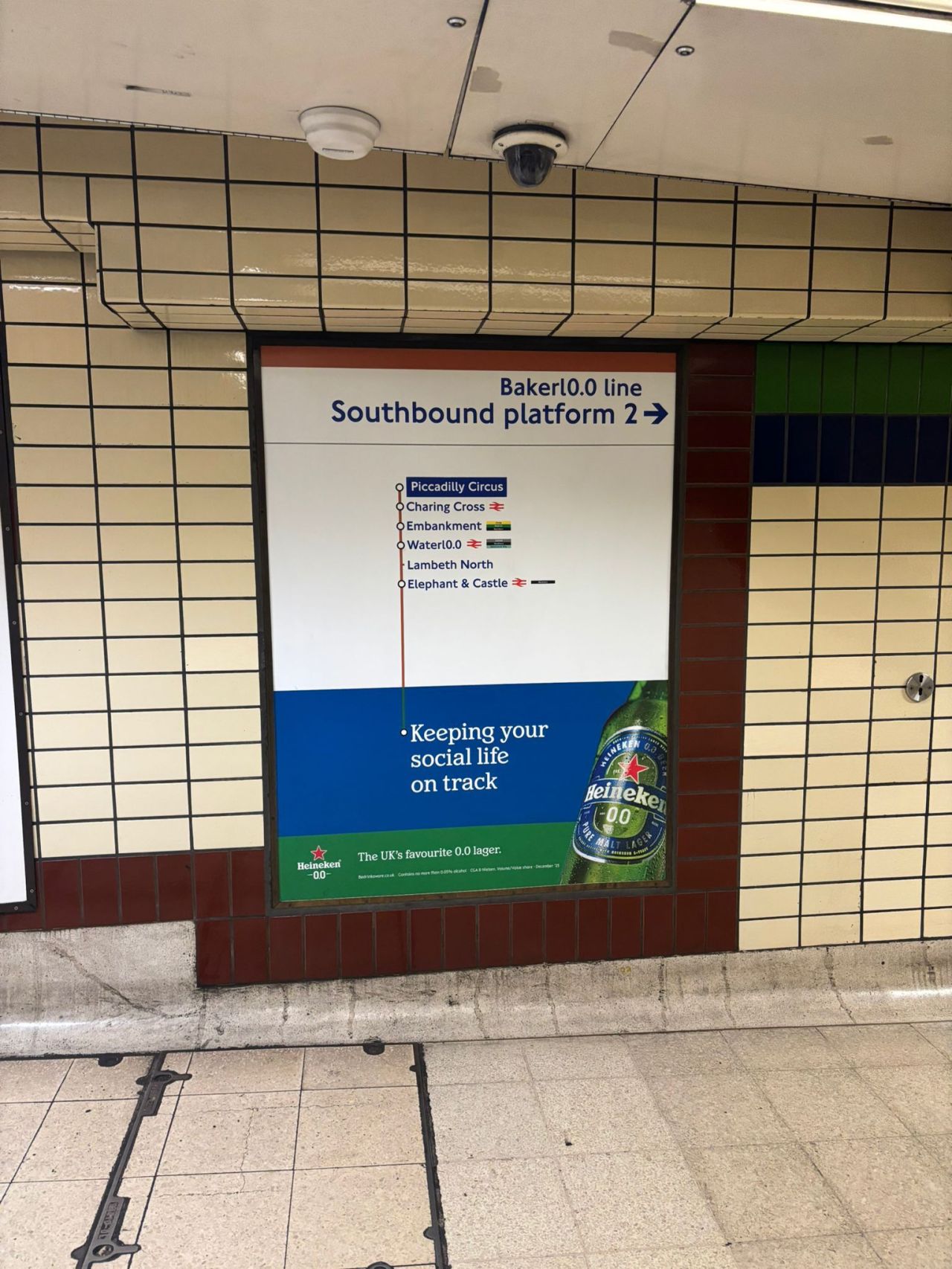
When creativity collides with accessibility
However, the initiative has been met with some criticism in its first active days. The Transport for All organization has publicly warned that this type of rebranding can cause confusion and put at risk vulnerable passengers who depend on clear and consistent signage to travel safely.
“For many people, including people who are visually impaired, learning disabled, neurodivergent, or those suffering from fatigue or brain fog, these campaigns can turn a routine commute into a stressful or unsafe experience.”said Emma Vogelmann, spokesperson for the organization. From their point of view, accessibility should not be negotiable and there are multiple advertising spaces on the network without the need to alter essential targeting elements.
TfL has defended its position, recalling that all campaigns are previously evaluated to ensure that they do not affect the service or users, and that the reconfiguration is limited and temporary. The brewery, for its part, maintains that the action has been developed in collaboration with the transportation authority to “Keeping the social lives of Londoners going” during “Dry January”.
The Bakerl0.0 Line functions as a powerful cultural and media action, but it also shows that, when creativity enters systems designed for maximum clarity and predictability, the margin of error narrows.
In a context in which brands seek memorable experiences and unconventional spaces, the line between innovation and social friction becomes finer.