Long marginal, this conspiratorial theory on immigration is essential in the public debate on an international scale. In the Maghreb, it now nourishes an increasingly visible racist discourse.
A theory born in Europe and popularized by the extreme right
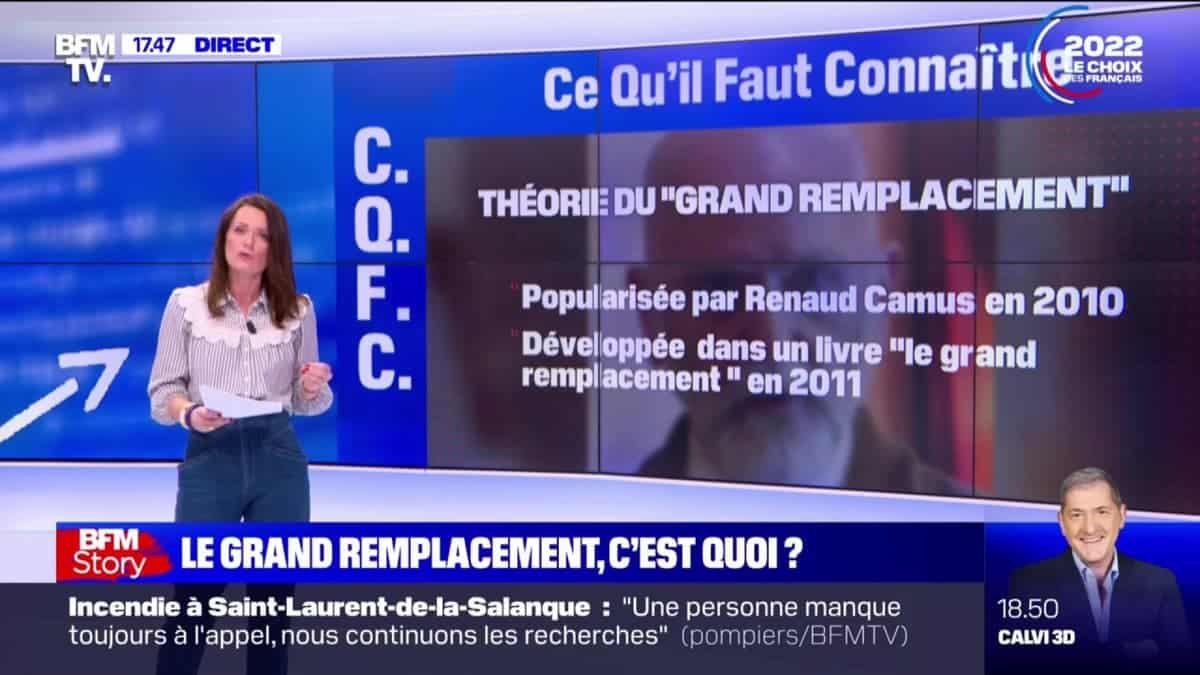
The expression ” replacement »Appeared in The years 2010. It is notably attributed to the French writer Renaud Camuswho theorizes an allegedly allegedly substitution of populations ” strain »By immigrantsmainly from Africa or the Middle East. A concept of the far right which is based in particular on a biased demographic reading, without any foundations.
The term becomes a political slogan With the ascent ofÉric Zemmourwhich makes it a central axis of his speech. But the idea is not new. Of the 1968the British deputy Enoch Powell already affirmed in his speech of Blood rivers that immigration would lead for a country to ” Frenetically erect his own funerary pyre.“”
Since then, the ” replacement “Has become a transnational political myth. He evokes the fear of a cultural or identity disappearanceoften presented as intentional, orchestrated by elites accomplices in globalization. The story is based on two pillars. On the one hand, Nostalgia for an idealized pastethnically homogeneous and on the other hand The announcement of a chaotic future caused by immigration. In several Western countries, this theory has justified radical political discourses, restrictive migratory measures and even sometimes violent and racist popular acts.
A booming speech in Morocco
In Morocco, the speech of ” replacement Found a new echo. For several weeks, Racist publications targeting migrants from sub -Saharan Africa proliferate on social networks. Tiktok, Facebook or Instagram relay messages accusing these migrants of wanting to ” replace The local population.
The Prometheus Institute for Democracy and the Civil Council against discrimination alert to a ” alarming wave Racist speeches. Relayed contents rely on dehumanizing representations. These speeches, say NGOs, help to legitimize physical, psychological and administrative violence.
The phenomenon is partly explained by the migratory climate. Morocco operates a certain role in control Migration flows to Europe. In exchange for funding, Rabat accepts to limit departures to the continent. This policy, carried by the European Union, accentuates tensions around migrant populations, especially in Morocco.
NGOs denounce repressions to Algerian or Mauritanian bordersof the illegal detentions and degrading living conditions. The Moroccan Association of Human Rights calls for a revision of agreements with the EU, which do not provide for clear guarantees in matters of respect for fundamental rights.
An argument that is gaining ground throughout the Maghreb
The theory of “great replacement” goes beyond Moroccan borders. In Libya, the authorities have recently expelled ten NGOsincluding Doctors Without Borders. They accuse them of wanting to modify the ” ethnic composition of the country By supporting migrants from sub -Saharan Africa. The Libyan Ministry of Internal Security speaks of ” demographic sabotage“. Also in Tunisia, similar speeches emerge in political spheres. Some officials evoke a risk of ” loss of identity“, In terms close to those used by the figures of the European far right. This theory is often amplified by social tensions and the economic crisis.
The Moroccan sociologist Mehdi Alioua recalls that these speeches also find root in history. Slaveryabolished late in the Maghreb, especially in Morocco, has left profound consequences in the representation of black people. Even today migrants from sub -Saharan Africa are called ” Blacks ” Or ” Africans“. Which is paradoxical even though the Moroccans and more broadly the North Africans are themselves.
Anti -racist activists and humanitarian associations are regularly targeted. In 2023, the anti -racist group of support and defense of foreigners and migrants (GADEM) was attacked online for having requested a reform in terms of of human rights and foreigners law. Some then accused him of ” Destabilize Moroccan genetics“.
The theory of “great replacement” is exported today far beyond European extremist thoughts. It finds fertile land in countries faced with migratory pressure and the contractions of European policies. If it remains without concrete scientific basis, it produces real effects. Between stigmatization, violence and rights -to -rights, its trivialization calls for a vigilance increased.