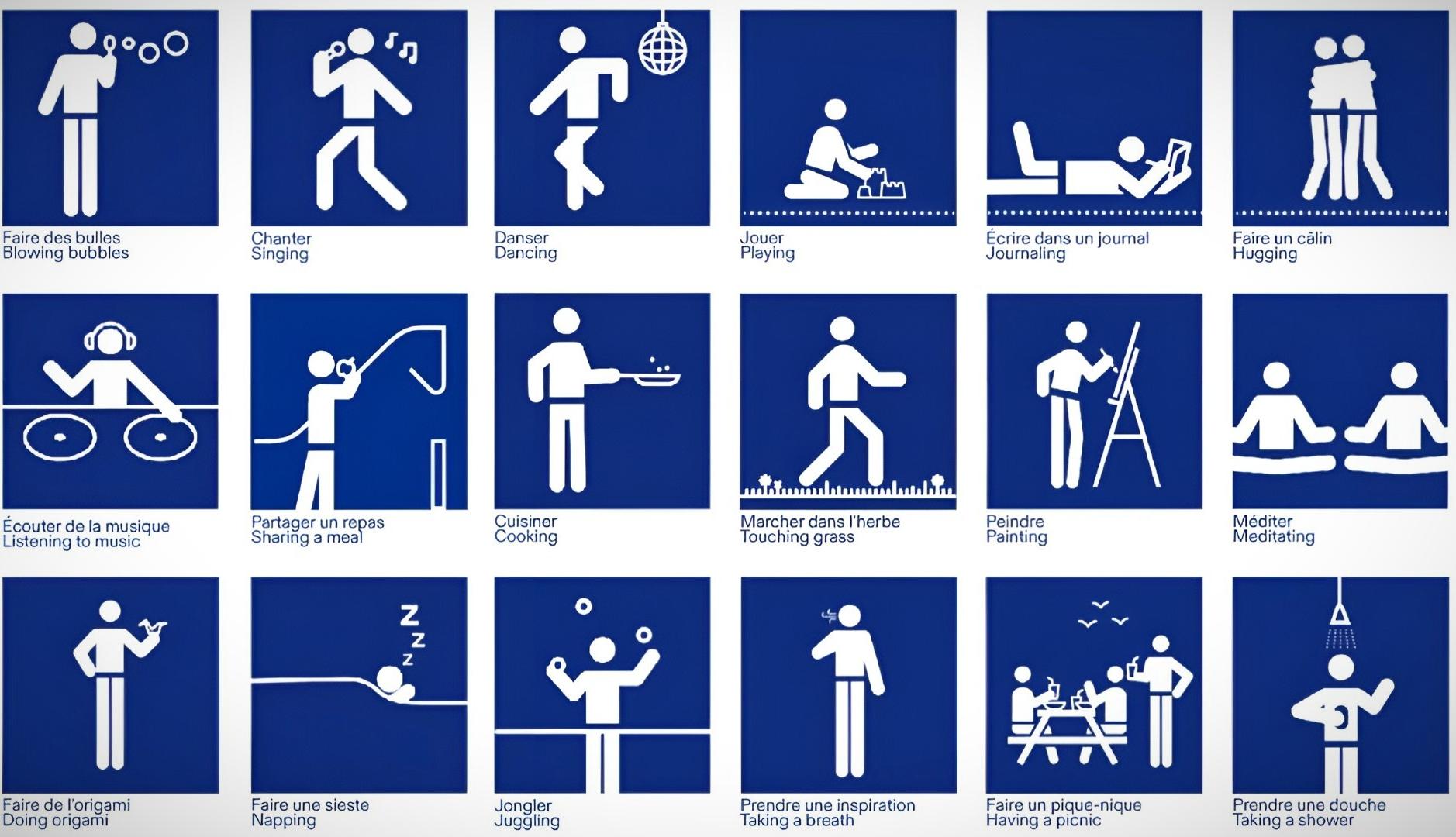
Moving and staying active, no matter how small and brief the exercises may be, is a powerful tool to promote mental and emotional well-being. And to reflect this, the International Olympic Committee (IOC) has created a series of animated pictograms that, precisely, connect everyday movements, such as painting, writing or dancing, with sport to highlight the importance of taking a moment to “reset.”
It has done so recently on the occasion of World Mental Health Month, which is celebrated during October, and in accordance with the Youth Olympic Games, the international sports competition for young people between 15 and 17 years old and which this year took place in Dakar between October 31 and November 13. The action is also part of “Let’s Move”, the program that the IOC develops together with the World Health Organization (WHO) to promote the integration of physical activity in daily life.
Thus, the initiative takes the pictograms created for the youth tournament and reinterprets them to turn them into “resetgrams”, that is, animated versions of the illustrations, inspired by the real activities that athletes do to disconnect and that highlight the importance of resting the mind and body. From breathing deeply to stretching or going for a walk, each piece illustrates a simple way to pause, regain balance, and find the focus needed to take the next step.
“Everyone goes through difficult times in their daily lives, including athletes. Whether it is due to increasing pressure, pre-competition nerves, personal insecurity or a feeling of being overwhelmed, these moments can affect anyone, at any time.“, they explain from the IOC in a statement. “In such situations, making small but meaningful movements can help change the mood and make a real difference.”.
This reinterpretation of the pictograms is part of a series of activities that, under the “Let’s Move” campaign, highlight the connection between movement and mental well-being throughout World Mental Health Month. Athletes from across the Olympic Movement participated, sharing their personal stories and sources of inspiration about how they use movement to care for their mental well-being; among them, Olympic silver medalist Yusuf Dikeç and Olympic champion Chad le Clos.