Advertising investment in retail media could reach $200 billion in 2026 and $223 billion in 2027, according to Warc’s latest projections. The forecasts, however, reflect a slowdown in the growth rate and maintain concentration on the big players in the category.
The analysis “The Future of Commerce Media 2026” indicates that investment in retail media will grow 11.5% year-on-year next year, at which time it will represent 15% of global advertising investment. However, although the evolution is positive, it is slowing down, which is evident when considering the figures taking Amazon out of the equation: without the sector leader, the growth of average retail investment would fall to 9.8% in 2027.
The consulting firm observes differences between regions, and points out that the United States continues to lead investment in the canal. Warc forecasts estimate that average retail spending in the country will grow by 13.6% in 2028, reaching $74.9 billion. However, the pace of investment in Europe will slow down.
In 2025, Amazon will account for 78% of total retail spending in the United States
The data also maintains the trend towards concentration. In 2025, Amazon accounted for 78% of total average retail spending in the United States, well above Walmart (7.5%), and the rest of the platforms (14.5%), according to data from Walrus Intelligence. A similar situation is observed in Europe, where more than two-thirds of total spending on the channel went to Amazon in France, Germany, Italy, Spain and the United Kingdom.
The concentration is also seen in the number of advertisers. According to Warc, many retail media networks rely on a small group of core advertisers: 74% of UK brands invest in three or fewer retail media networks.
On the other hand, the analysis indicates that the medium is chosen by the endemic categories, mainly consumer packaged products (CPG). By 2027, the channel will represent more than 56% of the total media spend of alcohol brands globally and almost 55% in the food category. On the other hand, investment will decrease for other areas, such as technology and electronics, for which average retail is expected to only reach 15% of total spending next year, compared to 16% in 2025.
For their part, retail media are diversifying their advertising businesses beyond their traditional retail media options in light of the growth of other media and channels. The data shared by the consulting firm indicates that connected television already represents 23% of retail media spending and that video on demand will exceed global advertising investment in retail media by 2028.
Proof of this is that last August Walmart announced the acquisition of Vibe.co, an advertising platform for connected television (CTV) and streaming, with the intention of expanding the range of possibilities for advertisers. Additionally, Amazon’s non-retail advertising business, which would include Twitch and Prime Video, is expected to generate $6.7 billion in 2027.
The risk of “enshittification” and the challenge of creativity
Given the slowdown in growth and consolidation of the channel, Warc warns that retail media runs the risk of experiencing the so-called “enshittification”, that is, the process by which a digital platform progressively worsens. In this case, the digital experience in retail media could deteriorate as platforms seek to drive monetization at the expense of users and advertisers.
With consumer spending under pressure, it may be tempting for retailers to increase the number of ads. Amazon, The Home Depot, Macy’s and Walmart already show, on average, more than 20 ads per page, according to an analysis by the firm Pentaleap.
To avoid “enshittification,” the consultancy recommends brands create a fluid experience on the platform that prioritizes user service, maximizes the relevance of ads and minimizes irrelevant advertising saturation. It also highlights intelligent management based on AI tools with solid data and improving consumer knowledge.
According to Ipsos, ads in retail media generate less memory than other environments
On the other hand, creativity is also posed as a challenge for the medial remnant. A recent Ipsos study on simulated shopping experiences at Walmart and Amazon revealed that information retention decreases by 47% in ads published on retail media platforms compared to those published in other environments.
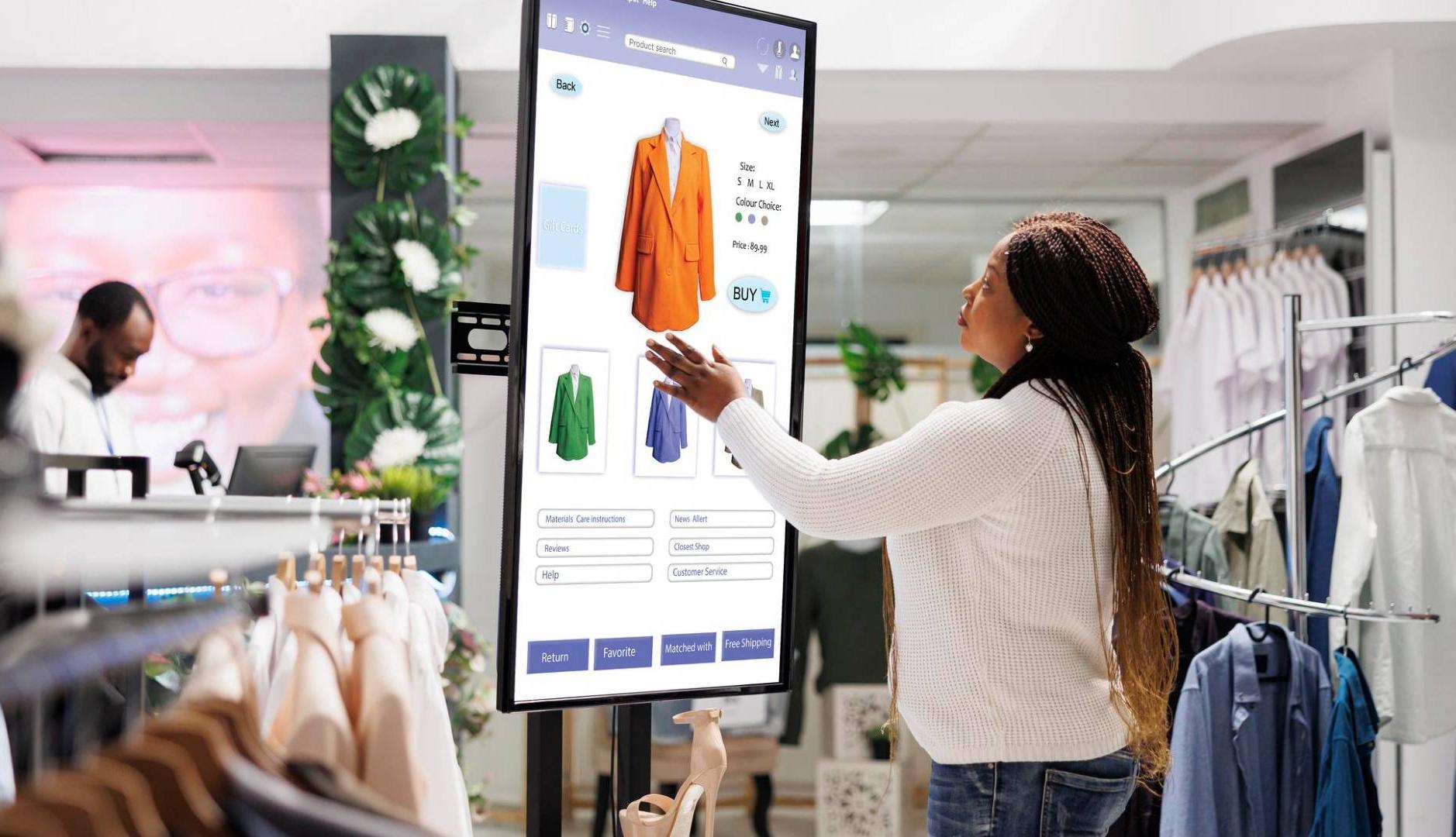
Among other things, it is also noted that, for undecided buyers, the high creative quality of advertising generates a 12% increase in brand choice in the short term; or that 62% of supermarket shoppers in the United States claim to have purchased a product immediately after seeing it on a screen in the store. Despite this, in-store space remains one of the least developed creative opportunities in retail media.
Likewise, Warc points out that retail media advertising is effective in converting existing demand, but not in generating long-term results. He attributes this mainly to the poor understanding of the contextual requirements of commercial advertising formats, which has generated creative deficiencies that the sector must overcome to guarantee the effectiveness of retail media campaigns.
In this regard, the consultancy suggests a diversified media mix in which, for example, collaborations with creators coexist with campaigns at physical and digital touchpoints.
“Retailers face a delicate balance: increasing advertising revenue to improve margins without overwhelming shoppers with too many ad interruptions that compromise both the shopping experience and campaign effectiveness.“said Alex Brownsell, Chief Content Officer at Warc Media, in a statement. “Success now depends on intelligent integration with other channels and finding the optimal path to obtain sustainable results”.