Cannes Lions has been growing far beyond the walls of the Palais des Festivals. What began as a contest dedicated to rewarding the best advertising films has transformed into an international meeting in which creativity, marketing, technology, entertainment and business coexist. The beaches of The Croisettehotel terraces, private villas and boats have progressively been incorporated into a parallel program that is sometimes as attractive as the official one. And now, the festival wants to go one step further by making the entire city of Cannes an extension of its proposal.
The organization has announced a series of new features for the 2027 edition, including the exhibition of award-winning works in different parts of the city, the creation of a passport that will facilitate access to certain activities outside the Palais, an expansion of its inclusion programs and a new recognition of prominent figures from different creative industries.
The objective is to connect the multiple initiatives that take place around the festival and make it easier for attendees to discover content, establish professional relationships and find business opportunities. A proposal that responds to the dimension that Cannes Lions has reached, but that also invites us to reflect on the limits of its growth.
Currently, Cannes Lions concentrates its official activity on five days, from Monday to Friday.
And, while the festival expands its spaces, content and experiences, the time available to take advantage of them remains the same. In fact, the duration of the meeting has been reduced compared to the editions in which the programming extended from Sunday to Saturday. Currently, Cannes Lions concentrates its official activity on five days, from Monday to Friday.
For those who come to the festival, the decision that prevails throughout the week is what they are willing to give up. Between conferences, exhibitions, meetings, presentations, informal meetings and activities organized by the brands, covering the entire offer has become a practically impossible task.
The award-winning creativity leaves the Palais and takes over Cannes
One of the main novelties of 2027 will be the presence of the Lions’ winning and finalist campaigns in different spaces in the city.
Until now, the Palais had concentrated the main exhibitions, screenings and activities dedicated to the participating works. But the organization wants to reinforce that experience through immersive installations, projections and content that allow us to delve deeper into the ideas, production processes and professionals behind the campaigns.
Thus, for the first time in its 74-year history, that display of creativity will officially extend beyond the festival site. The award-winning and finalist works can be found in installations, projections and experiences distributed throughout The Croisettethe beach and other participating spaces.
The intention is that the best creative ideas acquire a much more visible presence in Cannes and that recognition of the works is not limited to the places accessed by accredited delegates.
The measure can also contribute to recovering the prominence of creativity within an event whose offer has diversified enormously. In recent years, brand experiences, commercial activities and conferences organized by technology companies have gained increasing visibility, to the point that a significant part of the professional conversation takes place outside the official programming. With this initiative, Cannes Lions seeks to return creative works to a central place, also in the urban landscape of the festival.
A passport to access experiences throughout the city
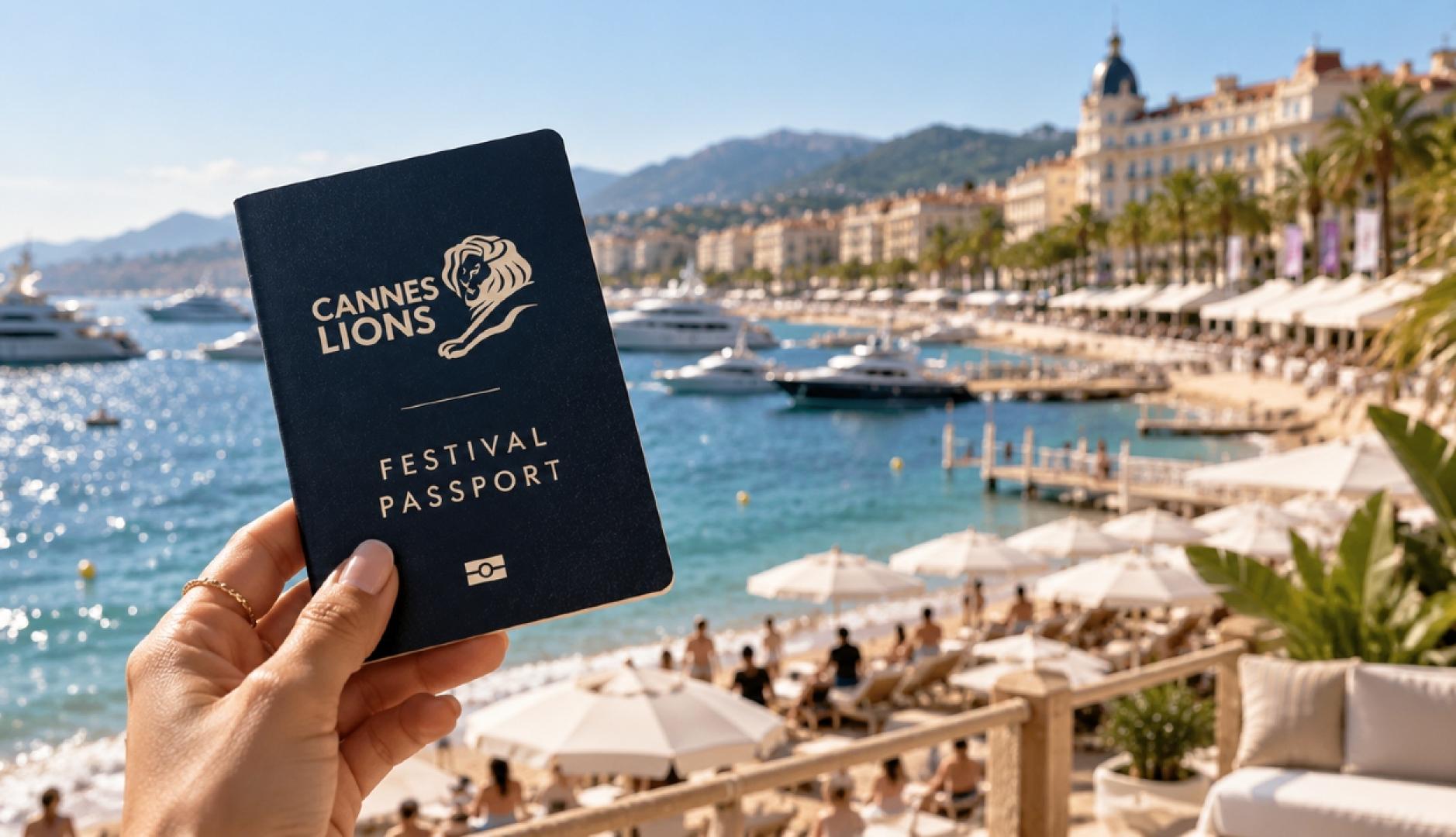
The second big novelty is the evolution of the Cannes Lions accreditation towards a passport that will allow access to certain official activities and participating spaces outside the Palais. The system will begin to be implemented in 2027 as a first phase of a broader project. The organization intends that, in the long term, a single accreditation will make it easier to discover and access a connected offer of experiences.
This does not mean that all side activities will automatically be included in the pass. Initially, access will be expanded to certain scenarios, events and spaces attached to the program. In addition, Cannes Lions will introduce the Flagship Experiences and Recommended Experiences categories, which will serve to identify outstanding proposals and guide delegates among the many activities held in the city.
“Our intention is not to establish a dividing line between the festival and everything that happens around it, but to bring both realities closer”explained Thea Skelton, Senior Vice President of Lions Festivals. “Our ambition is to move from access to advantage and help people spend less time deciding where to go, what to experience and who to meet, and more time making the connections, discovering the ideas and finding the opportunities that make Cannes Lions so special.”he added.
Its approach precisely identifies one of the main challenges of the meeting, which is the difficulty of finding one’s way among an offer that has multiplied with independent programming. Thus, the transformation announced for 2027 is the consequence of an evolution that has developed for decades.
Cannes Lions was founded in 1954 with 217 delegates and an activity focused on recognizing the best advertising films. Over time, it incorporated new disciplines, conferences and training programs, attracting professionals who went far beyond creative agencies.
The growth of digital platforms and the increasing participation of advertisers further expanded its reach. Cannes became a meeting place for companies seeking to establish business relationships, present new products and participate in the conversations that mark the evolution of the industry.
Hotels began to establish themselves as spaces for meetings and informal gatherings. Then came branded experiences on beaches, pop-up installations, parties, private conferences and corporate hospitality spaces.
In 2025 it registered more than 13,800 official attendees, from 94 countries
The result is an ecosystem that brings together thousands of professionals inside and outside the Palais. In 2025, Cannes Lions registered more than 13,800 official attendees, from 94 countries, and was attended by hundreds of brands and agencies. However, that number does not necessarily represent all the people who travel to Cannes during the festival. Many professionals participate in meetings, presentations and parallel activities without having official accreditation.
In this context, the new passport represents an attempt to organize and connect an ecosystem that has been expanding through initiatives of the organization itself and the participating companies.
More opportunities, but five days to take advantage of them
Expansion offers advantages for brands, because it means having more spaces and formats to interact with the industry. For delegates, it means accessing a greater diversity of content, perspectives and professional opportunities. And for the festival itself, it means reinforcing its position as a meeting point for the international creative economy.
But during the current five-day Cannes Lions, attendees must distribute their time between the conferences of the Palaiscampaign exhibitions, award ceremonies, professional meetings and company-organized activities. Added to this are the trips between spaces, invitations to private events and spontaneous meetings that have traditionally been part of the festival’s appeal.
So expanding programming doesn’t necessarily mean delegates can take advantage of more opportunities. Sometimes it simply increases the number of decisions they must make and experiences they will not be able to attend. The new passport can facilitate the discovery of activities and reduce some barriers to access, but it does not by itself solve the most obvious limitation, which is the time available.
Cannes Lions thus seems to face a paradox of its own success: the greater the offering it brings together, the more difficult it is for each attendee to experience the festival in all its dimensions. The organization has chosen to connect the different spaces instead of establishing a separation between the official program and parallel initiatives. It will be interesting to see to what extent this integration really facilitates the experience and makes it possible to better take advantage of the opportunities offered by the meeting.
New recognitions for figures of the creative economy
Another of the initiatives announced is the creation of the Global Creative Assemblya new annual recognition aimed at professionals whose creativity has transformed their respective disciplines and generated influence beyond them.
The proposal will expand the scope of Cannes Lions recognition to areas such as film, music, sports, fashion, design, technology, entertainment and the creator economy, in addition to advertising and marketing. The first distinguished professionals will receive a Laureate Lion during the Cannes Lions 2027 awards ceremonies.
A Laureate Lion has been created for figures in the creative economy
The initiative will also feature conferences, performances and content that will allow you to learn about the creative processes of the honorees and explore how they develop their ideas. With this recognition, Cannes Lions reinforces its intention to represent a conception of creativity that transcends advertising and extends to other cultural and economic industries.
“For more than 70 years, people have come to Cannes Lions because they believe that creativity matters”said Simon Cook, CEO of LIONS. “What has changed is the dimension of everything that now gathers around that conviction.”
According to Cook, the organization’s responsibility is to make better use of this concentration of talent, give visibility to the best ideas and connect professionals and companies capable of generating commercial and cultural value from creativity.
With the new features announced for 2027, Cannes Lions begins to formally integrate the activity that has been taking place outside the Palaisrecognizing the prominence of parallel experiences and facilitating access to them. However, this expansion also poses a challenge: how to take advantage of an ever-growing offering of content, meetings and opportunities in the same five days. Diversity is one of the great attractions of the festival, but it also requires new ways of organizing and prioritizing experiences. The new passport is a first step in that direction, although it remains to be seen whether it will allow for better enjoyment of a meeting that, after decades of growth, is impossible to cover in its entirety.