
The dynamics of the work environment have changed substantially in recent years, first as a result of the impact of the pandemic and now in response to the transformations that artificial intelligence is generating. The result is a challenging scenario in which companies try to balance cost control, workforce stability, flexibility and the growing presence of AI; and in which employees continue to seek security, growth opportunities and a good employer experience.
Trust and balance will be key for companies to navigate the current landscape, according to talent consultancy Morgan McKinley’s employment trends report. It has surveyed 2,800 employees and 214 organizations in seven different markets, including Australia, Canada, Ireland, Japan and Singapore; and identified a new “work equation” determined by five variables. They are the following:
The stability variable
Employees’ concern about the stability of their jobs is aggravated in a context marked by global layoffs, stagnant salaries and deep economic uncertainty. The feeling of restlessness is influencing the decisions of professionals, which range from “job-hugging”, that is, remaining in a position out of fear; in search of new opportunities.
The consulting firm’s data indicates that 43% of employees feel very safe or secure about their position; On the other hand, 35% feel very insecure or insecure. The response to this feeling of risk is, mainly, the search for work (85%) or the development of new skills (64%).
This perception of stability is far from universal and contrasts with companies’ plans for the workforce for this year. 63% of employers say they have no plans to reduce their workforce, compared to 24% who contemplate moderate reductions.
Furthermore, the issue of salaries is also under stress. Almost 70% of employees say they have not received a pay increase in the last six months, although almost half (48%) are optimistic about receiving a raise in the next 12 months. However, the same proportion of employers (48%) claim to have increased salaries in their organizations.
- The situation: the results suggest a gap in both salary expectations and organizational stability and future plans between employees and employers.
- The solution: the consulting firm considers it necessary to increase transparency around remuneration plans and personnel decisions, and promote specific actions to close this perception gap and strengthen employee confidence.
The flexibility variable
Flexibility has evolved from a job benefit to a fundamental expectation of employees, who increasingly seek more autonomy in their work schedules, while employers continue to seek a balance between these preferences and business needs.
The hybrid work model finds a conflict between worker preferences and corporate policies. 45% of employees prefer to work in the office one or two days a week, and their current situation reflects this, with 39% of professionals working in this modality. However, 47% of employers surveyed require attendance at the workplace more than three days a week. Improving collaboration (53%) and reinforcing organizational culture (24%) are the main motivations for this.
Flexibility is the point where the interests of employees and employers converge. Flexible hours are the form most valued by workers, followed by hybrid work and teleworking. Additionally, nearly two-thirds (64%) of employees said flexible working arrangements influenced their decision to accept or reject a job offer.
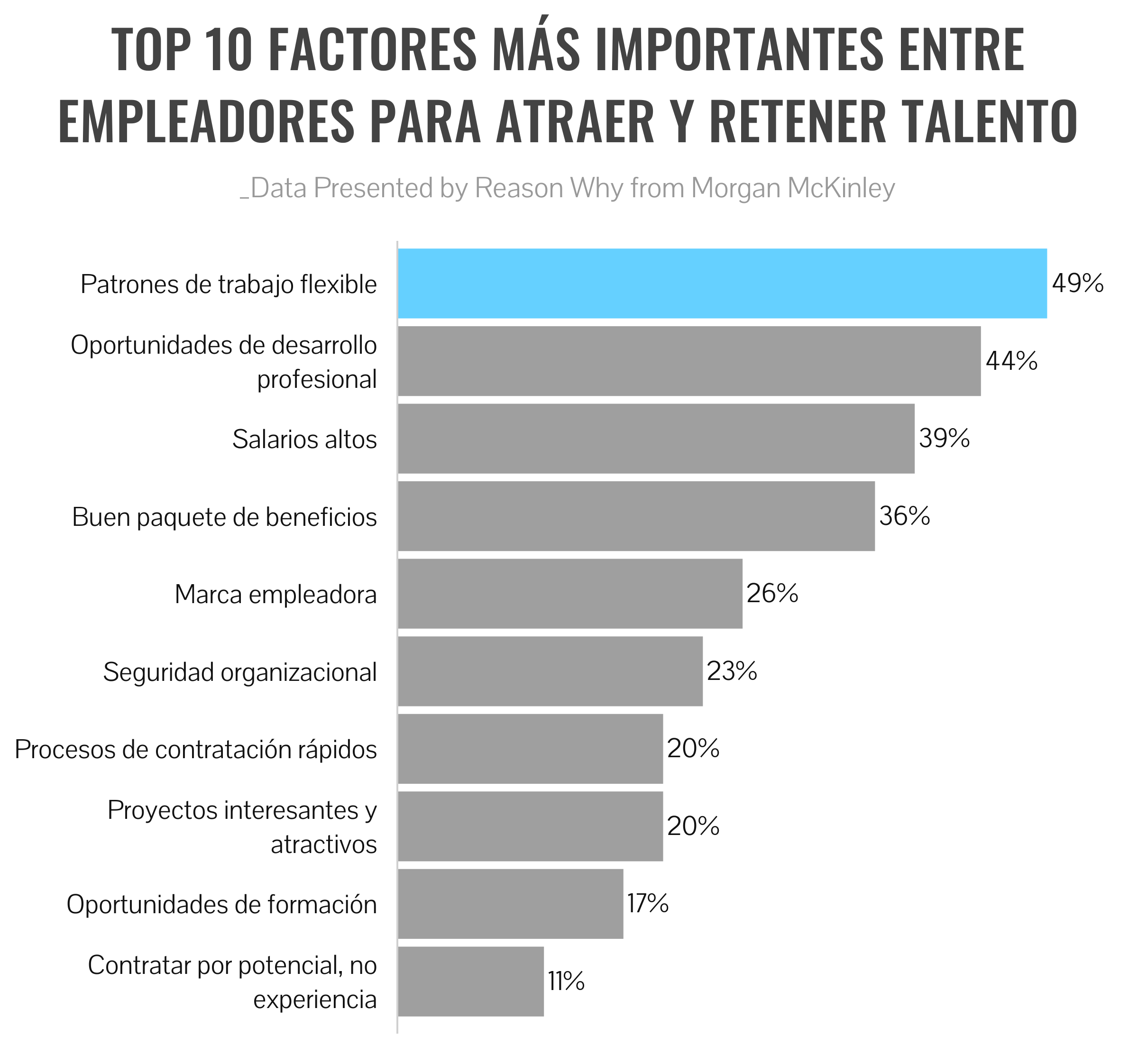
It is a factor that also contributes to the attraction and retention of talent. 48% of companies are committed to flexible work patterns to improve their employer image, as well as offering professional development opportunities (44%).
- The situation: Data points to a persistent gap between employees’ flexibility preferences and employers’ expectations.
- The solution: If company policy favors five-day in-person work or hybrid work is not feasible, employers should consider measures such as flexible work schedules to boost employee satisfaction.
The trust variable
AI is driving unprecedented efficiency improvements, while raising important questions about trust, the role of human oversight, or its impact on justice and equity. While many employees are increasingly comfortable using AI in activities such as job search and career development, caution remains when it is used to evaluate or make decisions about them.
43% of workers already use artificial intelligence in their job search, a figure that grows from 26% last year. Resume optimization or applying technology to find jobs that match skills and experience are the most common uses.
However, 46% say they feel uncomfortable when AI evaluates their performance in interviews, as they believe it does not analyze their skills and qualifications fairly.
The application of AI in personnel selection also suggests a gap between employees and employers. 29% of workers have a positive view of AI, a considerable drop from 34% the previous year, while 35% perceive it negatively. On the other hand, 65% of employers consider AI in personnel selection as a positive issue.
However, the sentiment clashes with adoption, which remains relatively limited: only 17% of employers claim to use AI in their selection processes. Those who do so find improvements in processes, while the cost and difficulties of training systems appear as barriers.
Additionally, 60% indicate that AI should not be used for final hiring decisions, preferring human judgment.
- The situation: the data shows a difference in perception regarding AI in selection processes and the need to manage it properly to avoid trust and reputation problems.
- The solution: the consulting firm suggests applying AI in routine tasks, such as writing jobs or scheduling interviews; as well as addressing fears about bias with the team and candidates.
The capacity variable
The adoption of artificial intelligence is transforming the skills of today’s labor market. Employees seek to secure the future of their careers, while employers compete for talent that provides strategic value. In this sense, the development of appropriate skills becomes a crucial factor in an increasingly complex and competitive environment.
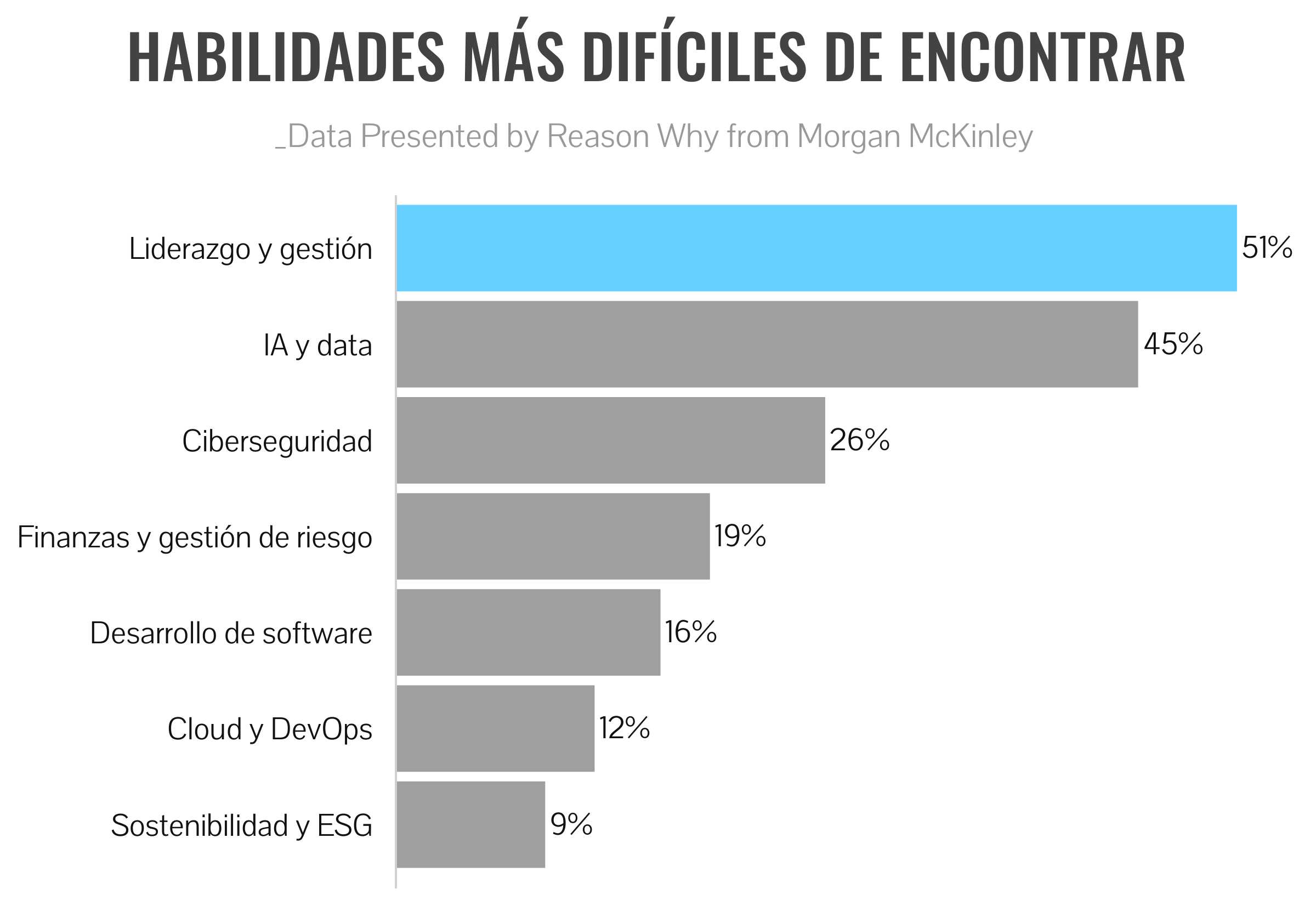
Artificial intelligence and data analysis (70%) are the skill that employees are most interested in developing today, followed by management and leadership (49%). However, this clashes with the reality of the sector. Employers point out that leadership and management skills (51%), followed closely by AI and data (45%) and cybersecurity (26%), top the list of the most difficult to hire. Overall, employers find hiring difficult, with 80% rating it as “fairly competitive” or “very competitive.”
Despite the importance of skills, more than half of employees (56%) believe their employers invest little in development and 49% say they are actively exploring new opportunities for the next six months. Companies, for their part, claim to have experienced recent talent losses (67%), which shows difficulties in retaining professionals, often related to salary or the perception of career progression.
- The situation: the consulting firm’s findings point to a gap between the interest and need for training and the reality of the labor market.
- The solution: Investment in employee training is advised to close the perception gap and turn a lack of skills into a competitive advantage.
The culture variable
Wellbeing remains a key factor for employees when evaluating career opportunities or remaining in their position. In an uncertain and stressful environment, mental health or workload can be determinants of company loyalty. For their part, employers recognize the holding power of well-being, but face obstacles in its implementation.
Mental health support is considered very important to stay in the workplace
52% of employees consider that the company’s support for mental health is “very important” when deciding whether or not to stay in their current position. Employers, for their part, seem aligned on the matter: 71% consider that the balance between work and personal life is “very important” to retain professionals, and 63% claim to have increased their investments in mental health and well-being in the last year.
Issues such as diversity, equity and inclusion also remain relevant in the relationship between employees and employers. What workers value most is equal opportunities for professional development, followed by an inclusive work culture and diversity in leadership.
- The situation: the importance of mental health, well-being and corporate culture continues to be decisive in talent management.
- The solution: it is recommended to invest in initiatives and implement measures that promote good conditions and an adequate environment for the personal and professional development of employees.
A labor market in full transformation due to the adoption of artificial intelligence brings multiple challenges to the table, but also opportunities to strengthen the relationship and trust of employees. Organizations that can combine stability and security with flexibility and agility; as well as boosting innovation while maintaining employee support, they will be better positioned to thrive in the years to come.