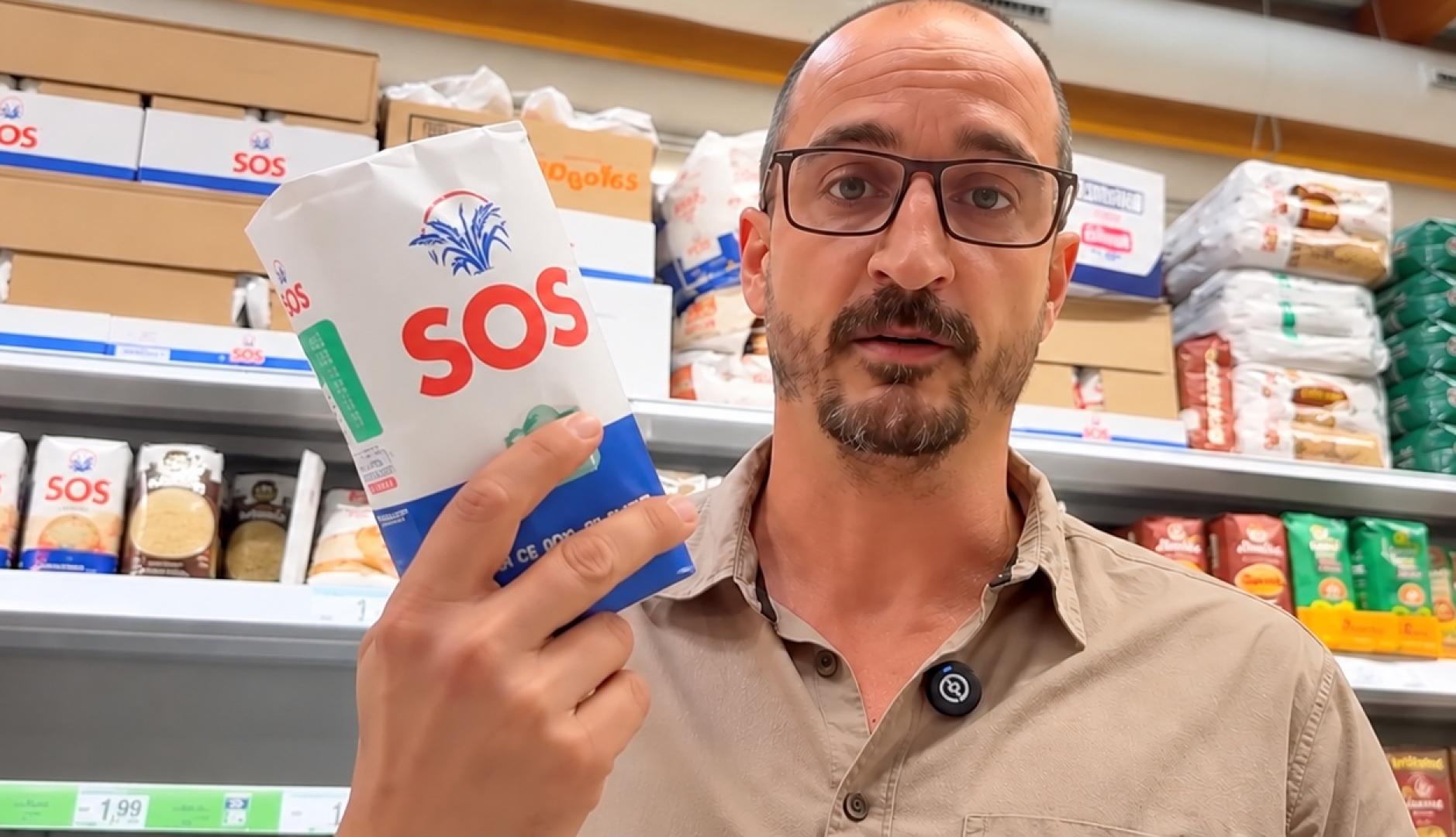
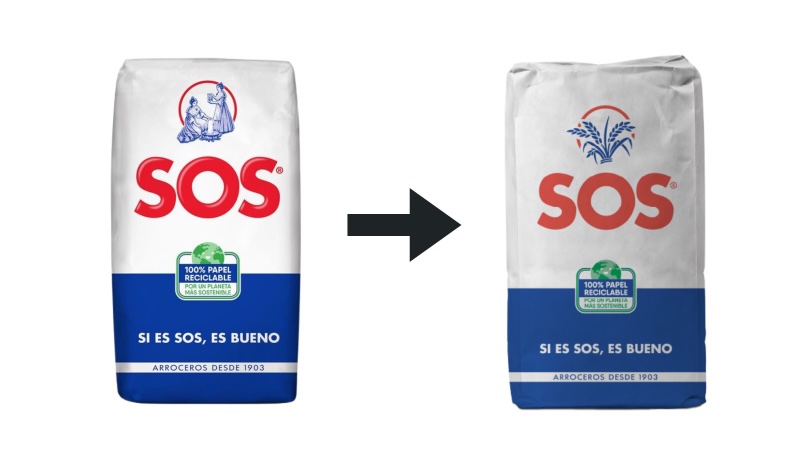
The falleras have disappeared from the SOS rice packages. The brand, owned by Ebro Foods, has replaced the image of several women dressed in traditional Valencian dress on its packaging with an illustration of ears of rice, after the actions undertaken by the agricultural organization La Unió Llauradora i Ramadera regarding labeling and communication of the origin of the product.
In this case, La Unió had been questioning for some time the use of elements closely associated with the Valencian Community on rice packages that, according to the agricultural organization, do not clearly identify the country of origin of the product.
SOS has now chosen to remove one of those elements. Where previously a group of falleras appeared, the packaging currently shows some ears of rice.
The change is significant due to the role that the image played within the packaging. The falleras did not technically describe the origin of the rice, but they did introduce a cultural element unequivocally associated with Valencia, a territory with a strong rice-growing tradition.
It is precisely that association that La Unió has questioned. The agricultural organization maintains that certain images, symbols, brand names and references to the packaging place can lead the consumer to associate a product with a geographical origin that does not necessarily coincide with the origin of the raw material. “A concrete change after a concrete demand”the organization noted when communicating the modification made by SOS.
The Unió considers the removal of the falleras an advance derived from its actions, although it warns that its main claim is still pending and that is that the containers clearly indicate the real origin of the rice sold.
Original post on Linkedin
The agricultural organization has long criticized the fact that large rice companies based in the Valencian Community resort to imported rice while, according to complaints, the country of origin is not specified clearly enough in certain products available on the shelves.
His criticism also extends to distribution. La Unió considers that retailers should assume a greater role in providing the consumer with information about the origin of the rice and questions those cases in which the packaging highlights that the product has been packaged in the Valencian Community or uses Valencian visual references without clearly identifying the origin of the rice.
The organization summarizes its position by stating that “The consumer has the right to know what he is buying and the Valencian rice producer has the right to compete with transparency.”
The organization asked to investigate the packaging of SOS and La Fallera
The claim comes from behind. Last year La Unió asked the Generalitat Valenciana to initiate a formal investigation into the labeling of rice marketed under the SOS and La Fallera brands, both belonging to Ebro Foods.
The organization considered that the combination between the absence of information on the origin and the use of certain references linked to the Comunitat Valenciana could mislead the consumer. According to La Unió, so far the investigation it requested has not been initiated.
La Unió will continue its actions regarding La Fallera, also owned by Ebro Foods
In its arguments, the association refers to article 26 of Regulation (EU) 1169/2011, relating to food information provided to the consumer. The Unió interprets that the regulations require indicating the country of origin or place of provenance when its omission could lead to error regarding the true origin of the food, particularly when the set of information accompanying the product may suggest a different origin.
After the change introduced by SOS, La Unió assures that it will continue its actions with respect to La Fallera, also owned by Ebro Foods, specifically in those products that do not belong to the Arròs de València Designation of Origin.
The organization points out that it continues to find packages in establishments that use both the name and image of a fallera and that only refer to its packaging in Silla, without, according to the complaint, the origin of the rice being clearly identified.
It also targets products sold in chains such as Carrefour and Aldi that incorporate flags or other references to the Valencian Community without specifying, according to La Unió, the origin of the raw material. For the agricultural organization, this situation affects both the information that the consumer receives and the conditions under which Valencian producers compete against rice from other territories or countries.
The Unió has also conveyed this problem to the General Directorate of Health and Food Safety of the European Commission (DG SANTE) in different meetings held in Brussels. According to the organization itself, the community institution has pointed out that the use of Valencian symbols, images or references on rice labels can be misleading when there is no guarantee that the product actually has that origin and, in these cases, information about its origin must be offered.
Beyond the specific cases of SOS and La Fallera, La Unió demands a modification of community regulation that requires the origin of the rice to be identified on the packages and, where appropriate, the percentages from each country, following a logic similar to that applied to other food products.
Thus, the removal of the faulty SOS packaging closes part of the claim, but opens another relevant conversation for brands and consumers: what a package communicates beyond what it expressly says and how far the responsibility of its visual codes goes when they suggest a certain geographical origin.